The Wild Atlantic Coast of Alto Minho
Known as Portugal’s Green Coast (Costa Verde), Alto Minho is where forests, rivers, and mountains meet the Atlantic to create one of Portugal’s most spectacular coastal landscapes. Quiet beaches, ancient towns, and windswept headlands define this remarkable stretch of shoreline.
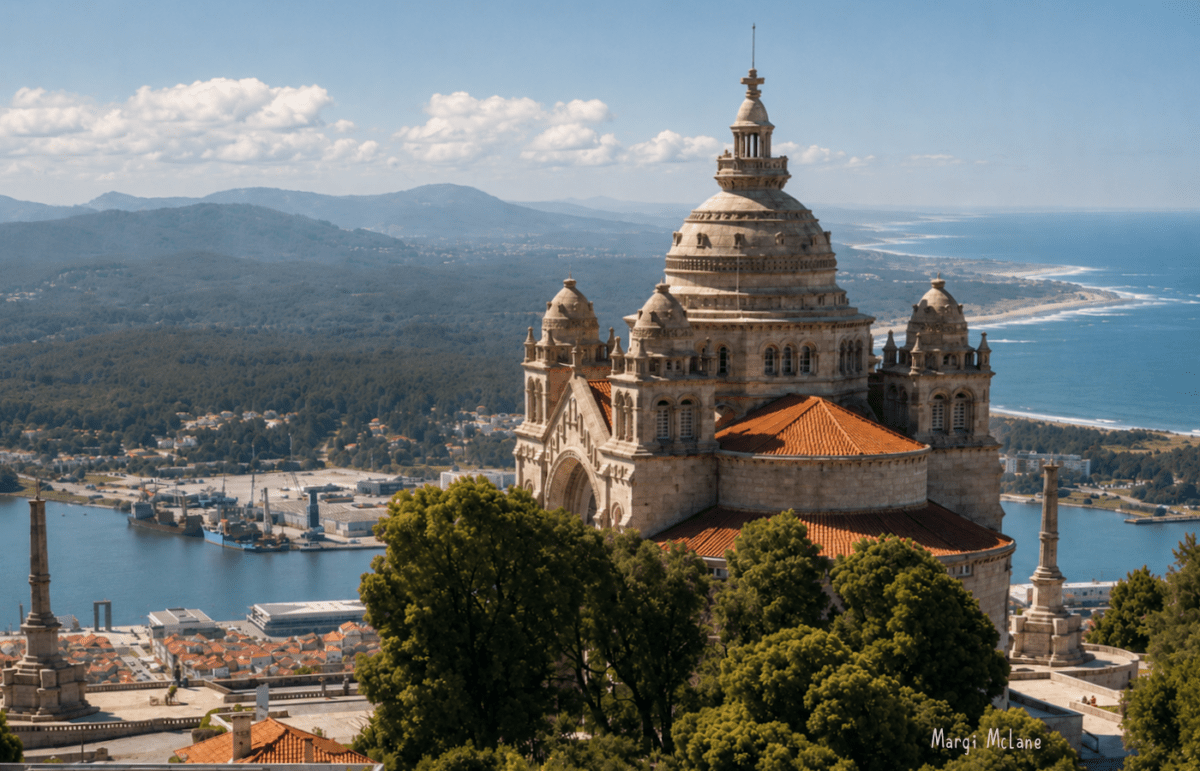
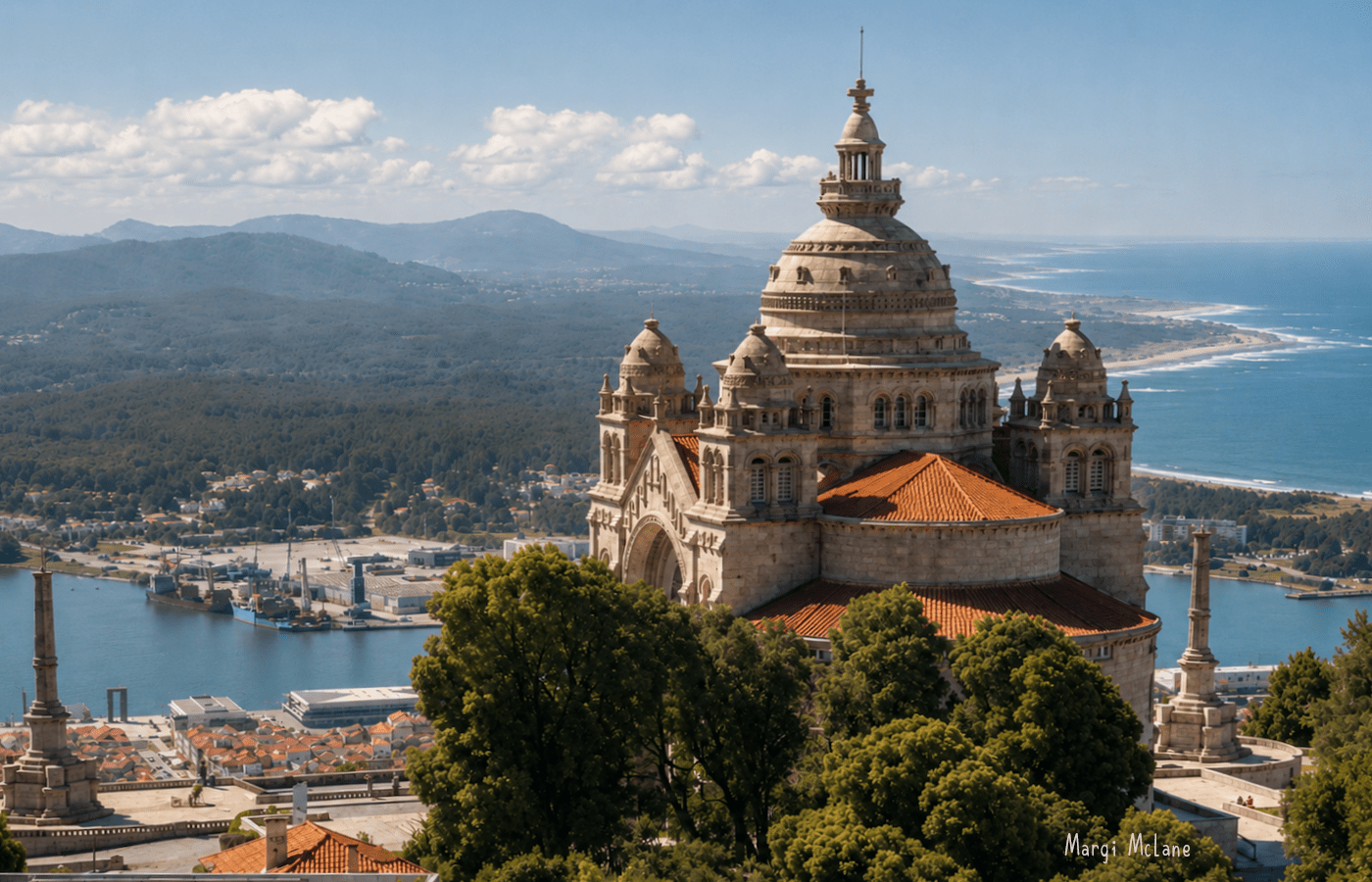
Basílica de Santa Luzia overlooking Viana do Castelo, the Lima Estuary, and Portugal's Costa Verde
The Wild Atlantic Coast of Alto Minho is defined by two unforgettable experiences. The first is the spectacular beaches of the Costa Verde (the “Green Coast”), widely regarded as being among Europe’s most beautiful and best-preserved natural coastlines. Framed by rolling dunes, pine forests, and lush green hills, they offer a wilder, more secluded atmosphere than many of the world’s highly developed beach destinations.
The second is the breathtaking panorama from Monte de Santa Luzia above Viana do Castelo. Overlooking the Lima Estuary, the Atlantic Ocean, and the sweeping Costa Verde, it is associated with a long-standing tourism tradition that places it among the world’s greatest panoramas.
Our journey follows the rugged Costa Verde coastline, exploring elegant maritime towns, legendary headlands, and some of Portugal’s most spectacular Atlantic scenery. Along the way, we discover how the ocean shaped the region’s history, inspired enduring myths, and continues to define life along Portugal’s northern shore.
Praia da Arda (Afife)
Praia de Moledo
Praia da Apúlia
Praia de Ofir
Cabo de Santo André
Castro de São Lourenço
Santuário de Santa Luzia
Viana do Castelo
Caminha
ADVERTISEMENT
Costa Verde
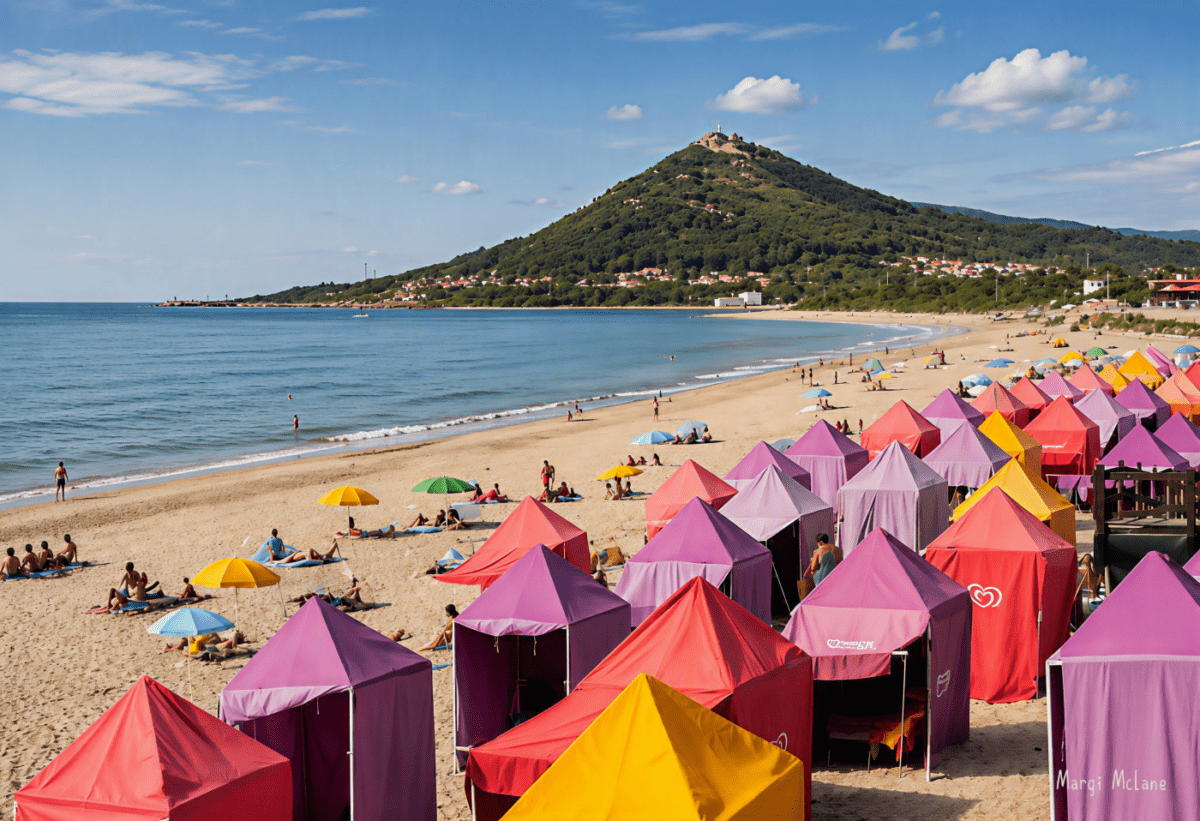
Colorful tents line the sandy shore at Praia de Moledo with Monte de Santa Tecla standing guard at the mouth of the Minho River
Alto Minho Beaches & Cape Santo André
Broad sandy beaches give way to windswept dunes, rugged granite headlands, and rolling pine forests, creating a landscape that feels remarkably untouched. Far removed from the crowded resorts of southern Portugal, this is a coastline defined by powerful surf, endless horizons, and the timeless relationship between land and sea.
Praia da Arda (Afife)↗
Among Alto Minho’s finest beaches, Praia da Arda is a vast expanse of golden sand framed by protected dunes and native vegetation. Constant Atlantic swells make it a favorite among surfers, while its wide shoreline invites long walks beside the ocean. Even in summer, the beach retains a peaceful, unspoiled atmosphere that perfectly captures the wild character of Portugal’s northern coast.
Praia de Moledo↗
Widely regarded as one of northern Portugal’s finest beaches, Praia de Moledo combines a broad sweep of golden sand with one of the Costa Verde’s most dramatic coastal settings. Powerful Atlantic waves attract surfers and windsurfers throughout the year, while protected dunes and an expansive shoreline invite long walks with views across the mouth of the Minho River to the forested slopes of Monte de Santa Tecla. Located just south of the historic town of Caminha, the beach is also known for the historic Fort of Ínsua, which stands on a small rocky island just offshore.
Beyond Alto Minho’s broad beaches and rolling dunes, the coastline is also shaped by stories older than Portugal itself. At Cape Santo André, Celtic tradition regarded this rugged granite headland as the “Port of Souls,” where the dead awaited a ferryman to carry them into the afterlife. While visitors come to Alto Minho for its spectacular beaches, this windswept headland serves as a reminder that the region’s coastline is equally defined by its ancient legends and enduring connection to the Atlantic.
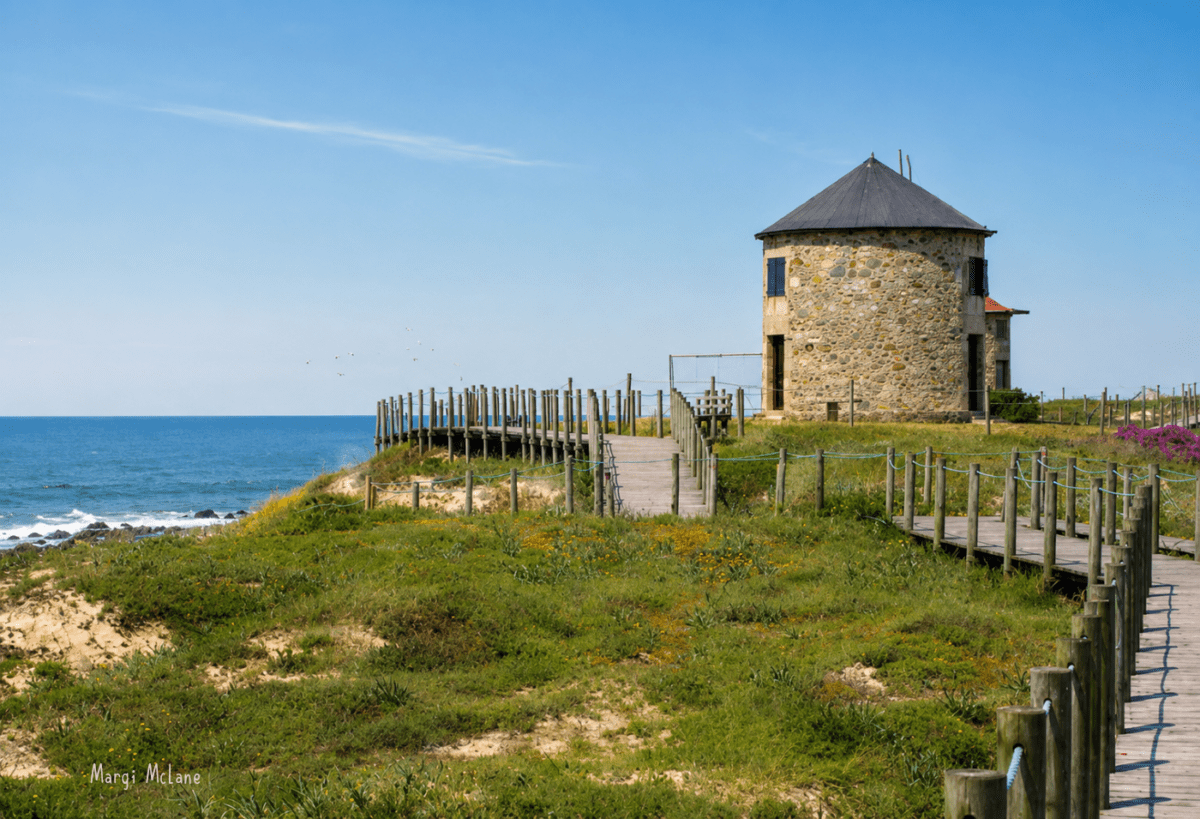
The quaint fishing village of Apúlia, defined by its historic stone windmills overlooking the Atlantic Ocean
Beyond Alto Minho
Stretching south from Alto Minho toward Porto, the Costa Verde (Green Coast) unfolds as a diverse Atlantic landscape of wide sandy shores, rolling dunes, fragrant pine forests, and traditional fishing communities where life continues to revolve around the sea. Whether you’re looking for lively waterfronts, fresh seafood, or peaceful stretches of sand, this remarkable coastline offers a more relaxed and natural alternative to Portugal’s busier southern resorts.
Praia de Apúlia↗
Apúlia is where the Costa Verde’s maritime heritage comes to life. Along its waterfront, colorful fishing boats recall the village’s centuries-old tradition of harvesting sargaço (seaweed), once dried and used to fertilize the surrounding fields. Just beyond the promenade, broad Atlantic beaches stretch south toward protected dunes where Apúlia’s iconic granite windmills still stand as enduring symbols of this unique coastal landscape. Together, the fishing village, windmills, and shoreline create one of northern Portugal’s most distinctive and authentic seaside destinations.
Praia de Ofir↗
One of the Costa Verde’s most iconic beaches, Praia de Ofir is known for its broad sweep of golden sand, protected dunes, and the fragrant Pinhal de Ofir (pine forest) stretching behind the shoreline. Nearby, the riverside town of Esposende offers cafés, restaurants, and marina views, making Ofir an ideal destination for combining a beach day with a leisurely afternoon exploring one of the Costa Verde’s most attractive seaside towns.
ADVERTISEMENT
Viana do Castelo
Summit to Sea
Monte de Santa Luzia ↗
Rising high above Viana do Castelo, Monte de Santa Luzia offers one of Portugal’s finest panoramic viewpoints. From the summit, enjoy sweeping views across the Lima Estuary, the Atlantic Ocean, and the city below.
Perched atop the hill, the Santuário de Santa Luzia is Viana do Castelo’s defining landmark and one of Portugal’s most recognizable basilicas. Inspired by Paris’s Sacré-Cœur Basilica, the basilica’s striking Neo-Byzantine architecture crowns the summit, overlooking the Atlantic coastline and surrounding landscape.
The sanctuary stands on the site of a small medieval chapel dedicated to Saint Lucy (Santa Luzia), the patron saint of eyesight, where a reported miraculous healing inspired a growing pilgrimage tradition. Constructed from local granite, the basilica features the largest stained-glass rose windows on the Iberian Peninsula, richly decorated interiors, vibrant frescoes, and ornate marble altars.
Climb the narrow spiral staircase to the top of the central dome for breathtaking 360-degree views stretching across the Atlantic coast, the Lima Estuary, and the mountains of Alto Minho.
Before leaving the summit, take time to explore the terraces surrounding the sanctuary. Each viewpoint reveals a different perspective over Viana do Castelo, from its historic harbor and the Lima Estuary to the sweeping Atlantic coastline and surrounding hills. As you circle the basilica, the ever-changing views create some of the city’s finest photographic opportunities, offering a remarkable appreciation of how the river, sea, and mountains converge along Portugal’s Green Coast.
Photography Tip: Walk the full perimeter of the terraces rather than stopping at the main viewpoint. Some of the most rewarding compositions of the city and coastline are found just beyond the busiest overlooks.
Below the sanctuary, beside the upper funicular station, lies the entrance to the Escadório da Confraria de Santa Luzia. This monumental granite staircase descends gracefully into Viana do Castelo through landscaped gardens and elegant terraces, revealing ever-changing views of the city, the Lima Estuary, and the Atlantic before leading into the historic center.
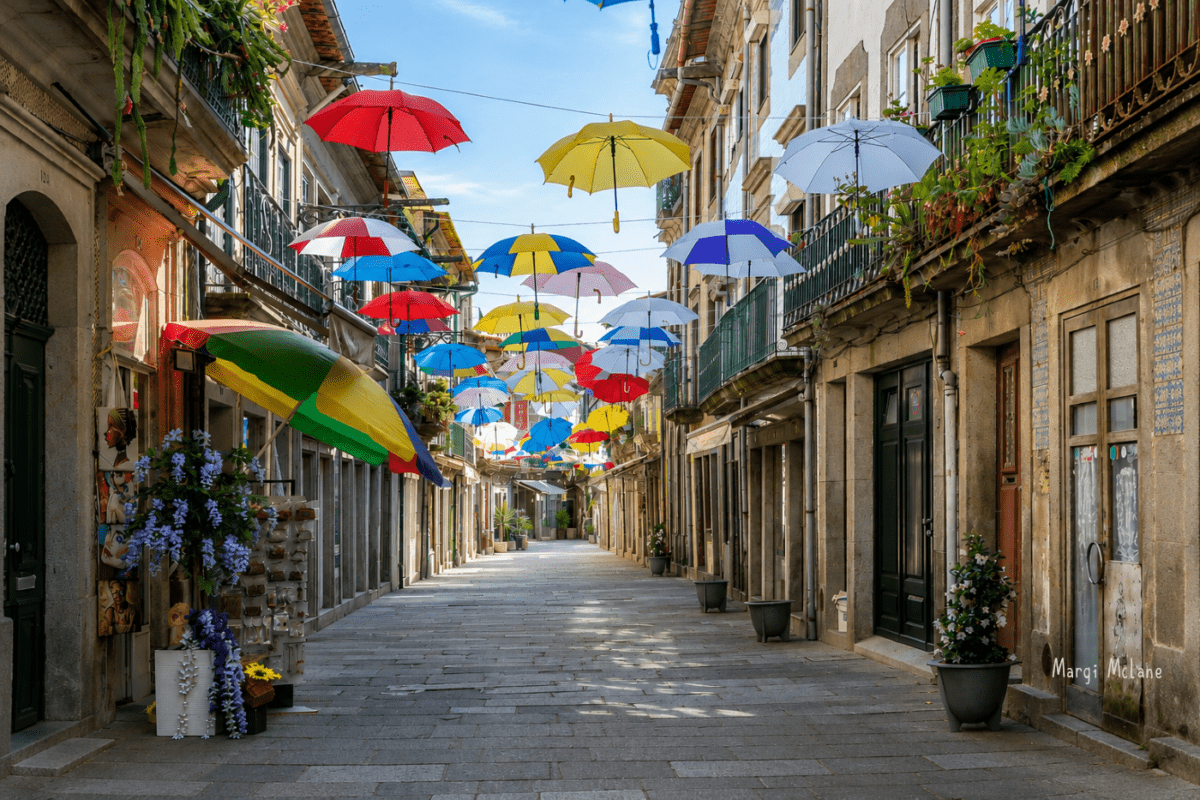
Colorful umbrellas brighten one of the narrow pedestrian streets in Viana do Castelo's historic center
Elegant Old Town
Praça da República↗
The historic heart of Viana do Castelo, Praça da República has served as the city’s civic center for centuries. Surrounded by elegant Renaissance and Manueline buildings, the square is home to the ornate Chafariz fountain and the former Town Hall, reflecting the prosperity that maritime trade brought to the city. Today, its cafés and open spaces make it the natural starting point for exploring the historic center.
Sé Catedral de Santa Maria Maior↗
Built in the 15th century, the Sé Catedral de Santa Maria Maior is one of Viana do Castelo’s oldest landmarks. Its restrained Gothic exterior gives way to an interior shaped by centuries of additions, reflecting the city’s long religious history. Standing just a short walk from Praça da República, the cathedral anchors the historic center and remains an important place of worship today.
Praça da Erva↗
Once Viana do Castelo’s bustling marketplace, Praça da Erva remains one of the liveliest corners of the old town. Today, its arcaded buildings, cafés, and restaurants invite visitors to slow their pace, while the surrounding streets are home to traditional gold filigree workshops and boutiques. It is an ideal place to pause before continuing toward the waterfront.
Romaria de Nossa Senhora d’Agonia
Throughout the historic center, shop windows display the delicate Coração de Viana, the gold filigree hearts that have become the enduring symbol of the region. Their significance is most vividly expressed during the Romaria de Nossa Senhora d’Agonia each August. Known as the “Queen of Romarias,” the festival transforms the streets into a sea of red and gold as hundreds of women parade in traditional Minho dress, their chests draped with generations of heirloom jewelry. These intricate ornaments, light as lace yet forged in precious metal, remain shimmering expressions of local identity, celebrating a heritage that has endured for centuries along Portugal’s Atlantic coast.
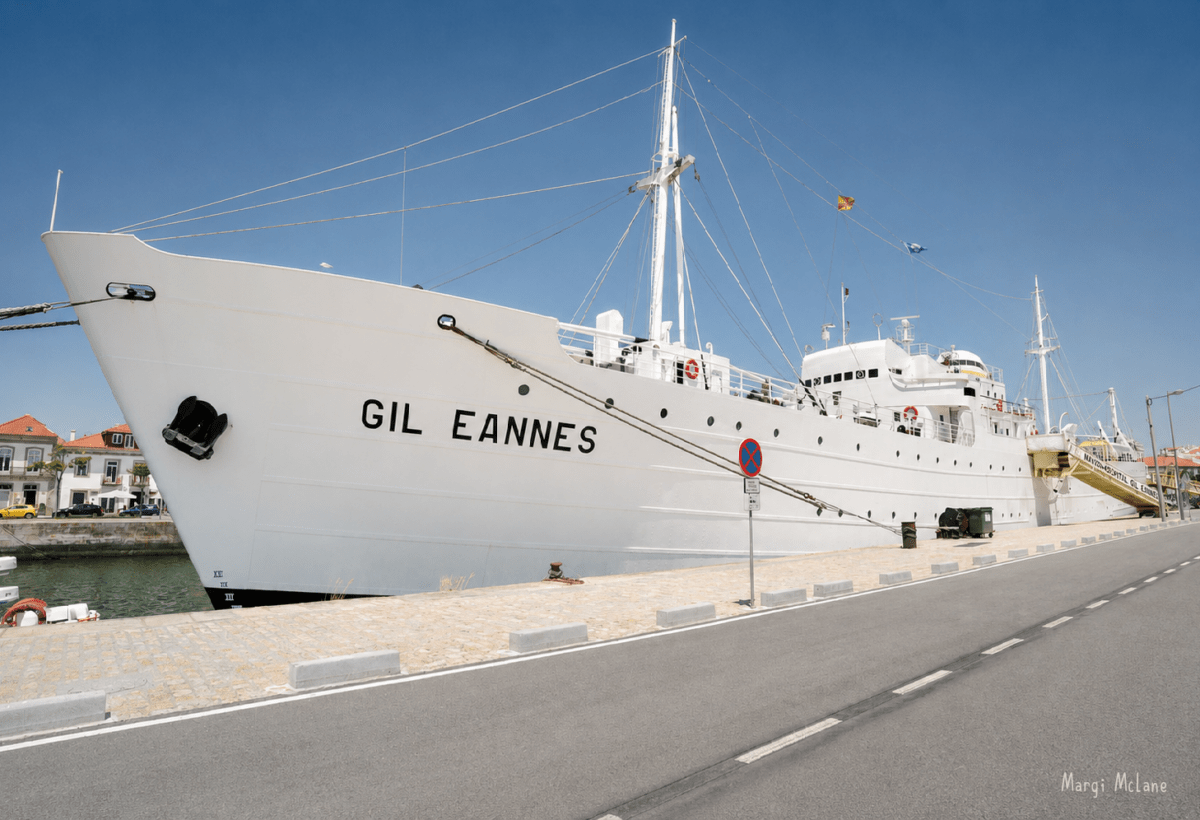
The Gil Eannes, a former Portuguese hospital ship, is now a floating museum in Viana do Castel
Harbor & Waterfront
Viana do Castelo has always looked to the sea. From the working fishing harbor to the modern marina, the waterfront reflects centuries of maritime tradition that shaped the city’s prosperity and identity. Today, the riverside promenade is a pleasant place to stroll, with cafés, gardens, and sweeping views across the Lima estuary.
Gil Eannes ↗
Moored along the waterfront, the Gil Eannes served as the hospital ship for Portugal’s famed White Fleet, providing medical care to cod fishermen working the harsh waters of the North Atlantic. Today, the meticulously restored vessel offers a fascinating glimpse into the lives of the fishermen and crew who spent months at sea, preserving an important chapter of Portugal’s maritime heritage.
After visiting the Gil Eannes, continue along the waterfront promenade, where cafés, gardens, and views across the Lima estuary provide a relaxing end to the day’s walk.
ADVERTISEMENT
Caminha
At Portugal’s northern frontier, where the Minho River meets the Atlantic Ocean, Caminha is one of Alto Minho’s most charming and atmospheric towns. For centuries, its strategic location made it an important trading port and gateway between Portugal and Galicia. Today, its beautifully preserved medieval center, lively cafés, riverside setting, and relaxed pace make it the perfect finale to a journey through Portugal’s Green Coast.
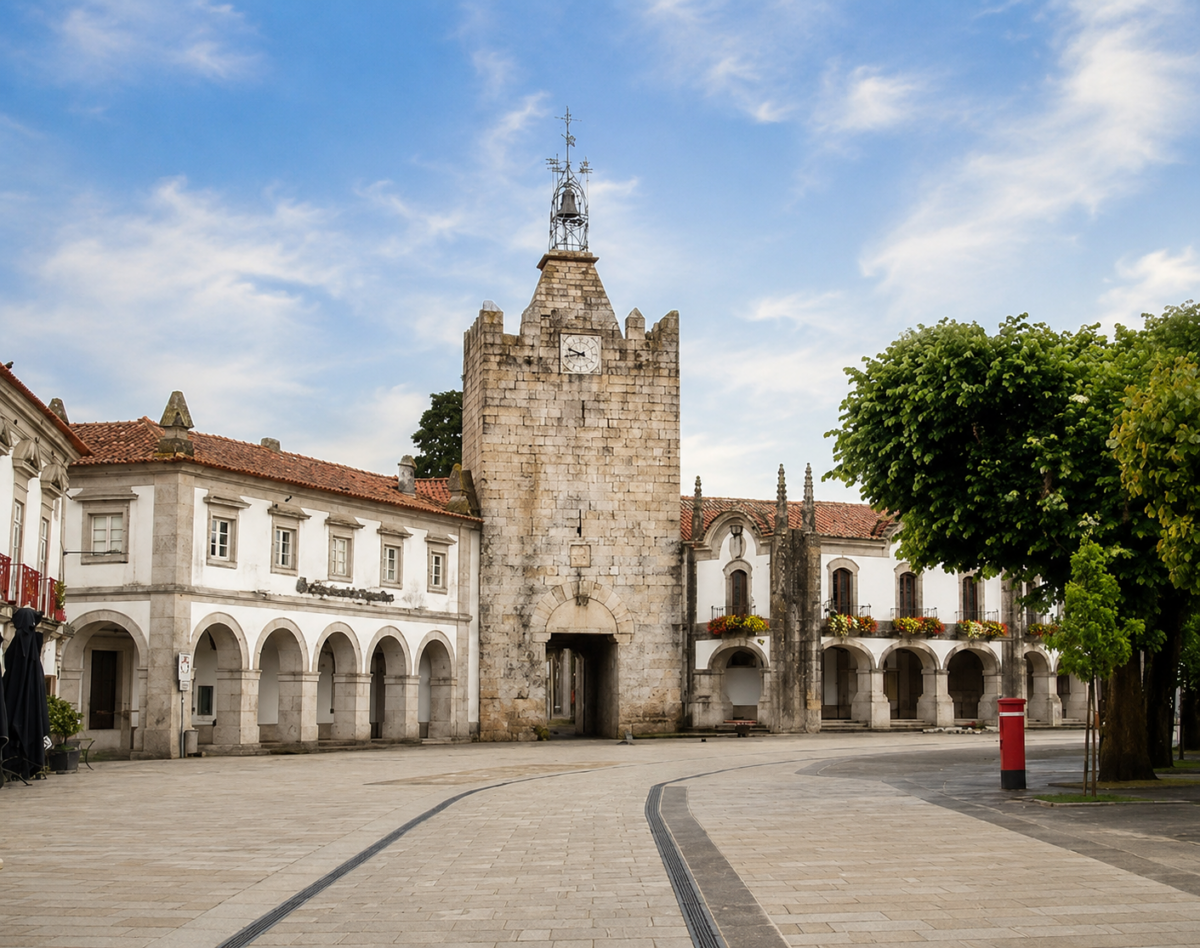
Caminha's medieval Clock Tower, once the principal gateway through the town wall
Historic Town Centre
Praça Conselheiro Silva Torres↗
The heart of Caminha, Praça Conselheiro Silva Torres is a welcoming medieval square surrounded by cafés, historic buildings, and shaded terraces. At its center stands a beautifully preserved Renaissance fountain, while the Igreja Matriz de Caminha dominates one side of the square. One of Portugal’s finest examples of late Gothic architecture, the church is distinguished by its richly carved Manueline portal, elegant rose window, and rare Mudéjar wooden ceiling. Nearby, the medieval Torre do Relógio, the last surviving gate of Caminha’s ancient walls, stands as a reminder of the town’s centuries guarding Portugal’s northern frontier. Together, these landmarks create one of northern Portugal’s most attractive medieval squares and the perfect place to pause over a coffee while soaking up the town’s relaxed atmosphere.
Beyond the square, the waterfront opens onto the broad Minho estuary, where Portugal and Spain are separated only by the river. Looking across the water, Monte Santa Tecla rises above the Galician coastline, while ferries continue a centuries-old connection between the two countries. The meeting of river, sea, and mountains creates a beautiful backdrop that has shaped Caminha’s identity for centuries.
Summer Festivals
While Caminha is a peaceful medieval town for much of the year, summer brings a vibrant new energy. International music, craft beer, and cultural festivals attract visitors from across Portugal and beyond, making this small border town one of Alto Minho’s liveliest summer destinations.
The largest event is the Vilar de Mouros Festival, held each August just ten minutes from Caminha. Portugal’s oldest music festival, first established in 1965, has evolved from a traditional folk gathering into one of the country’s premier outdoor music events, earning the nickname “Portuguese Woodstock.” International artists including Elton John, Bob Dylan, Neil Young, The Cure, Iron Maiden, and Peter Gabriel have all performed here.
In July, Caminha’s medieval center hosts Artbeerfest, one of Europe’s leading international craft beer festivals. For four days, breweries from Portugal and around the world transform the historic streets and squares into a lively celebration of craft beer, live music, street food, art, and local culture.
From the panoramic heights of Monte de Santa Luzia to the broad beaches of the Costa Verde and the medieval streets of Caminha, Alto Minho offers one of Portugal’s most rewarding coastal journeys. Blending dramatic Atlantic scenery with centuries of maritime history and enduring local traditions, the Wild Atlantic Coast is a destination where nature and culture remain inseparable.