Ancient Corridors of Alto Minho
If the mountains of Gerês could speak, they would tell stories spanning thousands of years. Perhaps their most remarkable story is not how much humanity has changed, but how much has remained the same.
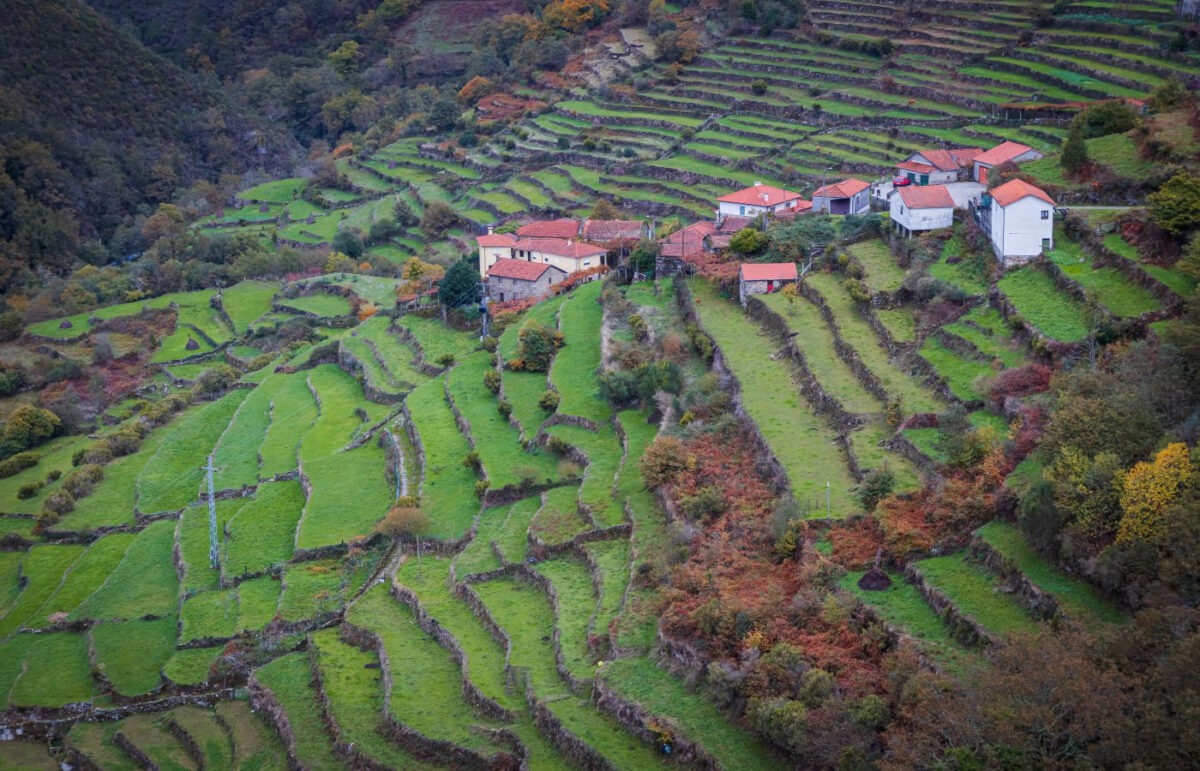
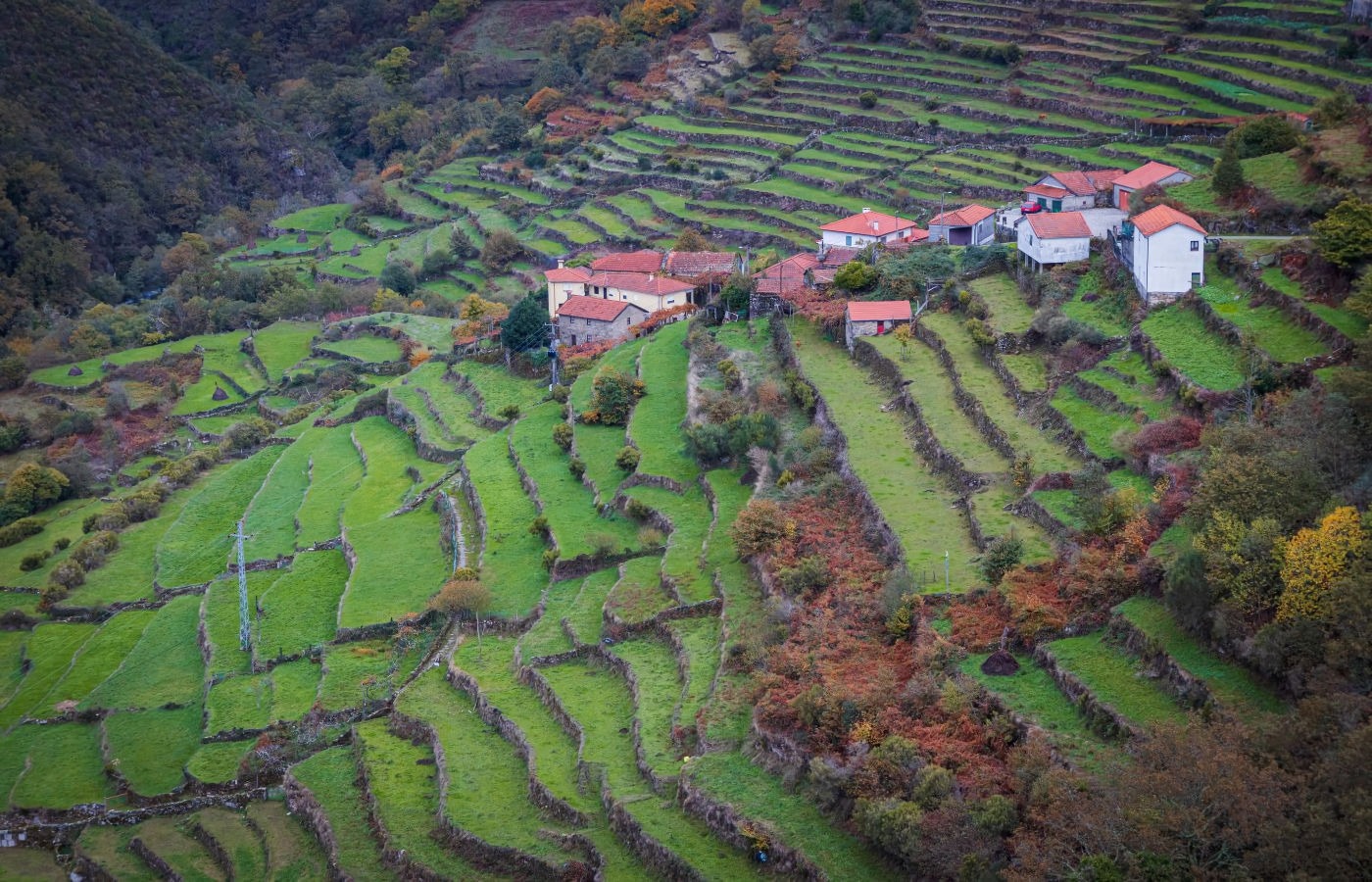
Terraced slopes of the Vez Valley in Alto Minho, shaped by centuries of adaptation
Beyond the rise and fall of empires, the history of Alto Minho is written in its geography. This journey follows the ancient corridors between its great rivers, revealing how the landscape of the Alto Minho has long dictated the patterns of human life. With Arcos de Valdevez as our home base, this itinerary highlights the essential places that best capture the spirit of the region. The region holds countless hidden corners, and you may find yourself wanting to stay longer to explore the nuances of its terrain or discover more of its wineries.
São Bento da Porta Aberta
Cascata do Arado
Pedra Bela's Viewpoint
Lindoso
Soajo
Geira + Oak Forest
Portela del Hombre
Arcos de Valdevez
Sistelo
Peneda Sanctuary
Castro Laboreiro
Soalheiro Winery
Monção
Melgaço
ADVERTISEMENT
Ancient Corridors and Frontier Life
Peneda-Gerês offers endless opportunities for hiking, waterfalls, and mountain adventures, best experienced as a dedicated journey in its own right.
Our journey traces the ancient path between two great rivers, following a corridor shaped by centuries of movement, trade, and survival. Continuing beyond the park into frontier villages like Lindoso and Soajo, where castles, granaries, and communal traditions reveal how people adapted to life on this rugged borderland. By focusing on this path, we begin to see how the logic of the past still dictates the rhythm and character of life here today.
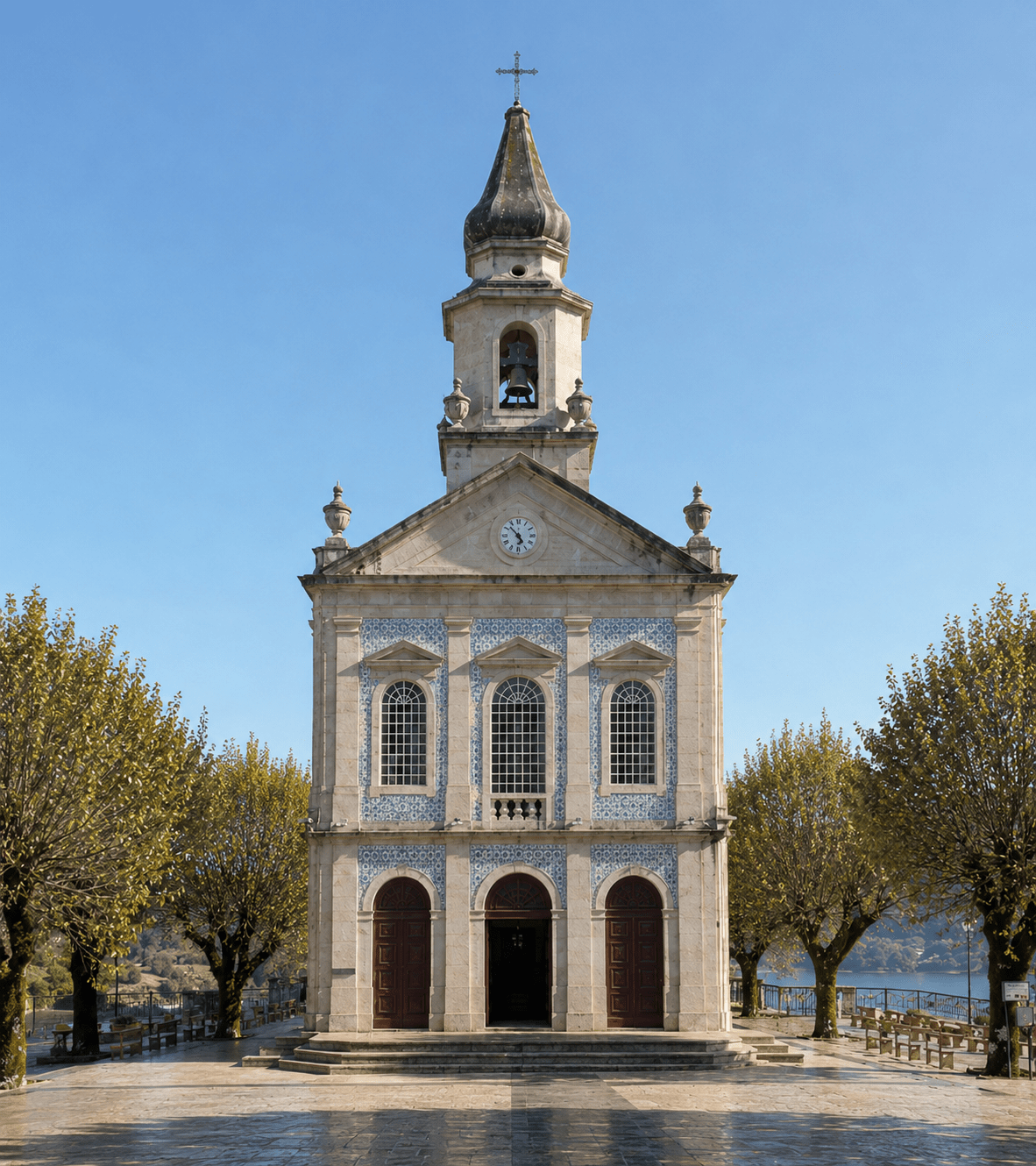
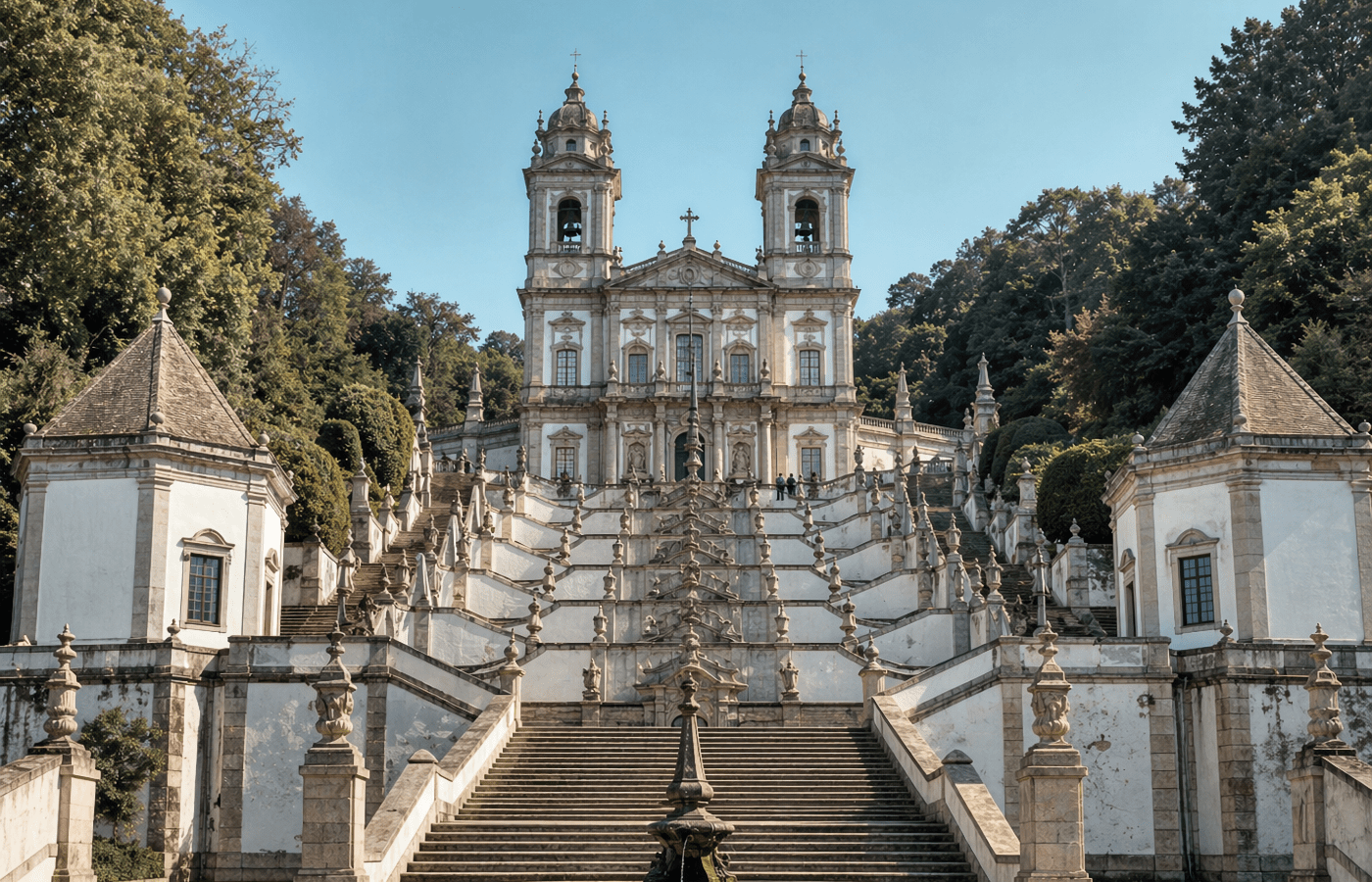
Santuário de São Bento da Porta Aberta perched above the Caniçada Reservoir
São Bento da Porta Aberta
This 17th century sanctuary reveals how life in the mountains shaped not only survival, but also faith. What began as a refuge for isolated communities grew into one of Portugal’s most important pilgrimage destinations.
São Bento was born from necessity. In 1614, mountain communities, often cut off by harsh weather, requested a local chapel. The resulting hermitage, dedicated to Saint Benedict, became known as the Open Door because it offered refuge to travelers day and night. Over the centuries, its reputation for miracles grew, transforming a humble shelter into a monumental sanctuary. Today, visitors still come seeking the same peace that once drew the lonely traveler to its doors.
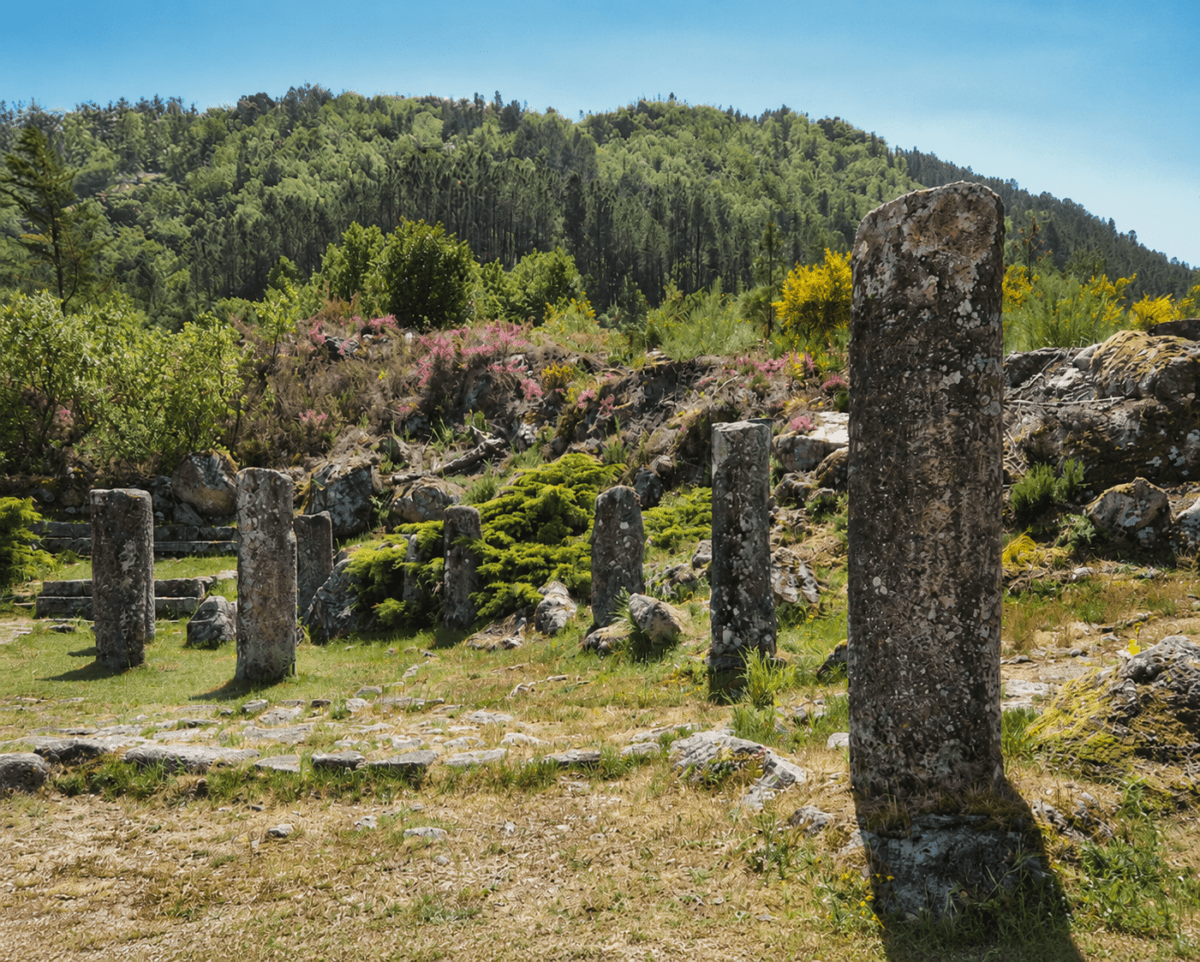
Ancient Roman milestones along the Via Nova
Cávado–Lima River Corridor
The historic corridor between the Cávado and Lima river valleys offers one of Portugal’s most scenic drives.
As the N308-1 winds beneath the towering oak trees of Mata da Albergaria toward Portela do Homem, it remains a rare window into the past, where ancestral oak forests shade the same mountain corridor once crossed by Roman soldiers, merchants, and weary pilgrims.
Close to the Spanish border, Cascata da Portela do Homem↗ reveals crystal-clear pools and small cascades carved into granite.
Further along the route, 2,000-year-old Roman milestones still stand at Miliário Romano da Ponte Nova↗, one of the most accessible places to see the Via Nova, or Geira. Built in the first century AD, this remarkable Roman road linked Braga to Astorga in Spain.
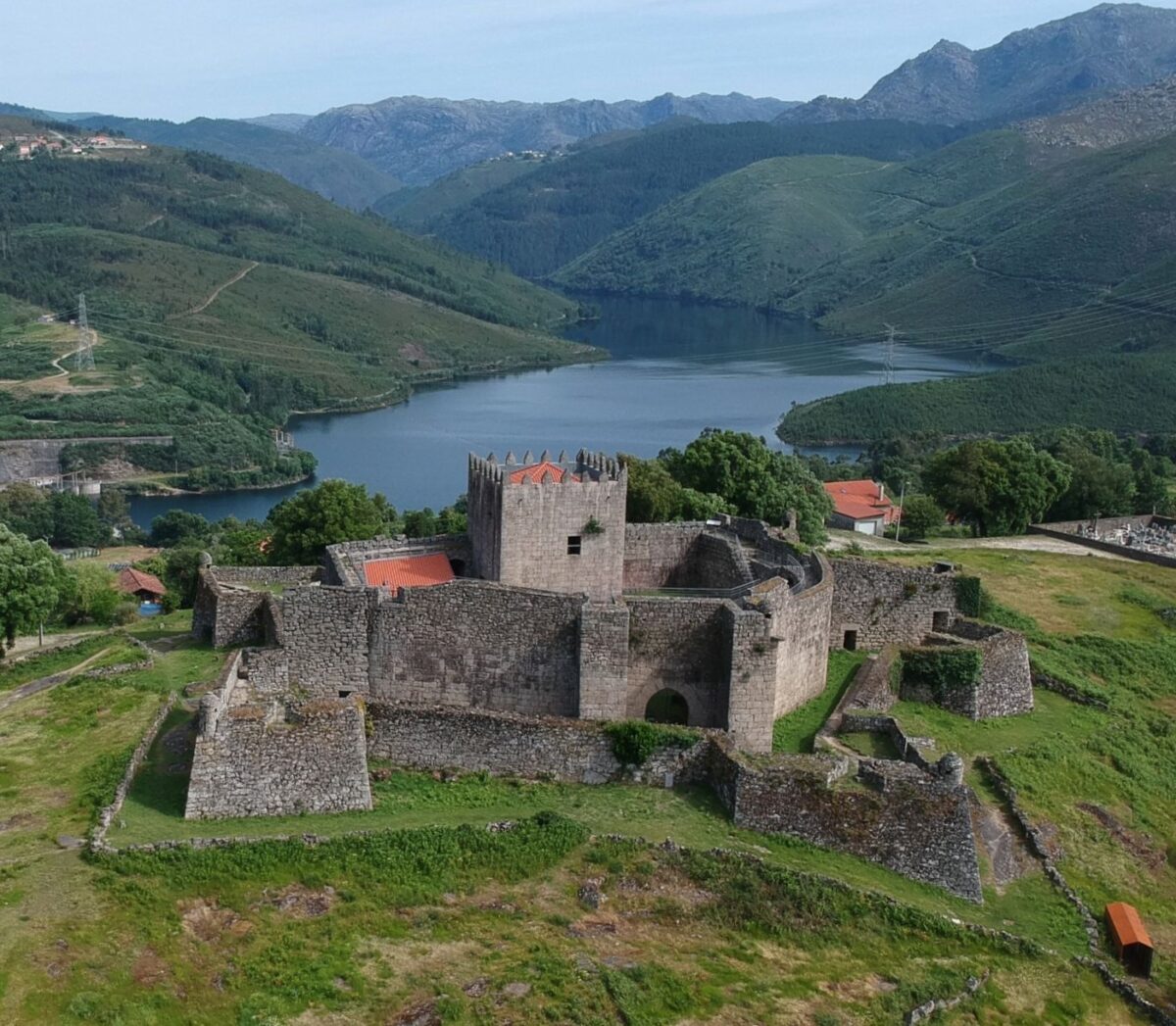
Castelo de Lindoso overlooking the Lima River Valley, a frontier fortress that guarded Portugal’s northern border with Spain — Photo by Joseolgon via Wikimedia Commons (CC BY-SA 4.0)
Lindoso Castle + Frontier Village
Lindoso represents the hard shell of the Portuguese frontier, built to protect one of the kingdom’s most vulnerable borders.
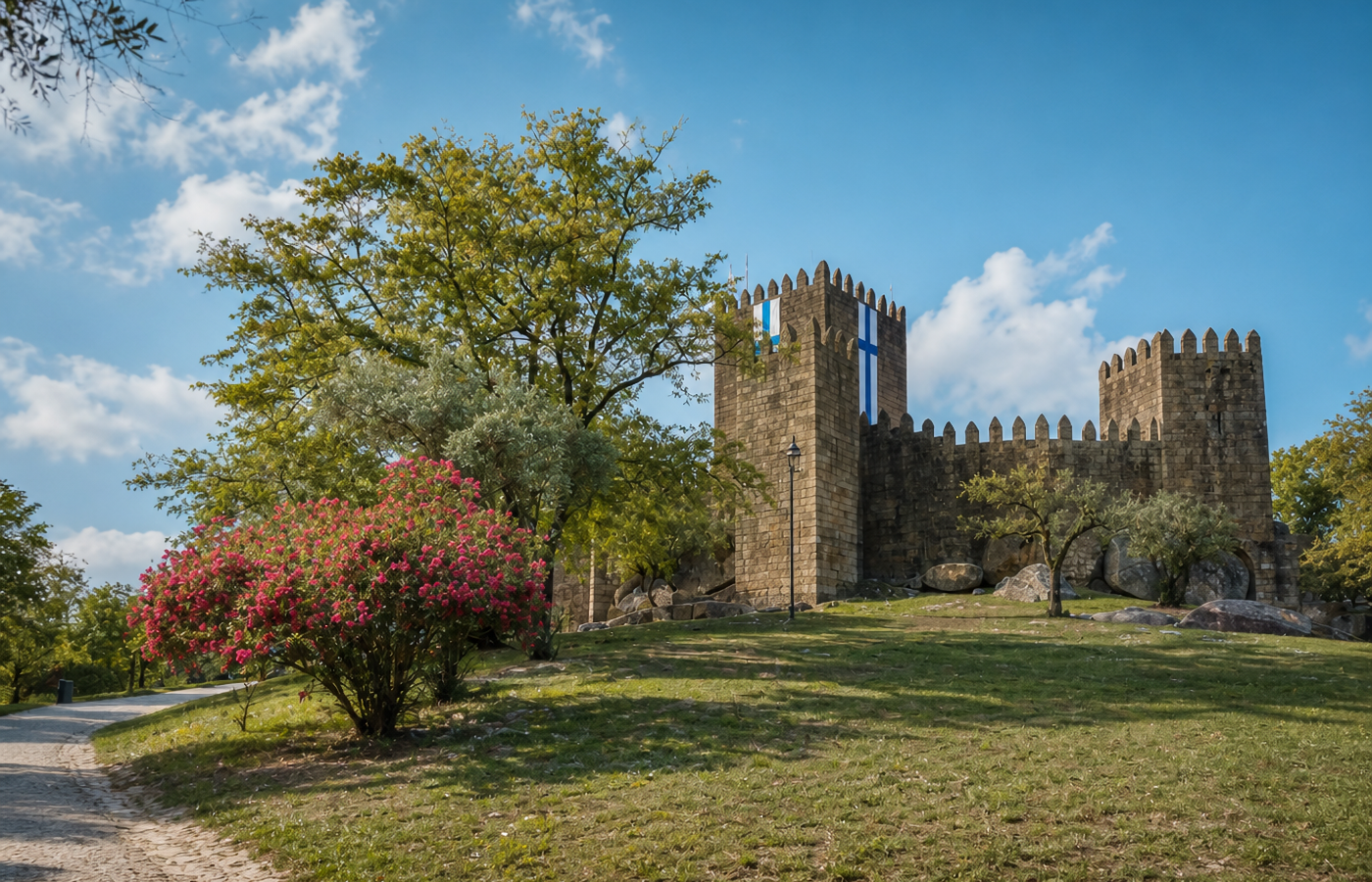
Perched above the village, Lindoso Castle stands as a testament to the defensive strategy of Portugal’s early kings. Dating largely to the late 13th century, it served as a vital stronghold against incursions from the north. It remains a powerful reminder of an era when guarding the frontier was essential to the survival of the realm.
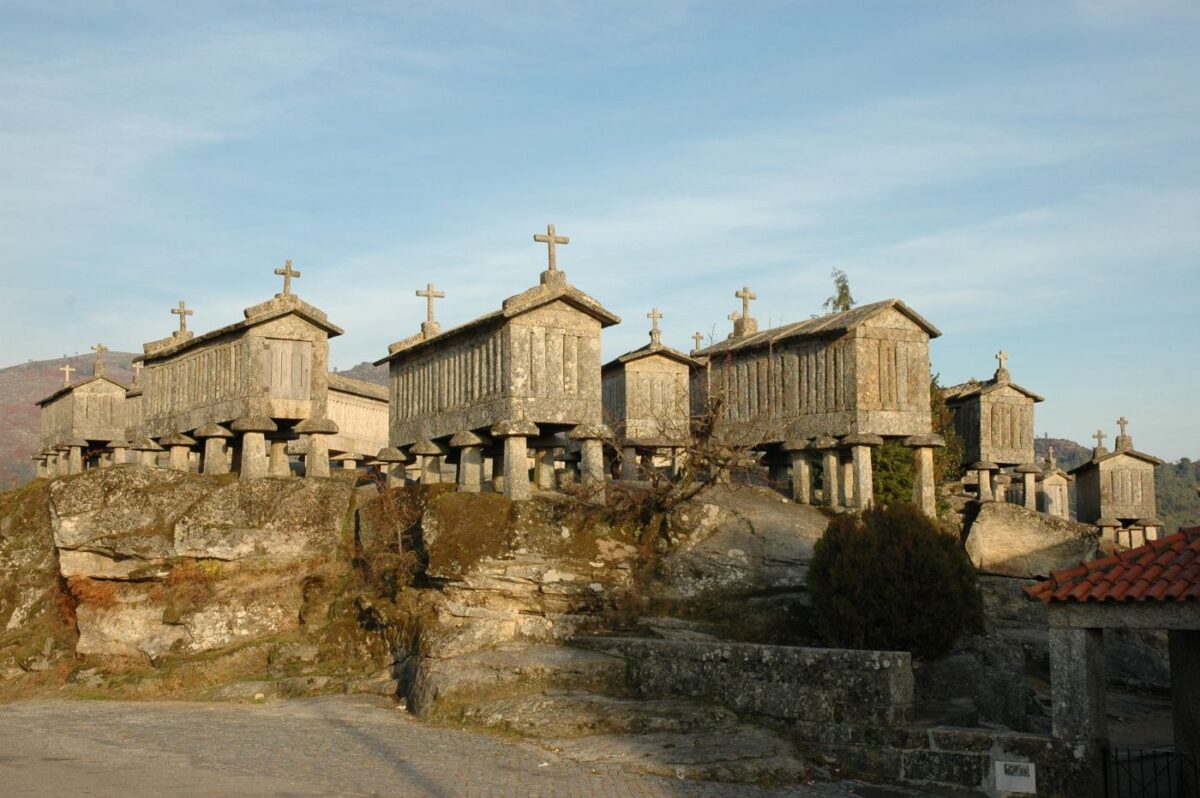
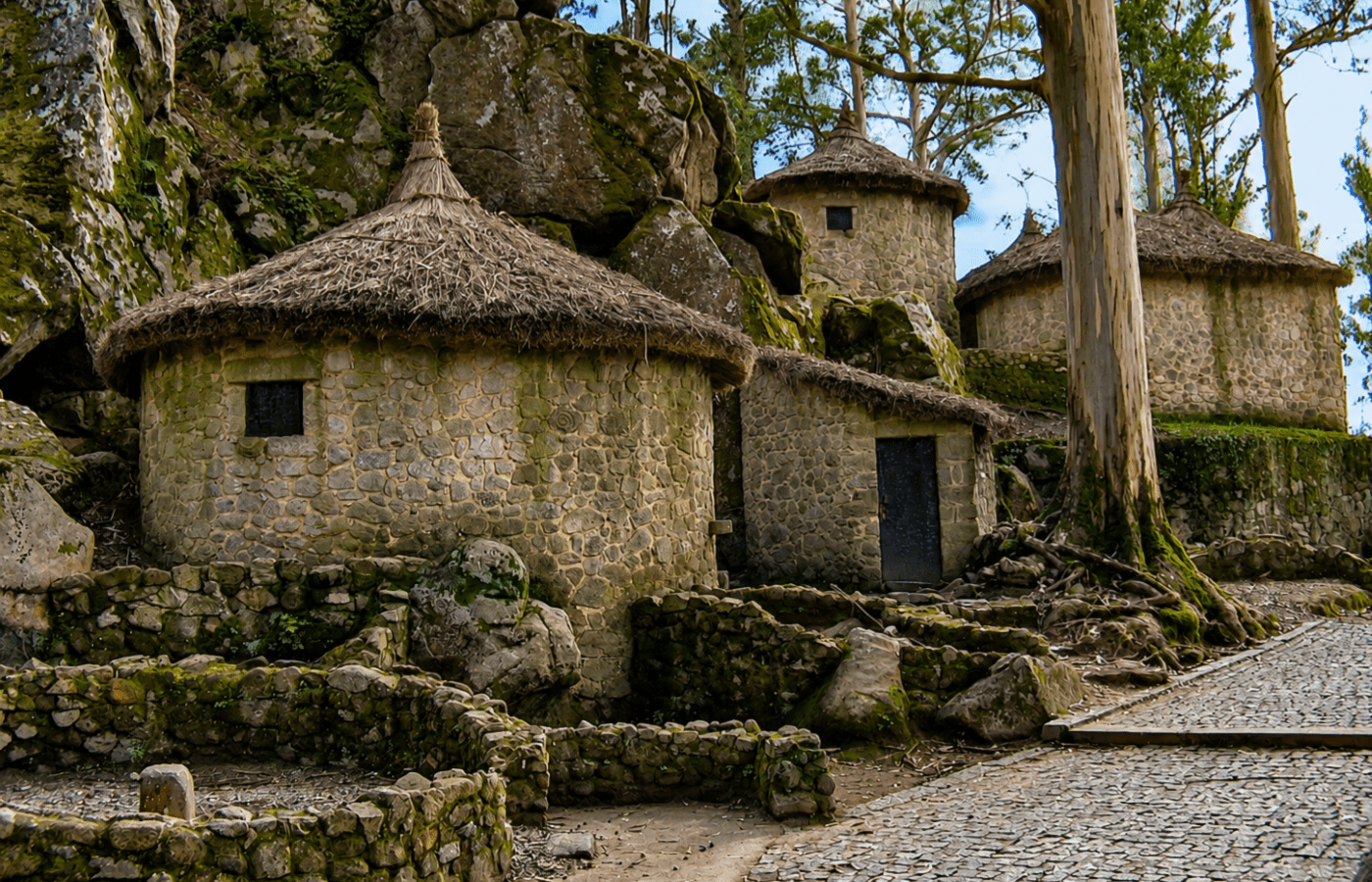
Soajo’s iconic granite espigueiros protected crops from moisture and rodents — Photo by Josep Renalias via Wikimedia Commons (CC BY-SA 3.0)
Soajo
Soajo offers the final piece of the puzzle. A testament to the resilience of those who, unlike the soldiers in the castle, stayed to turn the raw mountain terrain into a home.
Historically, Soajo’s people were monteiros—skilled huntsmen who traded their knowledge of the land for royal privileges. Their resilience is immortalized in the espigueiros, communal granaries built to protect the harvest. As you walk the narrow lanes, you see the village pillory and the stone crosses atop the granaries—symbols of a community that flourished in the shadow of the border. While Lindoso guarded the kingdom, the people of Soajo sustained it.
Our journey through Peneda-Gerês reveals how deeply this rugged landscape shaped human life. It influenced where people sought refuge, how they traveled, where they fought, and how they survived. Beyond the rise and fall of empires, the true heart of this frontier lies in the people who adapted to its rhythms and turned a harsh mountain landscape into home.
If You Have More Time in Gerês
Pedra Bela Viewpoint: 800 meters above the Caniçada Reservoir, Pedra Bela↗ reveals the scale of Gerês and the strategic importance of the landscape to Portugal’s young kingdom.
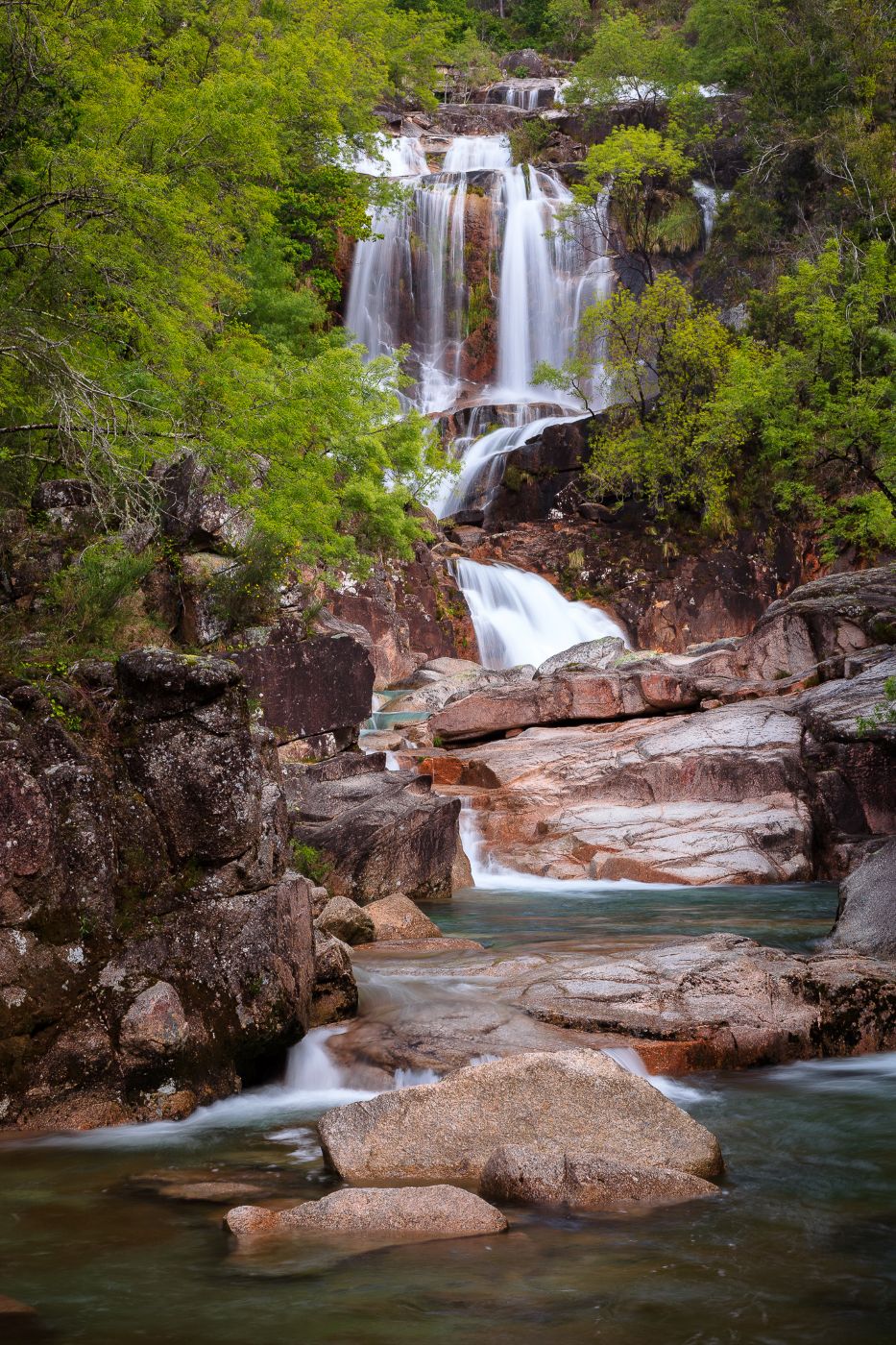
Gerês Waterfalls: Main falls are Cascata do Arado↗ and Tahiti Falls↗. Pools fed by the Cávado River system sustained shepherds for centuries.
Tahiti Falls, with Cascata do Arado nearby — Photo by Luis Afonso via Wikimedia Commons (CC BY-SA 4.0).
ADVERTISEMENT
Seasonal Pastures and Alvarinho Vineyards
The interior of Soajo↗, Lindoso↗, and Castro Laboreiro↗ demanded resilience. Harsh winters, thin soils, and difficult terrain isolated these settlements. Communities relied heavily on one another. Survival depended on livestock, shared grain storage, and tightly organized village systems. Fortresses guarded border routes, while every available resource was carefully managed.
The landscape still reflects this historical logic. Although many residents have moved to larger cities and traditional farming has declined, the physical evidence remains. Castles, communal granaries, ancient terraces, and vineyards still define the region. They show that while economies and ways of life change, the imprint of geography endures.
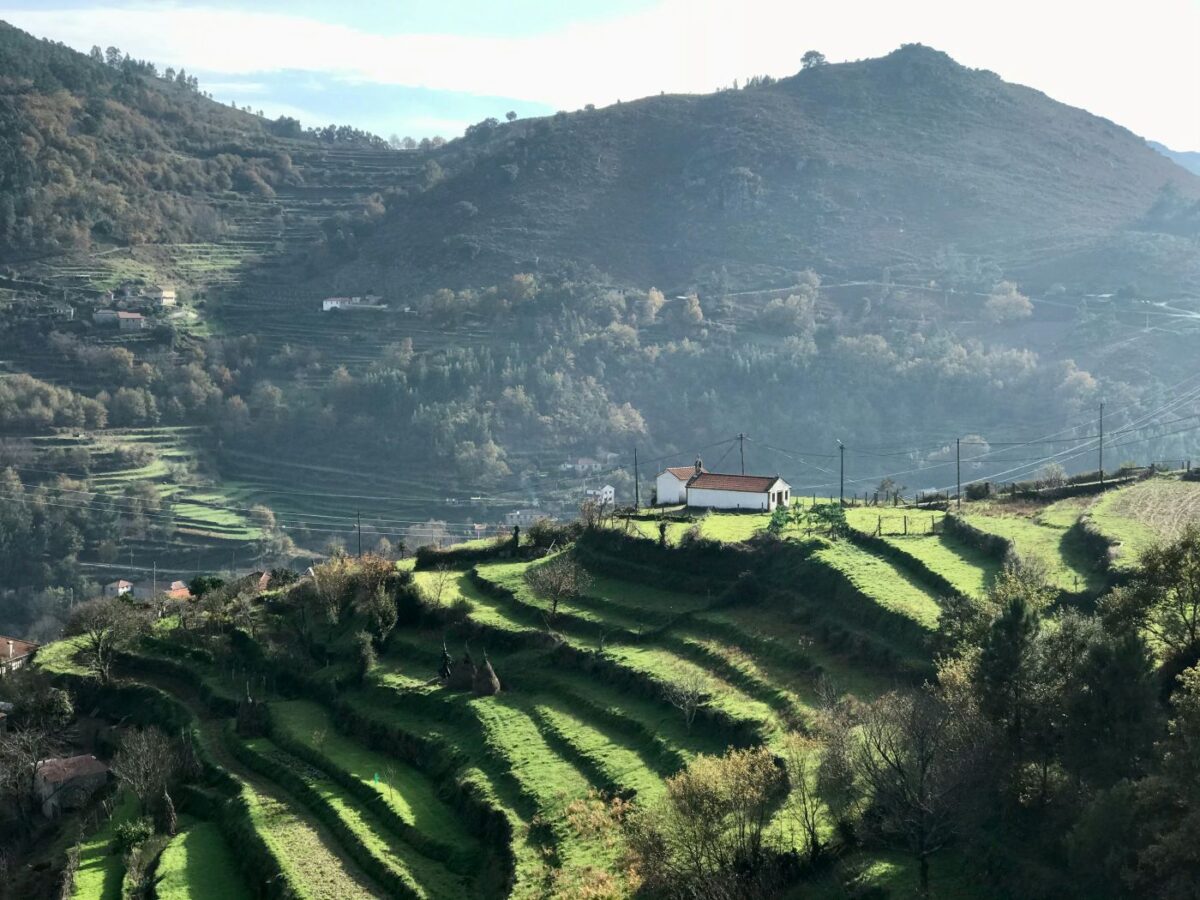
Sistelo’s iconic terraces reveal how generations of mountain families transformed steep slopes into fertile farmland — Photo by Artur Azevedo via Unsplash
Sistelo
Leaving Arcos de Valdevez, the scenic drive toward Sistelo along the N202 largely follows the Vez River, passing through quiet rural landscapes, small villages, and pockets of vineyards. Watch for roadside pullouts along the way, which provide access to the Vez River Trail (Ecovia do Vez), a popular walking and cycling route that follows the river from Arcos de Valdevez north toward Sistelo.
Known as the “Little Portuguese Tibet,” Sistelo is one of the most striking cultural landscapes in northern Portugal. Parking is limited. A small parking lot is located in the upper part of the village↗. After parking, walk the perimeter of the village to take in the full expanse of the terraced farmland. Continue through the lower village toward Igreja Paroquial de Sistelo↗. Take a moment to consider what daily life here was like over the centuries and how the settlement fits into the surrounding landscape.
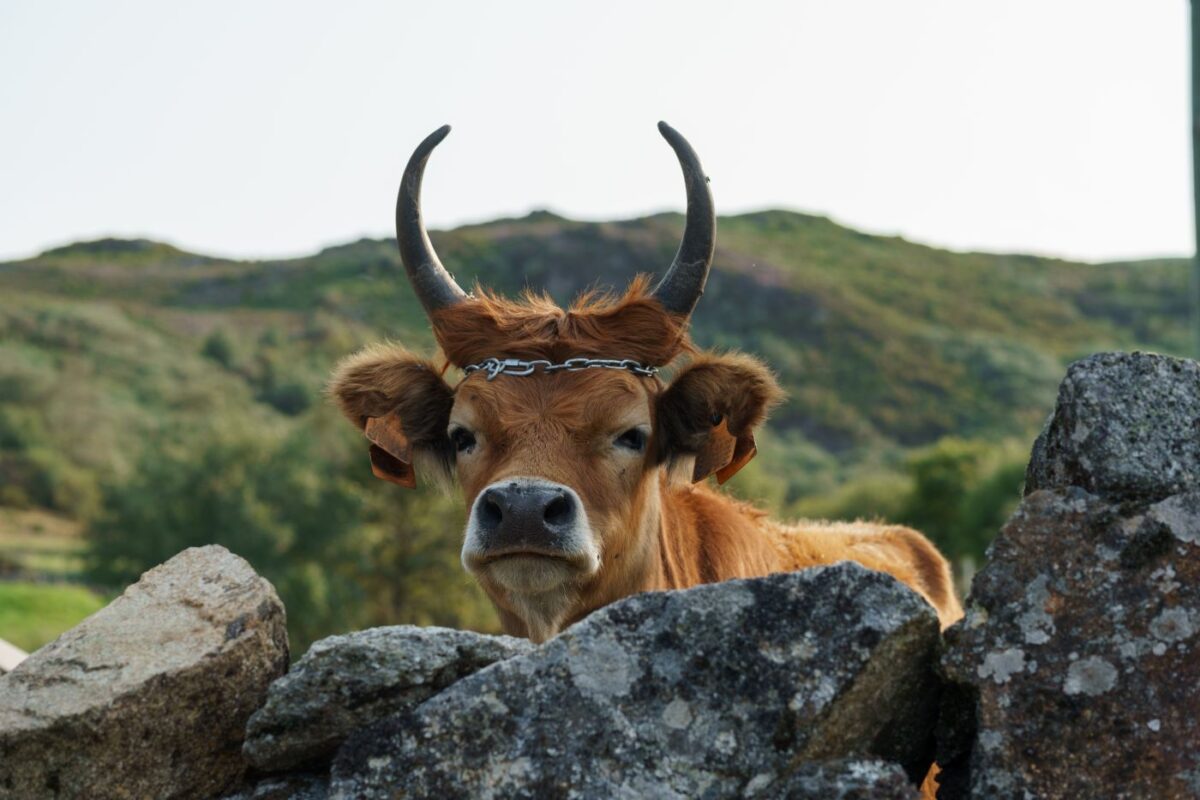
Curious cattle are a common sight along the winding, narrow road to Castro Laboreiro
Mouro Valley to Castro Laboreiro
Leaving Sistelo, the route toward Castro Laboreiro↗ passes through Riba de Mouro↗, Gave↗, and Pomares↗. Villages appear regularly along the road. Rather than barren frontier highlands, much of the landscape is green and lush, with rolling hills, forests, streams, and enclosed pasture.
Wind turbines along the ridgelines reveal how exposed the higher elevations are. While the valleys feel sheltered and productive, the ridges above are colder, windier, and far less forgiving. As the road climbs, settlements thin out and the land opens into broader grazing country, making it easy to understand why herders brought cattle and flocks here each summer.
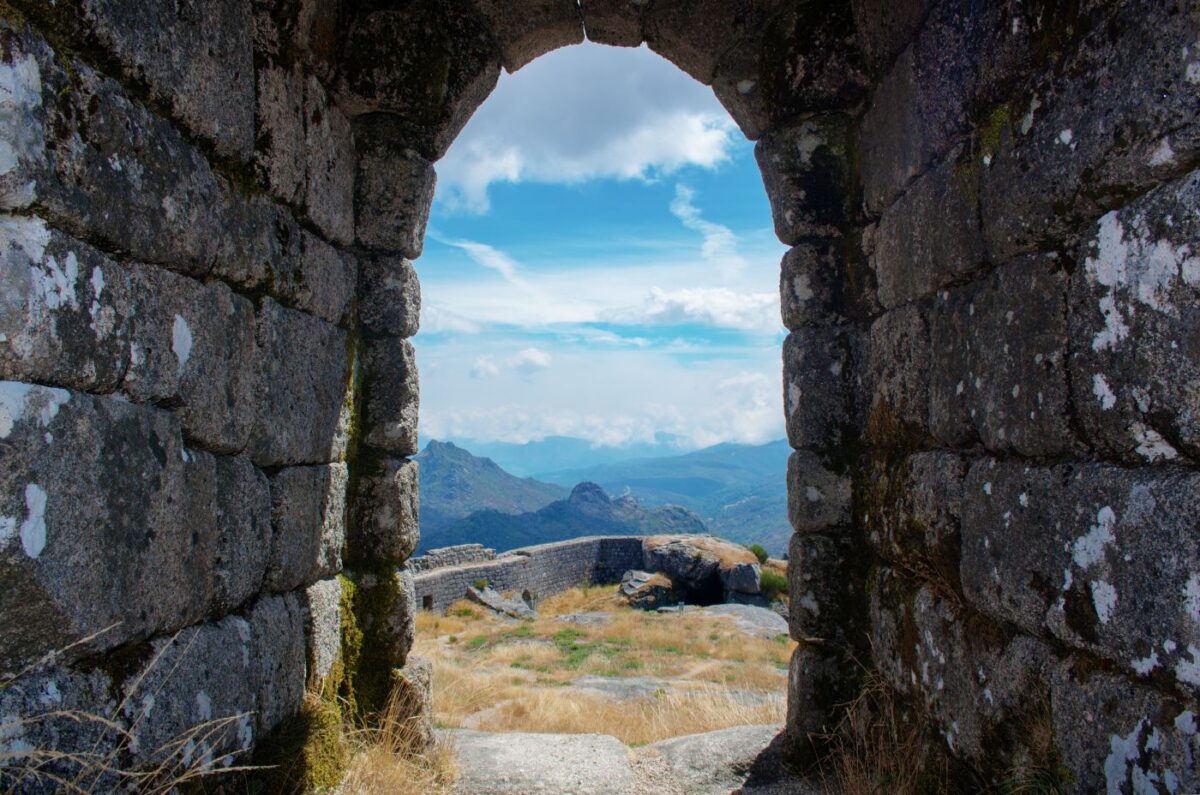
Views from Castro Laboreiro Castle reveal its commanding position over Portugal’s rugged northern frontier — Photo by Harpagornis via Wikimedia Commons (CC BY-SA 4.0)
Castelo de Castro Laboreiro
Castelo de Castro Laboreiro is a fortress fused with the mountain itself. Perched atop a massive granite outcrop at 1,033 meters, it commands sweeping views across the surrounding valleys and toward Galicia. Sheer rock faces, narrow approach paths, and steep drops made the site naturally formidable. For the people living in the village below, the greater challenge was often not invasion, but enduring winter, wind, altitude, and isolation.
Afonso Henriques conquered Castro Laboreiro and reinforced its defenses. From this height, defenders could monitor movement through the mountain passes, watch routes into Galicia, and detect raiding parties long before they arrived.
Under Denis of Portugal, the northern frontier became more firmly established. When the Knights Templar were dissolved across Europe, Denis secured papal approval to preserve their Portuguese lands, fortresses, and military resources under the Order of Christ. Castro Laboreiro became a Templar stronghold, reinforcing Portugal’s military presence along the frontier.
In the 1600s, a lightning strike hit the main keep, igniting stored gunpowder and triggering a massive explosion that destroyed much of the castle’s interior. Little remains beyond ruined walls, broken stone, and far-reaching views that make it easy to understand why this granite summit was chosen to guard one of Portugal’s most rugged frontiers.
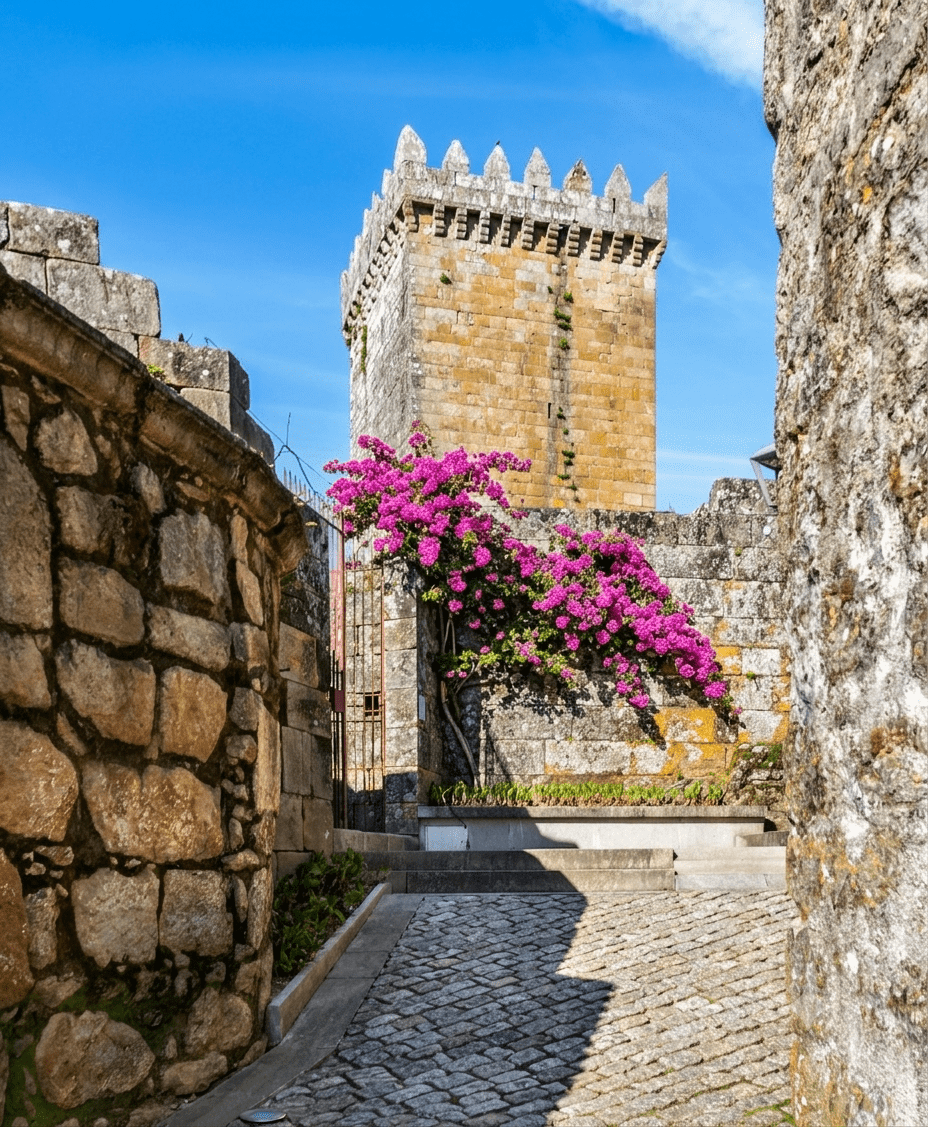
Built in the late 12th century, Melgaço Castle guarded one of Portugal’s most strategic northern border crossings with Spain
Melgaço and Alvarinho
Descending from Castro Laboreiro, the harsh granite highlands give way to sheltered valleys of vineyards and fertile farmland. You are now entering the Monção–Melgaço subregion of Vinho Verde, widely regarded as Portugal’s premier area for Alvarinho.
If time is limited, focus on Melgaço↗ itself. Park near the historic center and spend an hour exploring the old town, castle, and small shops before stopping at a local wine bar or winery to taste Alvarinho. The compact center is easy to explore on foot, making this an ideal short stop before continuing your journey.
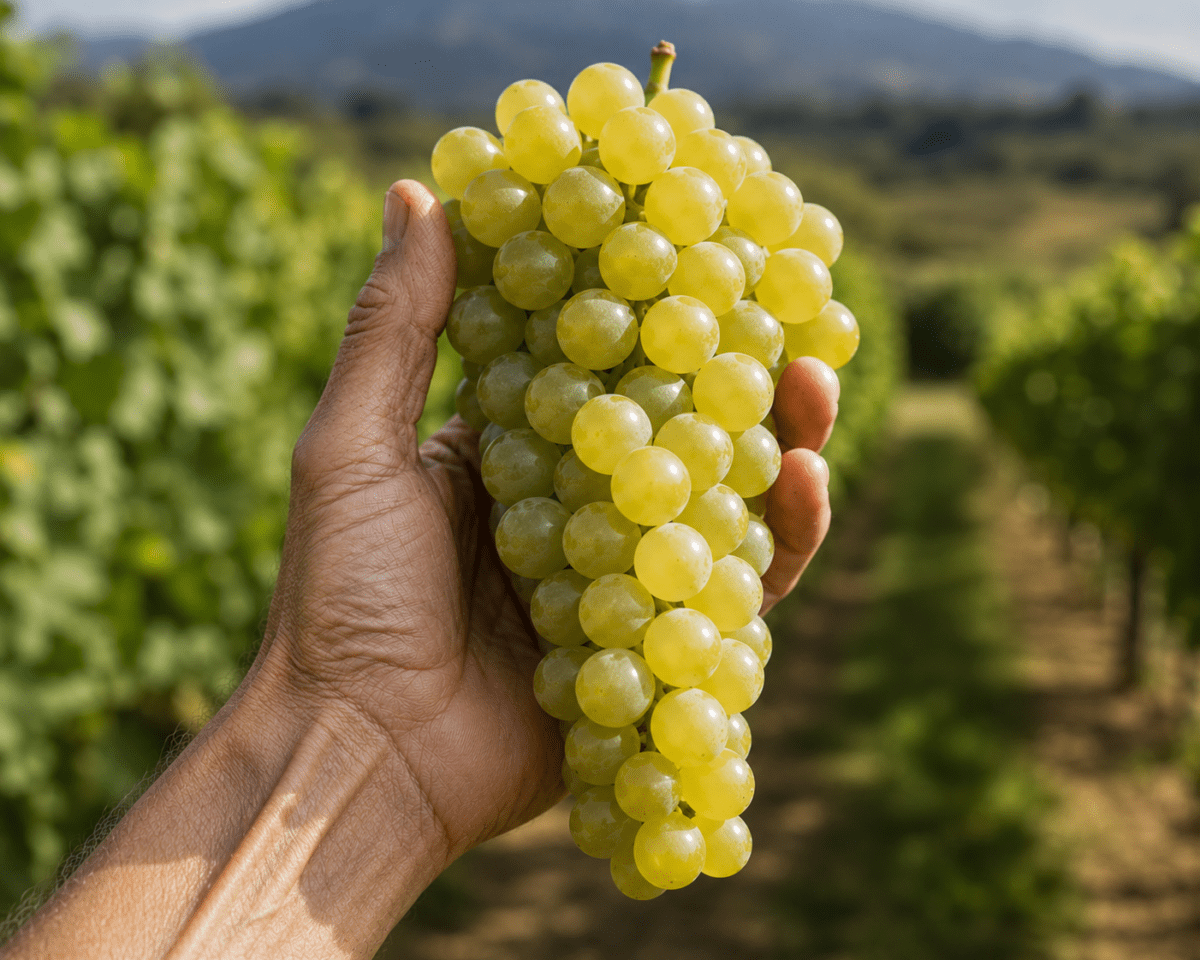
Delicate Alvarinho grapes are harvested by hand, with each cluster carefully selected at peak ripeness
Quinta de Soalheiro
Quinta de Soalheiro↗ is our featured winery. Founded in 1974 by João António Cerdeira and his family, it pioneered modern Alvarinho by planting the first continuous Alvarinho vineyard in Melgaço. In many ways, Soalheiro represents the grower’s story—understanding terroir and where great Alvarinho can thrive. Its name, Soalheiro (“sunny place”), reflects one of the estate’s key advantages: exceptional sun exposure, with surrounding mountains providing shelter from Atlantic influence.
The Patchwork Wine Tasting Experience is especially well suited to this itinerary, offering an introduction to the remarkable diversity of Alvarinho across the Monção–Melgaço valley, where vineyards range from valley floor to mountainside, riverbank, and old-vine parcels. The experience includes a winery visit, panoramic interpretation of the valley, and a guided tasting of Soalheiro Alvarinho (Classic) plus two additional Alvarinhos, along with The Pur Terroir herbal infusion. Advance reservations are recommended.
Book a Tour →
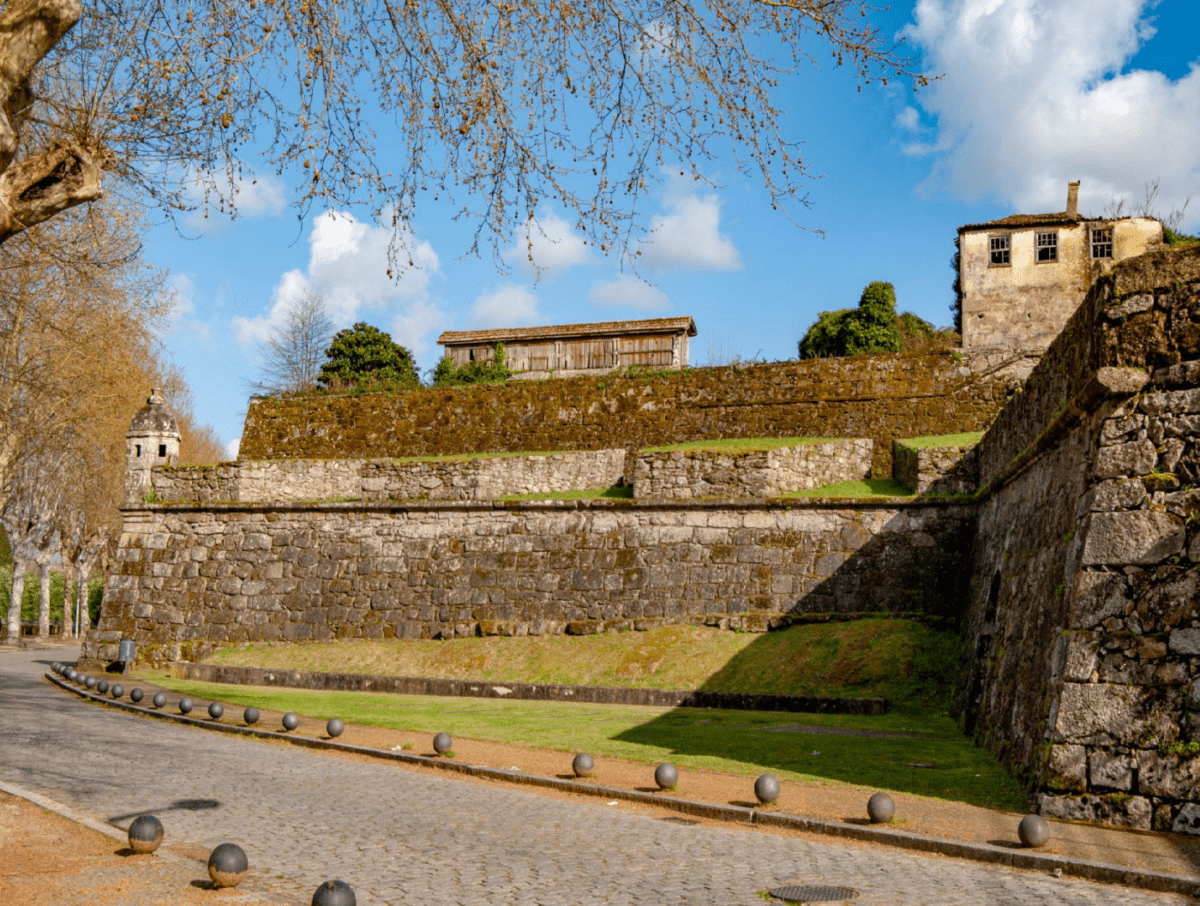
Old ancillary buildings sit alongside the granite ramparts that protected this strategic frontier town
Monção and Alvarinho
Further along the Minho River lies Monção↗, a historic fortified town shaped by both frontier life and Alvarinho. Together with Melgaço, Monção forms the historic heart of Portugal’s most prestigious Alvarinho region. Facing Galicia across the river, it served for centuries as both a defensive stronghold and an important trade corridor, linking Portugal and Spain through commerce, culture, and agricultural exchange.
The strategic importance of this stretch of the Minho can still be seen in surviving fortifications such as Monção’s walls and the nearby Torre de Lapela↗, a medieval watchtower that once monitored movement along the river frontier.
Monção is best explored on foot. Its compact historic center can be comfortably visited in one to two hours, following a leisurely walking circuit through medieval streets, fortified walls, and bastions overlooking the Minho River. Along the way, stops such as the Museu do Alvarinho offer a natural introduction to the region’s wine culture before continuing to a winery or tasting experience in the surrounding vineyards.
Quinta da Torre↗, associated with Anselmo Mendes—often called “Mr. Alvarinho”—represents the oenologist’s perspective: not simply where great grapes are grown, but how great wine is made. Mendes helped redefine Vinho Verde by demonstrating that Alvarinho could produce complex, structured, age-worthy wines through innovative winemaking.
Book a Tour →
Palácio da Brejoeira↗ offers the grand historic estate experience—the aristocratic face of Alvarinho. With palace architecture, formal gardens, and deep historic prestige, it embodies old-world refinement, though it feels more formal and less connected to the working rural landscape that has remained central to this journey.
Book a Tour →
As the day winds down, we have come to understand the prestige of Alvarinho, Portugal’s most celebrated white grape. Renowned for its complex structure, vibrant acidity, and crisp minerality, Alvarinho reaches its highest expression in the Monção–Melgaço subregion. In many ways, it represents the modern expression of Alto Minho, where a landscape once defined by survival, defense, and isolation now produces one of Portugal’s most celebrated wines.