Barcelos and the Iconic Rooster
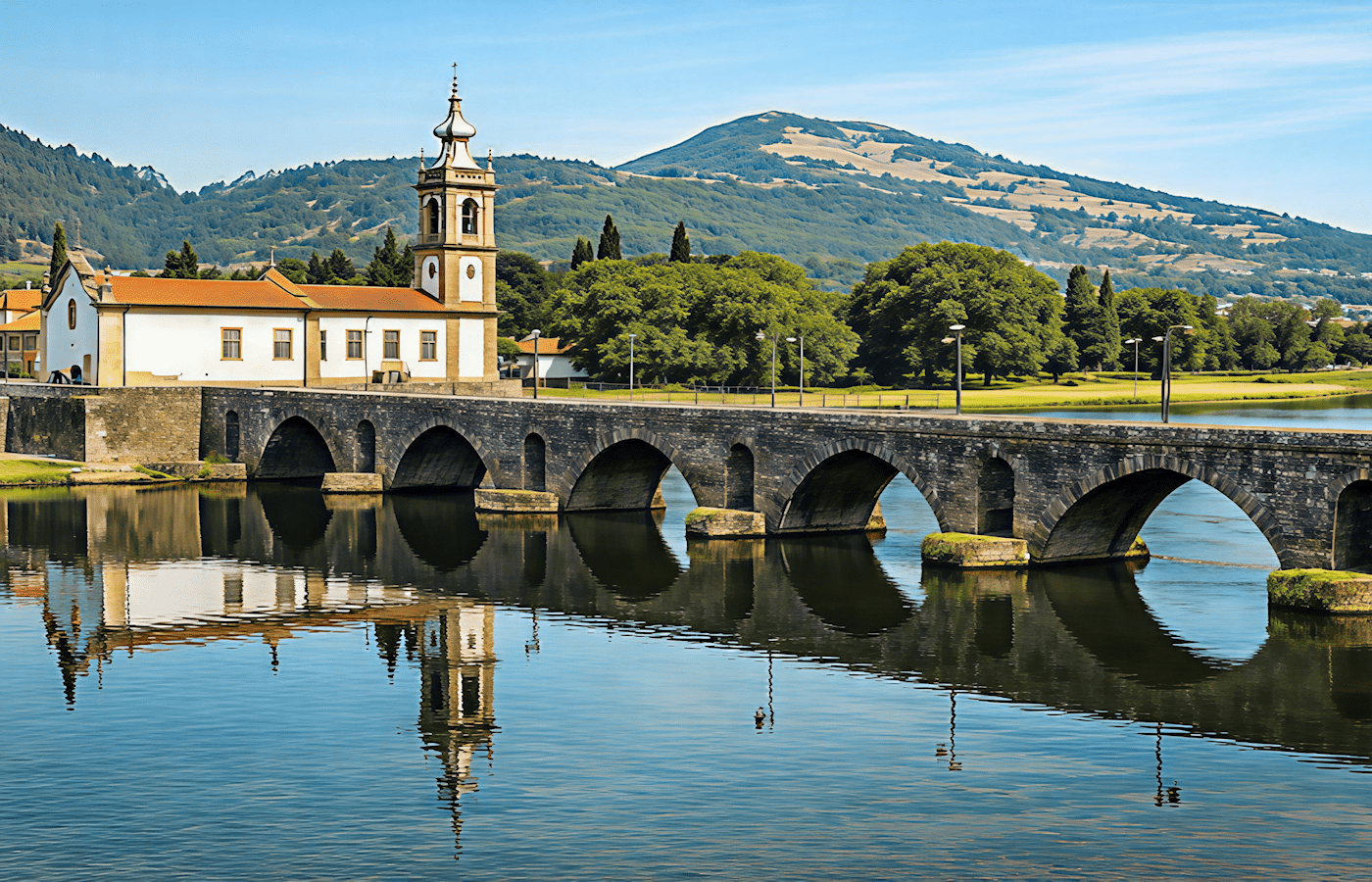
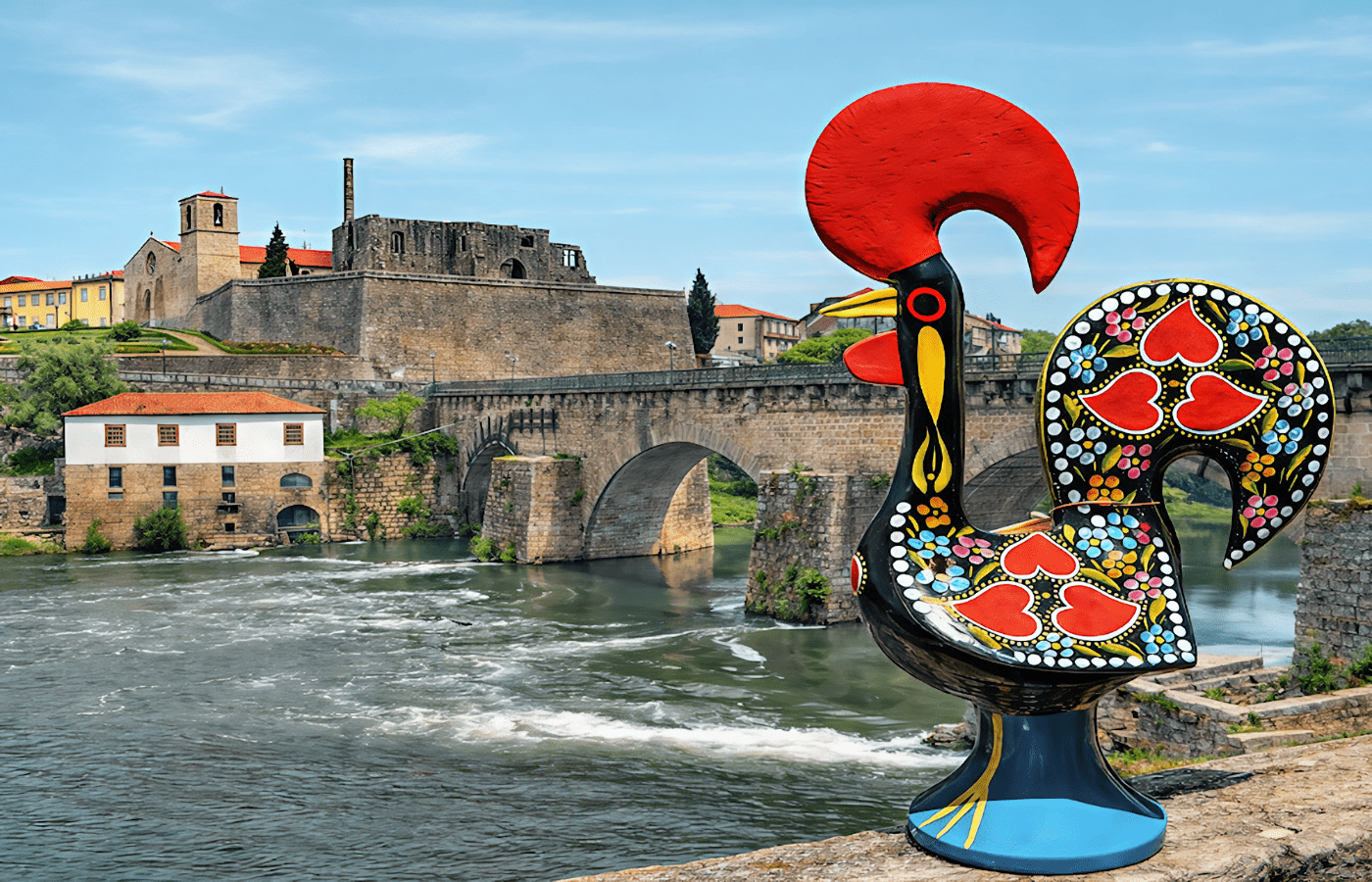
At first glance, Barcelos is known for one thing: the Galo de Barcelos, or Rooster of Barcelos. The rooster is a visible symbol of something much deeper. Beneath its five arched medieval bridge, the Cávado River flows past a town where folklore remains painted, sculpted, and sold in the streets.
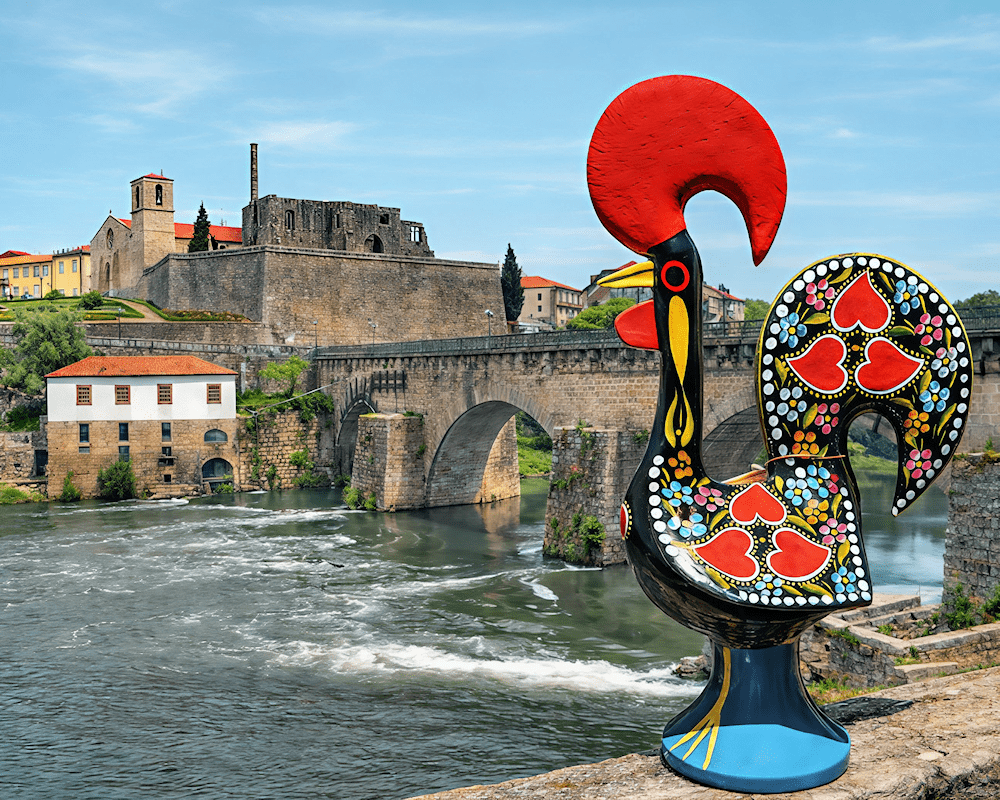
The legendary Galo de Barcelos overlooking the Cávado River in Portugal’s folk art capital
Barcelos is the heart of Portugal’s folk identity and a UNESCO Creative City for Crafts and Folk Art. For centuries it has been a crossroads where pilgrims, market traders, and rural traditions shaped the life of the town. Visit on market day to experience the true spirit of Portugal’s folk art capital as artisans, farmers, and families fill the streets with colour, craft, and a sense of community that has carried its traditions forward for generations.
Historic Center / Main Rooster
Thursday Market (Feira de Barcelos)
Medival Bridge
Pottery Museum
ADVERTISEMENT
The Miracle of the Rooster
The Rooster of Barcelos is more than Portugal’s most recognizable folk symbol. Behind its bright colours lies a story of faith, justice, and divine intervention that has endured for centuries. What began as a local legend in Barcelos grew into a national emblem of truth, good fortune, and hope, carrying the spirit of the town far beyond the banks of the Cávado River.
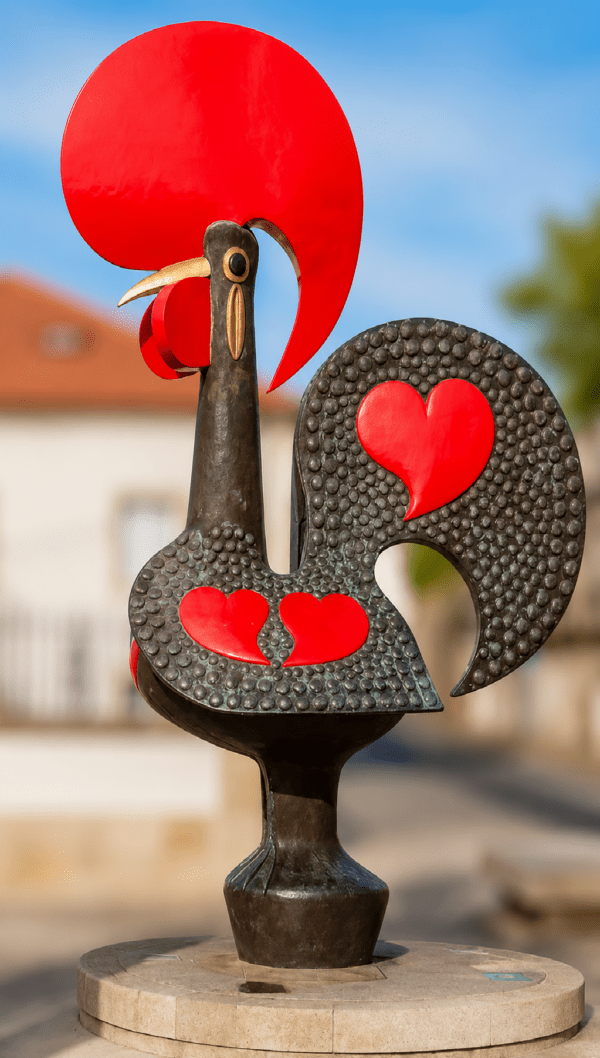
The Accusation
According to legend, a pilgrim bound for Santiago was falsely accused of a crime he did not commit. As he was led to the gallows, he made a final gesture toward a roasted rooster on the judge’s banquet table.
The Prophecy
“My innocence is as certain as the crow of this bird when the rope tightens,” he declared. At the moment of execution, the impossible happened. The roasted rooster rose to its feet and crowed.
The Vow
Spared by this divine intervention, the pilgrim was set free. In gratitude, he commissioned the Cross of the Lord Rooster, which stands at the Barcelos Archaeological Museum.
ADVERTISEMENT
Historic Barcelos
Barcelos likely developed around a favorable crossing point on the Cávado River, where people and goods could move more easily across the water. The fertile lands surrounding the river helped sustain early settlement, while the rich agricultural plains of Minho supported both local communities and regional markets. Close enough to benefit from Atlantic trade, yet strongly connected to Braga, one of the most powerful Roman and medieval cities in northern Portugal, Barcelos was ideally placed along a natural economic corridor. Even the town’s name reflects its layered past, possibly linked either to an early landowning family or to its role as an important river crossing.
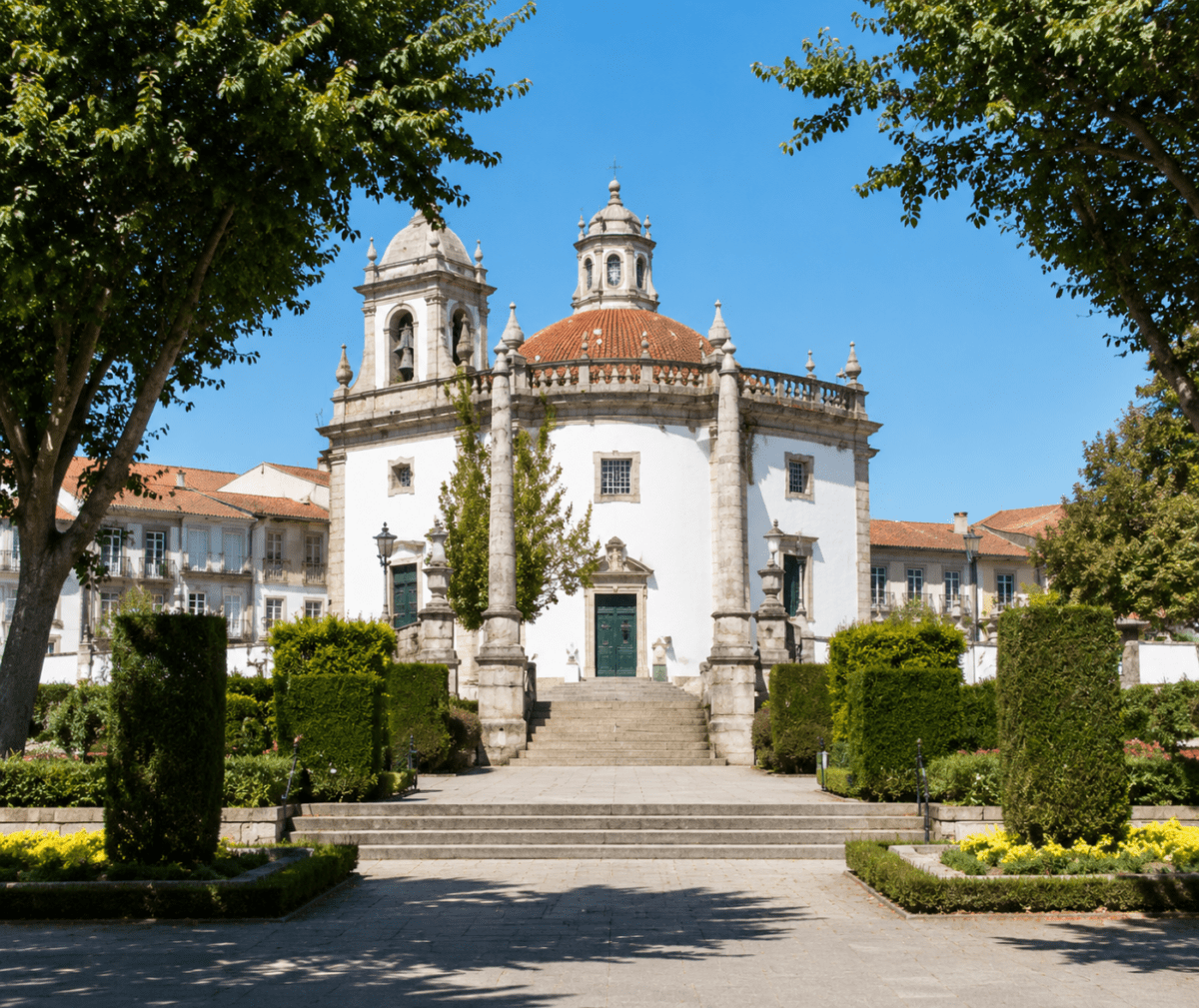
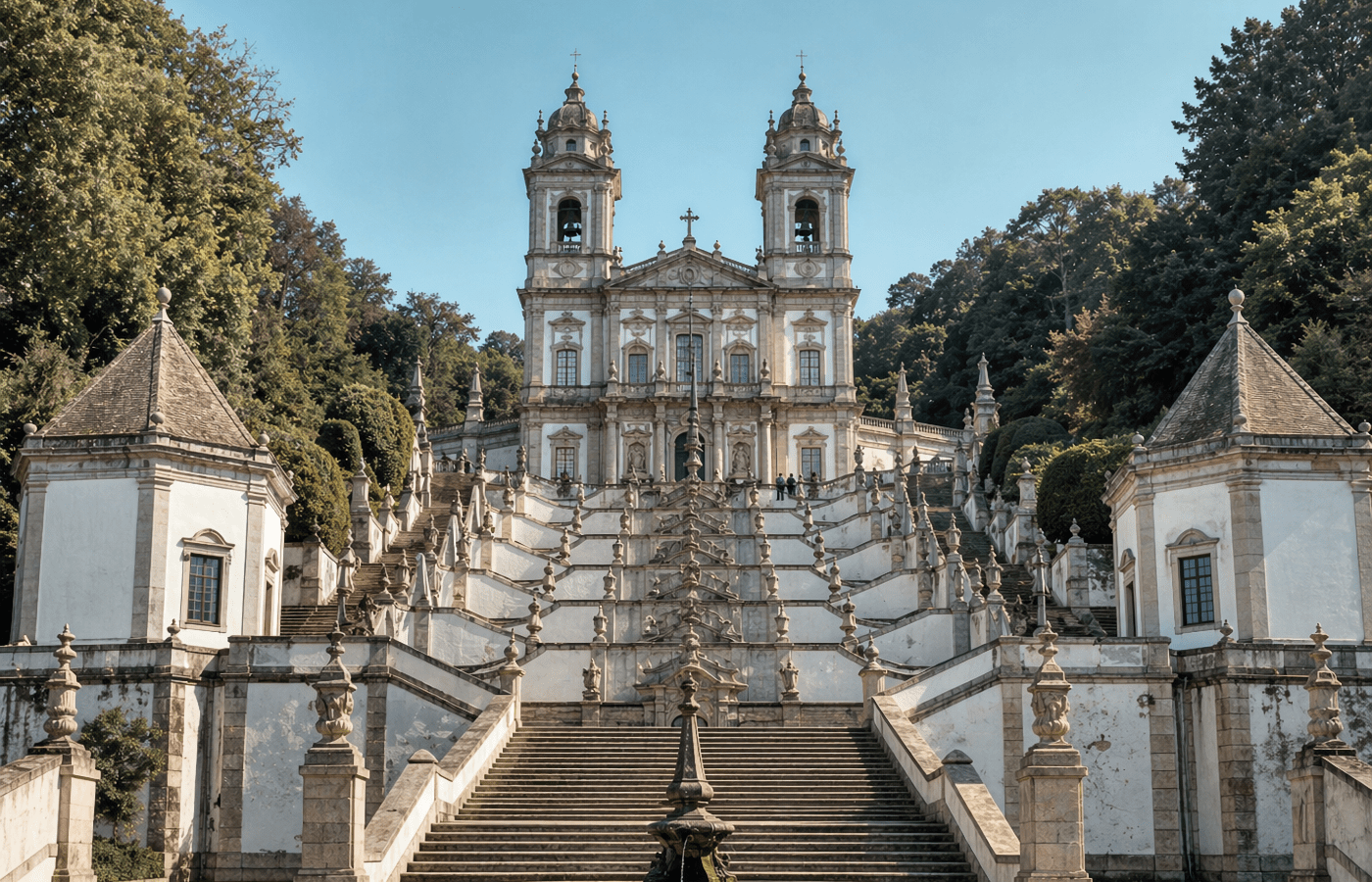
Igreja do Bom Jesus da Cruz, one of Barcelos’ most iconic landmarks, anchors the elegant gardens at the heart of town
From Bridge to Old Town
Barcelos is best explored on foot, beginning at the medieval bridge over the Cávado River. After crossing the bridge, take a left and walk around the museum to see the Lord of the Rooster Cross, one of the town’s most important monuments and a reminder of its deep connection to the Camino. Continuing past the museum, you’ll come to Santa Maria, the town’s most noteworthy medieval church. Nearby, the modest ruins of the Palace of the Counts of Barcelos hint at the town’s former political influence. Continue along Rua D. Afonso Henriques until you reach Rua António Barroso. This narrow street, lined with small shops, cafés, and historic façades, leads into the heart of historic Barcelos. Here, old churches, granite façades, and quiet squares preserve the atmosphere of a traditional Minho town.
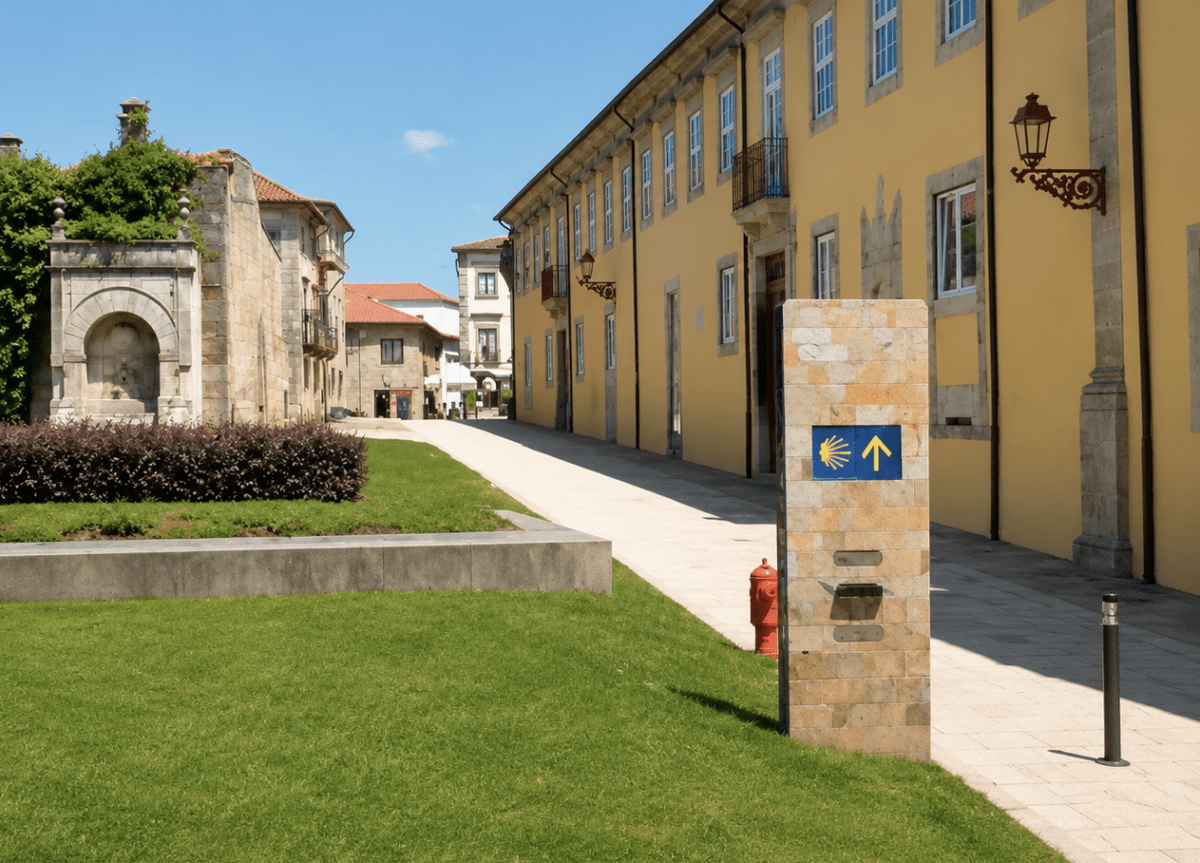
Camino de Santiago
Barcelos is an important stop on the Portuguese Camino de Santiago, the historic pilgrimage route leading to Santiago de Compostela in northwestern Spain, where tradition holds that the remains of Saint James are buried. For over a thousand years, pilgrims have followed this route on foot, guided by the familiar yellow arrows and scallop shell markers seen throughout town. As you walk from the bridge through historic Barcelos, keep an eye out for these markers. They trace the same path followed by countless pilgrims and remain deeply woven into the town’s identity today.

ADVERTISEMENT
Portugal’s Folk Art Capital
Barcelos is widely regarded as Portugal’s folk art capital, a reputation rooted in centuries of craftsmanship, trade, and rural tradition. The town is especially known for its brightly painted ceramics, handcrafted pottery, embroidered linens, and the iconic Rooster of Barcelos, one of Portugal’s most recognizable national symbols.
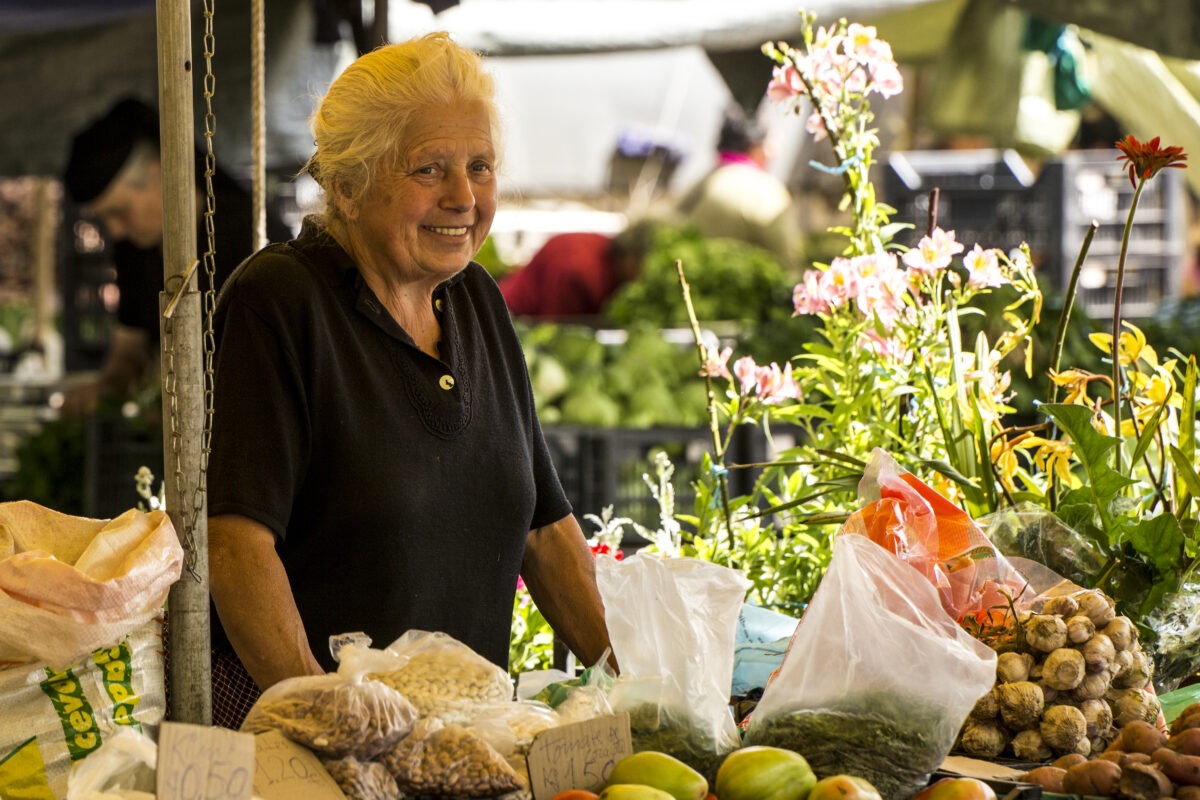
Local vendors selling fresh produce and flowers at Barcelos’ famous Thursday market
Feira de Barcelos (Thursday Market)
The best place to understand this identity is the famous Thursday market, one of the largest and oldest open air markets in Portugal. For centuries, farmers, artisans, and merchants from across Minho have gathered here to sell produce, flowers, ceramics, textiles, antiques, and handmade crafts. More than a tourist attraction, the market reflects the agricultural and artistic traditions that shaped Barcelos. It remains one of the clearest expressions of local life in northern Portugal.
Barcelos offers a glimpse into a side of Portugal where tradition remains part of daily life. Medieval legends, pilgrimage routes, folk art, and the weekly market continue to define the character of the town. In Barcelos, the past is not distant. It remains visible in the streets, stories, and customs that endure today.