Travel Guide to Braga
Braga is the spiritual heart of Portugal, where ancient traditions blend seamlessly with a vibrant, modern energy. This city offers a unique character shaped by centuries of faith and a lively, youthful pulse.
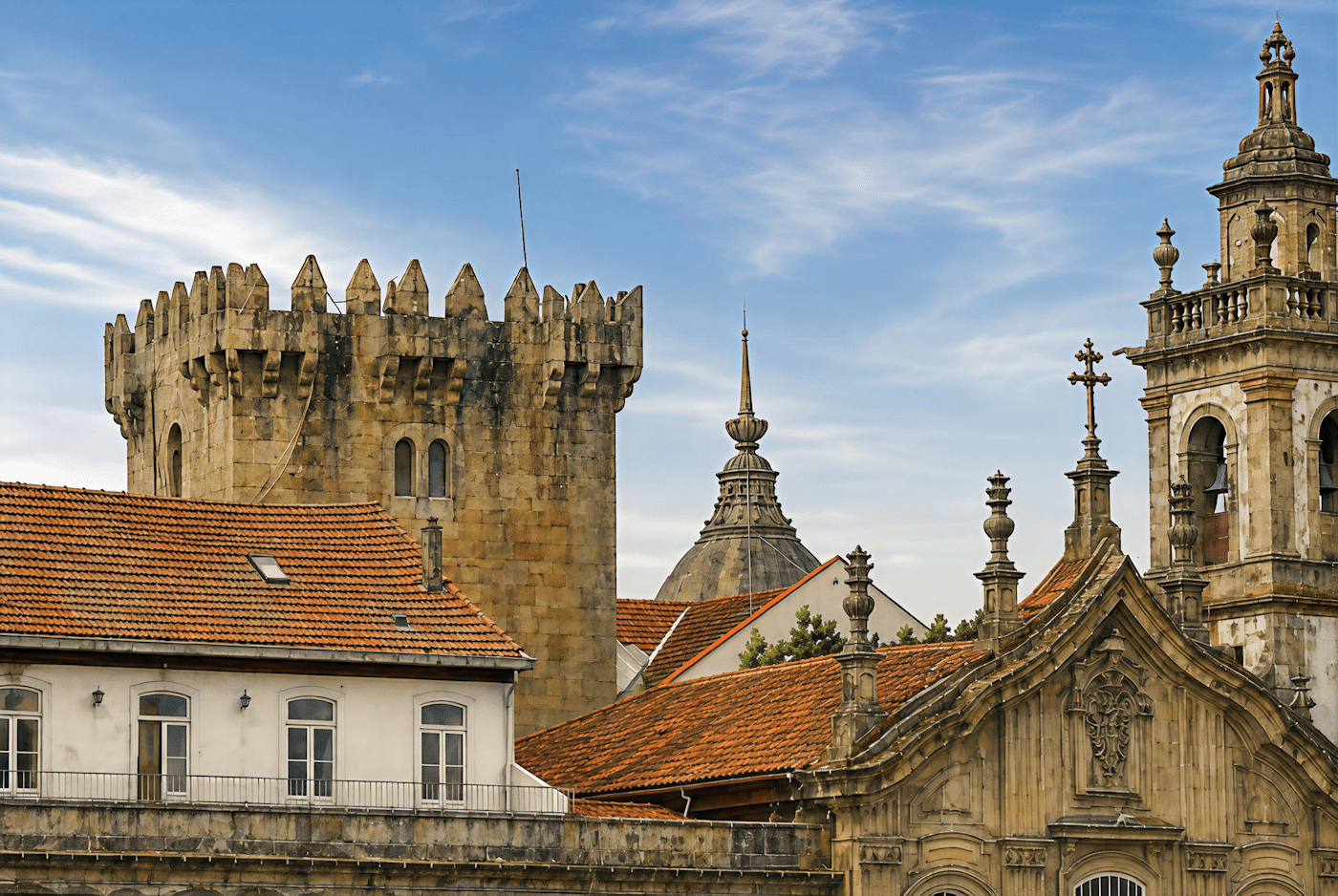
Braga's skyline reflects one of the highest concentrations of churches in Portugal
Braga offers a perfect blend of history and modern energy. For sports fans, the Estádio Municipal de Braga is a must see. Carved directly into the side of a granite quarry, its dramatic design has made it one of the most recognizable football stadiums in the world.
For shopping, visit the Mercado Municipal for fresh local produce and regional specialties, or head to Braga Parque, the largest shopping center in the Minho region. With a wide range of shops, restaurants, cafés, and entertainment options, it offers a modern contrast to Braga’s historic streets.
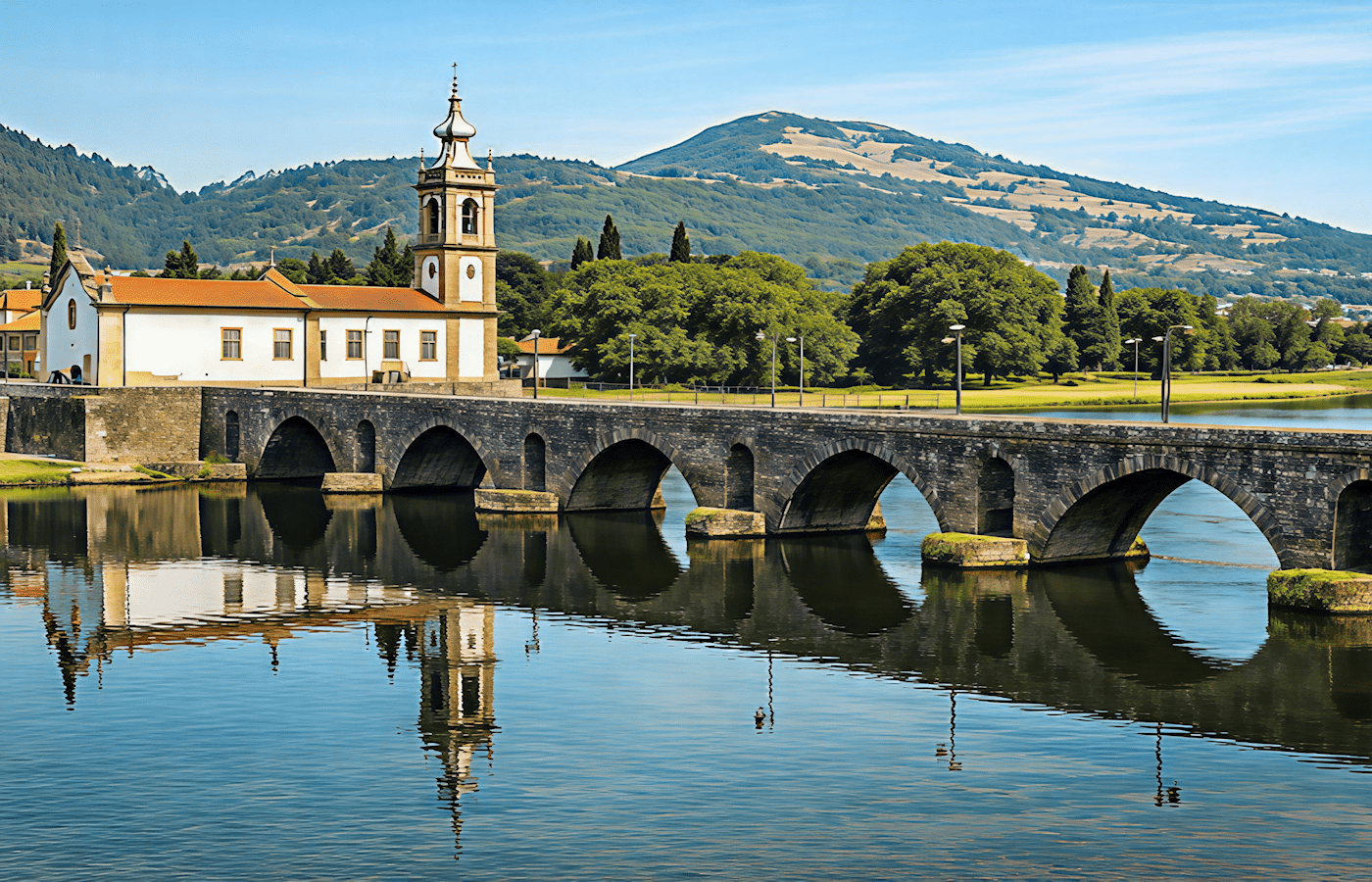
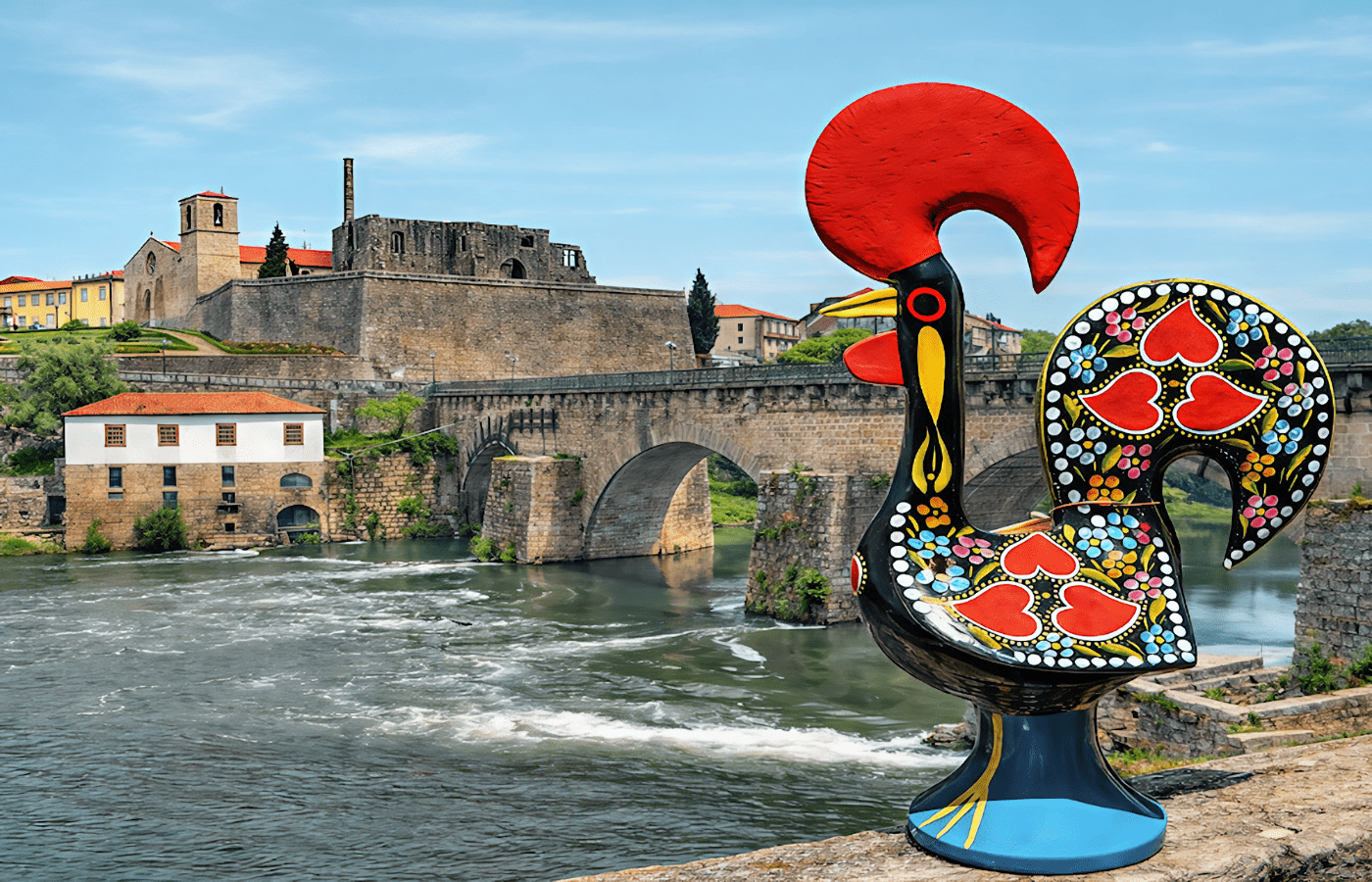
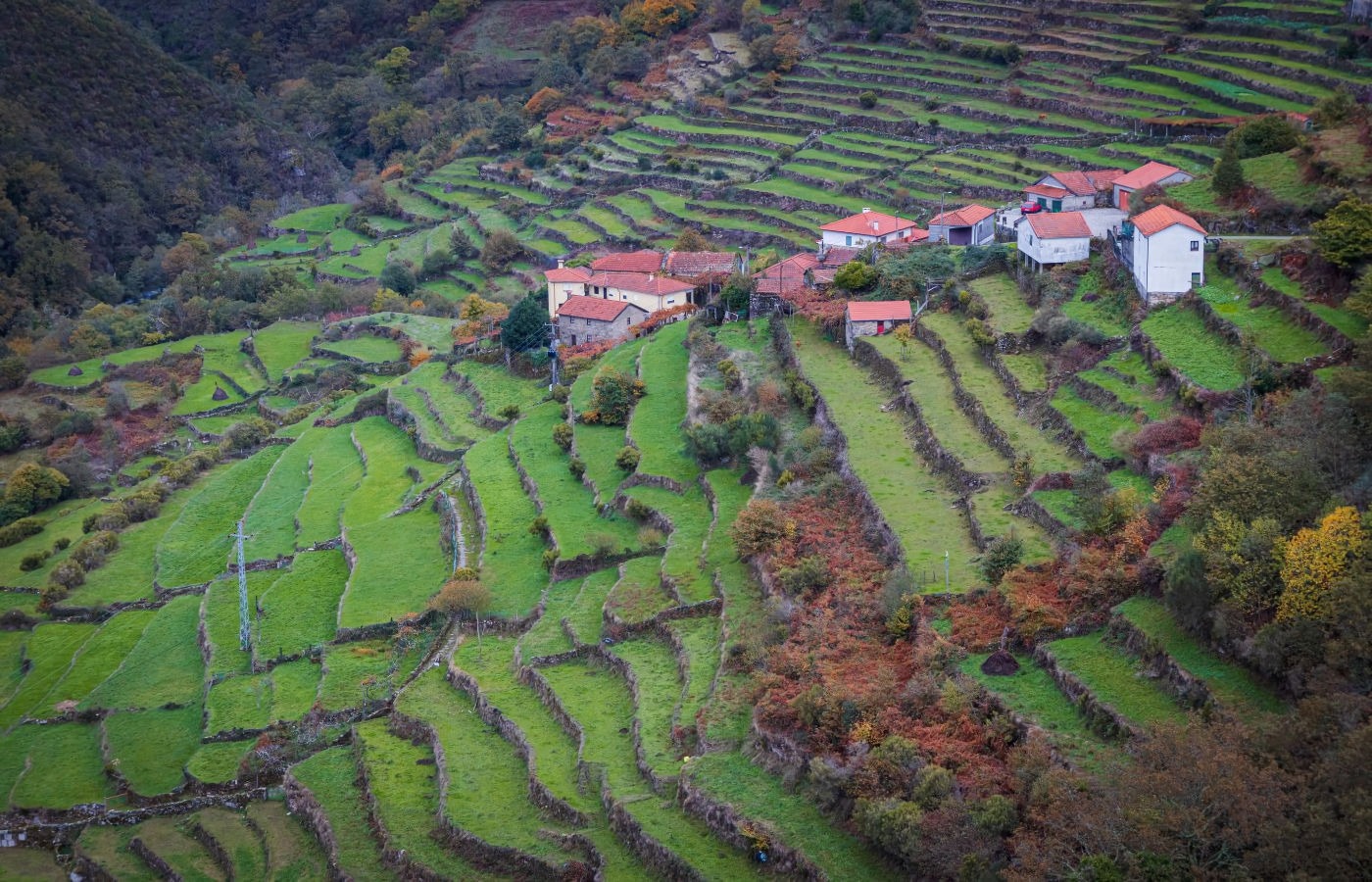
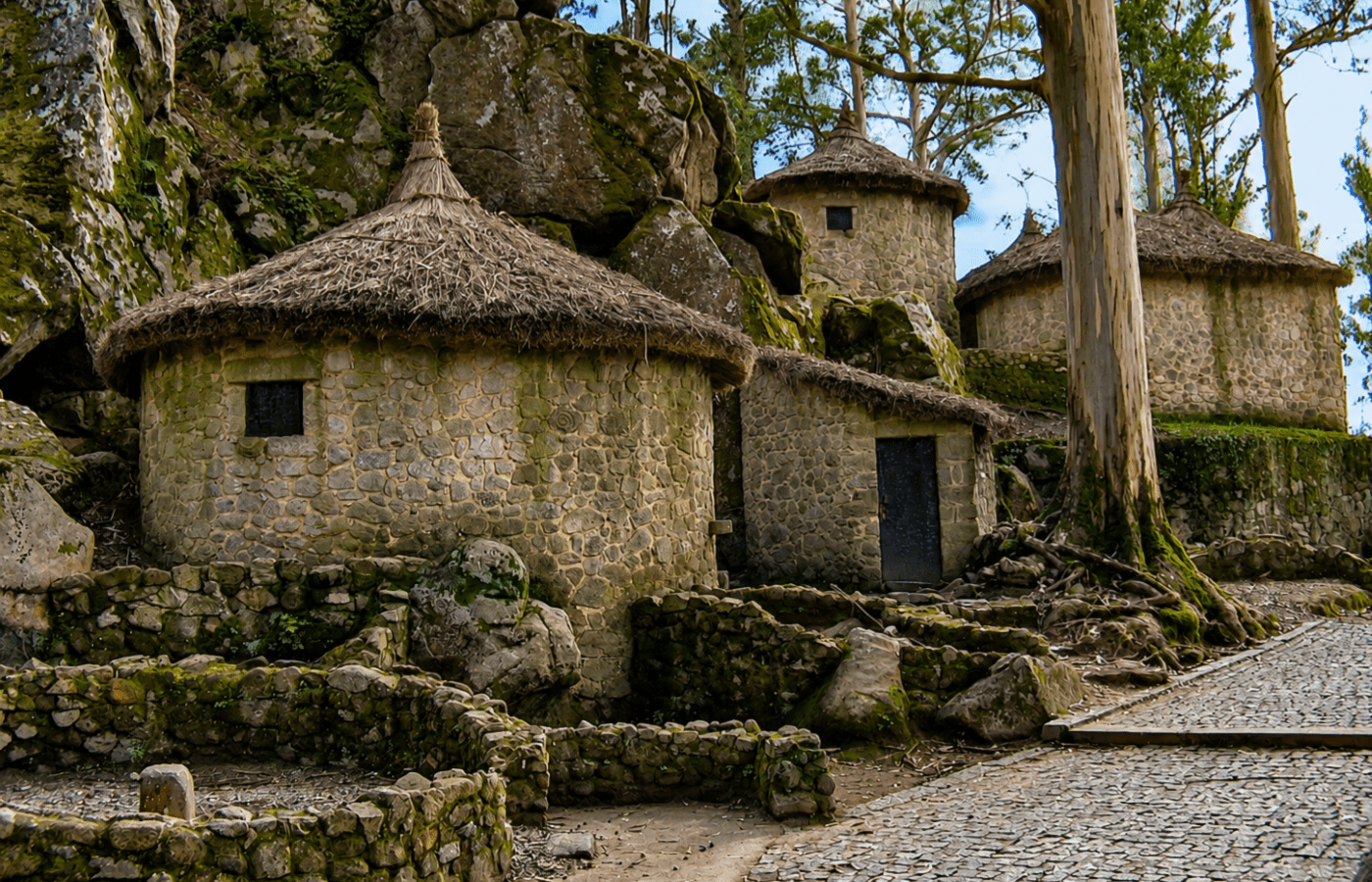
Braga is also an ideal base for exploring the Minho region. Its central location provides easy access to some of northern Portugal’s most rewarding destinations, including the medieval streets of Guimarães, the riverside charm of Ponte de Lima, the artisan traditions of Barcelos, and the coastal heritage of Viana do Castelo. Well connected by road and rail, Braga is also a popular day trip from Porto, making it one of the region’s most accessible cultural destinations.
Main Attractions
Bom Jesus do Monte
Sameiro Sanctuary
Braga’s Historic Core
Tibães Monastery
Parking + Train Station
INNSiDE by Meliá Braga
ADVERTISEMENT
Bom Jesus do Monte
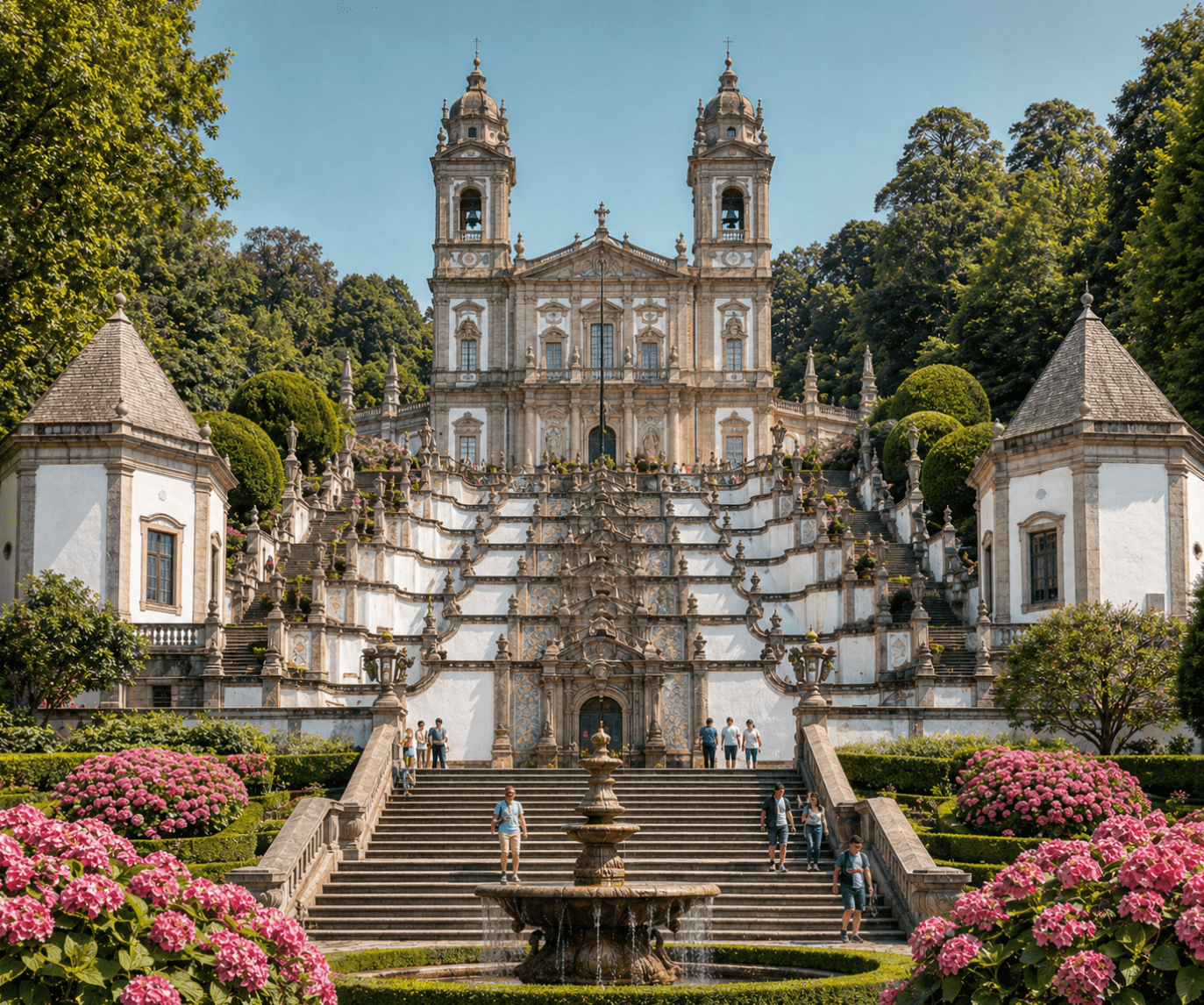
Bom Jesus do Monte, a pilgrimage shaped by movement, reflection, and the senses
The Silent Sermon
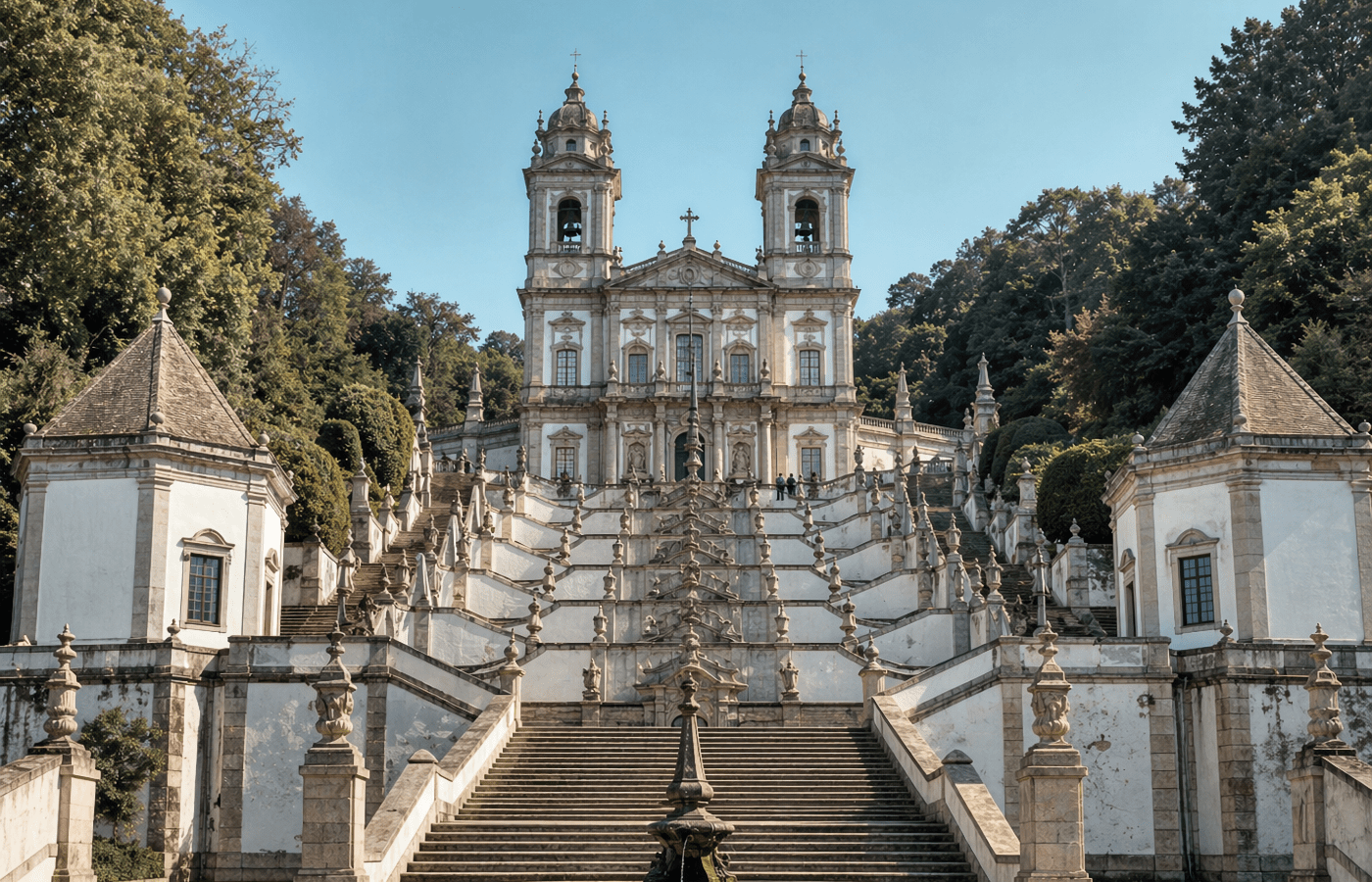
The Sanctuary of Bom Jesus do Monte↗ emerged during a time of profound change in Europe. Baroque architecture was deliberately shaped to move people emotionally. Through scale, light, and spectacle, it inspires awe and reverence, drawing visitors into an experience that communicates faith through the senses. Whether or not you share the belief it represents, the experience remains open to all and quietly compelling.
Stairway to Heaven
UNESCO recognizes Bom Jesus do Monte as a sacred mount whose design expresses a continuous spiritual journey toward the divine. The pilgrimage begins at the Portico Stairway, a heavy stone threshold marking the transition from earthly concerns to higher spiritual realities. From here, the path rises in a zigzag of approximately 573 white steps, forming an ascent where every movement carries meaning.
The Stairway of the Five Senses introduces a steady rhythm to the climb. Waterspouts flowing from statues representing sight, hearing, smell, taste, and touch accompany visitors upward, while weathered stone and moving water invite pause and reflection.
The Stairway of the Three Virtues shifts the focus from the physical to the spiritual. Here, fountains symbolize faith, hope, and charity, and the silent sermon reaches its peak. The elevation changes your perspective. You are no longer looking at the trees, but through them.
If the climb feels out of reach, the historic funicular offers an alternative ascent. Operating since 1882, it still runs on a water balance system powered by gravity rather than electricity. As the final steps approach, the sense of arrival begins to take hold.
Where Earth Meets Heaven
At the summit, 566 meters above sea level, the sanctuary stands high above Braga, with views that can stretch to the Atlantic on a clear day. The church of Bom Jesus do Monte becomes the final Amen to the climb, preparing you for the silence within.
What stands here today grew from earlier chapels and was completed in 1811. Where the staircase is expressive and Baroque, the church resolves into Neoclassicism, defined by balance, restraint, and clarity. After the movement of the ascent, the structure feels composed, almost still, its twin towers rising as a quiet signal of arrival.
Inside, the atmosphere shifts. The main altar is a sculptural Calvary, not a painting. The figures stand in full form, creating a presence that feels quiet, heavy, and immediate. Off to the side, a smaller room holds personal offerings left by pilgrims, each one a private moment of gratitude, a story carried here and left behind. In contrast to the ordered design of the church, this space feels intimate and deeply personal.
- UNESCO World Heritage Centre — Sanctuary of Bom Jesus do Monte
- Confraria do Bom Jesus do Monte — Official sanctuary history
- Baroque Architecture — Counter Reformation design principles
- Counter-Reformation — Use of art and architecture to influence belief
ADVERTISEMENT
Braga’s Historic Core
A quiet authority lingers in Braga’s streets. As one of the oldest ecclesiastical centers in the Iberian Peninsula, its archbishops helped shape belief and power across the north during the centuries in which Portugal emerged.
The historic core is compact and easily explored on foot. Allow 60 to 90 minutes to visit the main sites, longer if you plan to step inside the cathedral or museums.
Tip: Bom Jesus do Monte, Sameiro Sanctuary, and Tibães Monastery are located outside Braga’s historic center. Taxis and ride-share services are the easiest way to reach them, though public buses are available. Bus 2 runs between Bom Jesus and central Braga, and local TUB routes also connect the city center with Sameiro and Tibães.
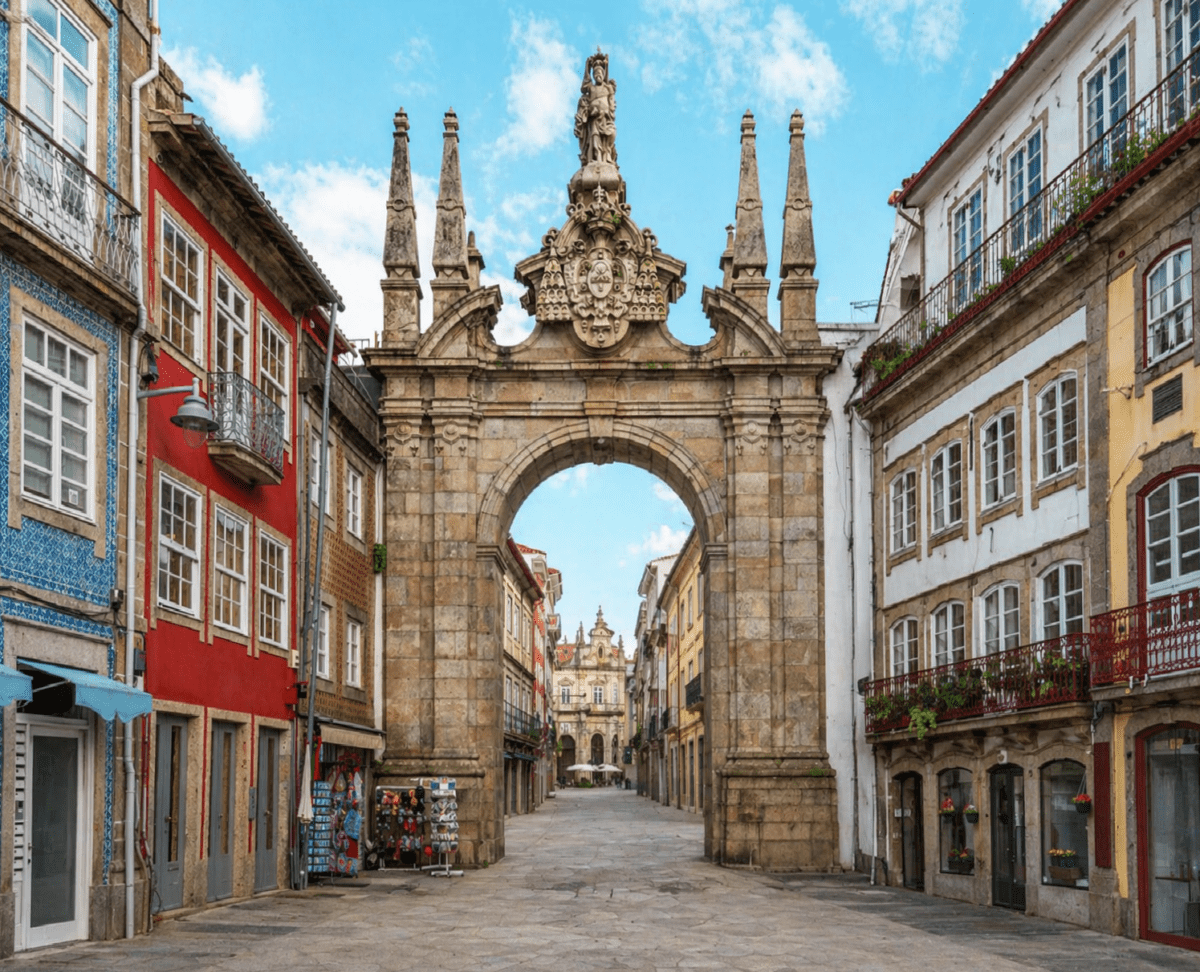
The Arco da Porta Nova, where centuries of history continue to frame daily life in the heart of Braga
Ancient City Entrance
Arco da Porta Nova↗
An 18th-century arch that once marked the main western entrance into the city. It served as a ceremonial gateway for important visitors arriving in Braga, one of Portugal’s most influential ecclesiastical centers. Passing beneath it still feels like a threshold, where broad streets give way to the narrow lanes of Braga’s historic center. On your way to the Museu dos Biscainhos, take a moment to walk around Braga City Hall. Although you approach from the rear, its main façade overlooks one of the city’s principal squares.
Museu dos Biscainhos↗
A 17th-century aristocratic residence with azulejo-lined rooms, carved wooden ceilings, and formal gardens behind the house. Preserved as a museum, it offers an intact glimpse into how Braga’s wealthy elite once lived.
Jardim de Santa Bárbara↗
A formal garden of manicured flowerbeds set against the stone remains of the former Archbishop’s Palace. For the best view, stand toward the far edge, where the backdrop of ruins and color comes fully into alignment. Together, they create one of Braga’s most photographed scenes and offer a first glimpse into the historic seat of the city’s archbishops.
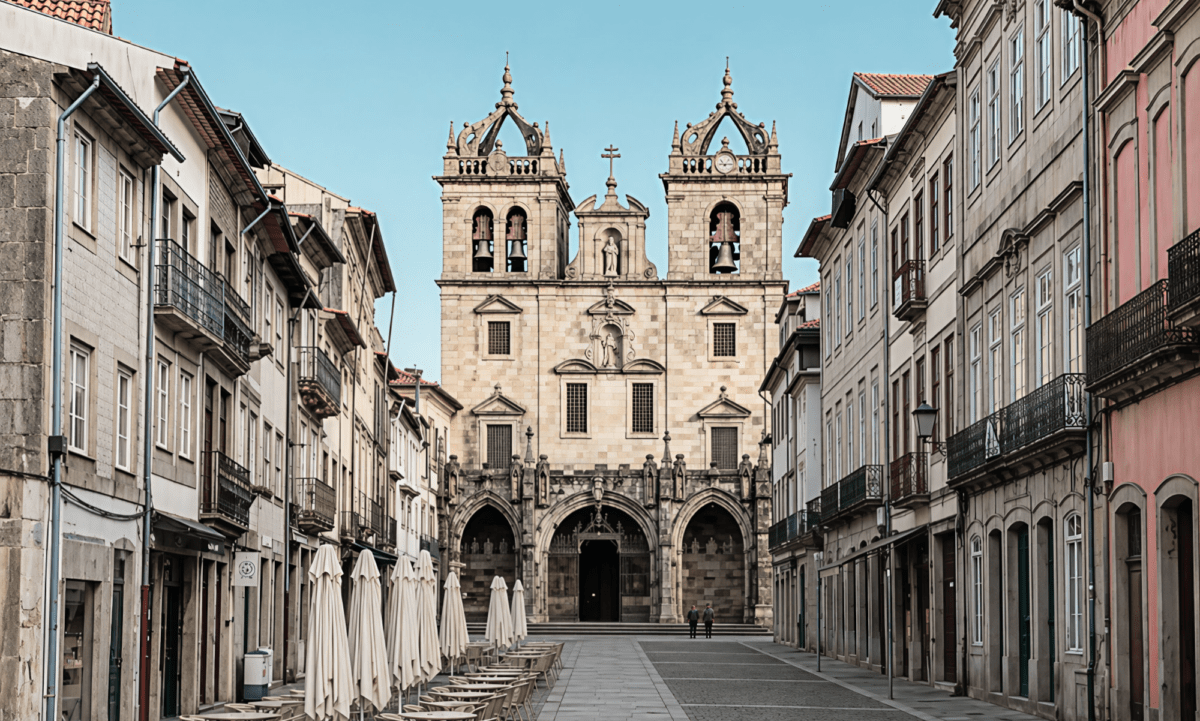
Sé Cathedral, the oldest cathedral in Portugal and the spiritual heart of Braga
The Archbishop’s Quarter
Largo do Paço↗
Once the ceremonial heart of the Archbishop’s Palace, Largo do Paço served as the center of ecclesiastical administration in Braga for centuries. Framed by elegant Baroque façades and historic fountains, the square reflects the authority once exercised here by the archbishops who helped shape religious life across northern Portugal. Today, it remains one of the city’s most atmospheric spaces and a natural stop on the way to the cathedral.
Sé Catedral de Santa Maria de Braga↗
The true heart of Braga. Founded in the 11th century, it is the oldest cathedral in Portugal and the seat of the Archbishop, whose influence once extended across much of the Iberian Peninsula. Architecturally, it is a layered record of time. Romanesque foundations, Gothic chapels, Manueline details, and Baroque additions coexist within the same structure. The cathedral is also home to the tombs of Count Henry of Burgundy and Teresa of León, the parents of Portugal’s first king, Afonso Henriques. More than any other building, it represents Braga’s historic role as the religious center of Portugal and the seat of ecclesiastical power in the north.
Tip: Worth stepping inside if open. If the exterior feels restrained, the interior reveals a far richer world of chapels, carvings, tombs, and architectural styles accumulated over centuries.
Igreja de Santa Cruz↗
A Baroque church known for its highly detailed façade. Look closely at the carved stonework, where figures, scrolls, and ornament create a remarkable sense of movement across the surface. Built in the 17th century, it remains one of Braga’s finest examples of Baroque craftsmanship.
Lunch Option: After exploring the Archbishop’s Quarter, consider a stop at Bira dos Namorados↗. Known for its creative hamburgers and relaxed atmosphere, it offers a casual break before continuing on toward the Roman sites and Avenida da Liberdade.
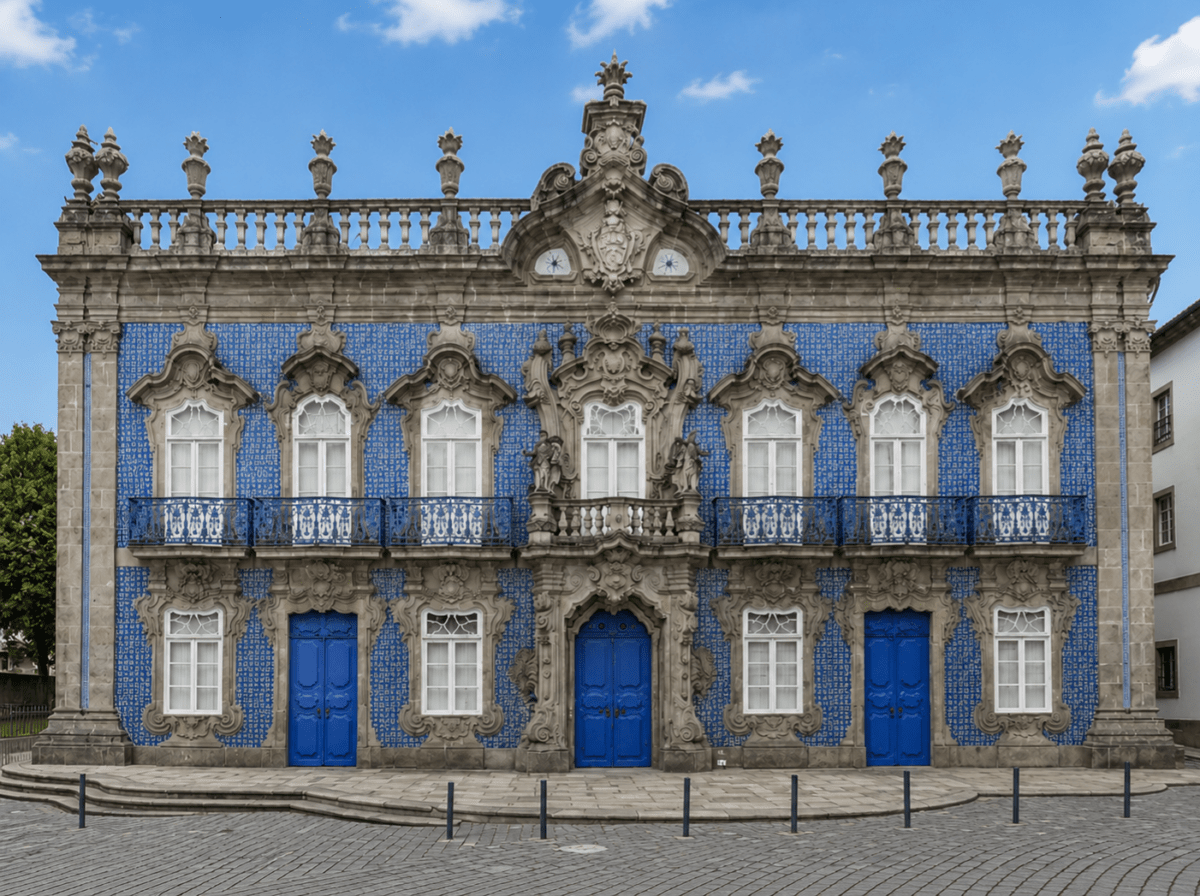
Palácio do Raio - An 18th-century palace distinguished by its vivid blue azulejo façade
Beyond the Medieval Core
Fonte do Ídolo↗
A Roman sanctuary carved directly into a rock face, dating to when the city was known as Bracara Augusta. Easy to miss if you’re not looking for it, this small site preserves original inscriptions and carvings cut into the stone itself, likely tied to water-related worship. It marks a deeper layer of Braga’s history, before the churches, before the cathedral, when the city’s story was still embedded in the landscape itself rather than built upon it.
Tip: Keep an eye out along the street-level wall. This is one of the easiest sites in Braga to walk past without noticing.
Palácio do Raio↗
An 18th-century palace distinguished by its vivid blue azulejo façade, where patterned tiles wrap the building in color. Built during Braga’s Baroque era, it remains one of the city’s most recognizable landmarks and a striking reminder of the wealth and prestige that once flowed through this ecclesiastical capital.
Roman Thermae of Maximinus↗
Hidden beneath the modern city, these Roman baths date to the 1st century AD and once formed part of ancient Bracara Augusta. Though modest in appearance, they offer a rare glimpse into daily life during Braga’s Roman past, revealing a layer of history that existed long before the rise of its churches and cathedrals.
Museu de Arqueologia D. Diogo de Sousa↗
Dedicated to the archaeology of Bracara Augusta, the museum traces Braga’s history from prehistoric settlements through the Roman period and beyond. Its collection provides valuable context for understanding the ancient city that existed here long before Braga became Portugal’s spiritual center.
Lunch Option: If you choose to continue on to the Roman Thermae of Maximinus and the Museu de Arqueologia D. Diogo de Sousa, Tasquinha do Fujacal↗ is a worthwhile stop along the way. Known for its traditional Portuguese cooking and local atmosphere, it makes a natural place to pause before continuing your exploration of Braga’s Roman past.
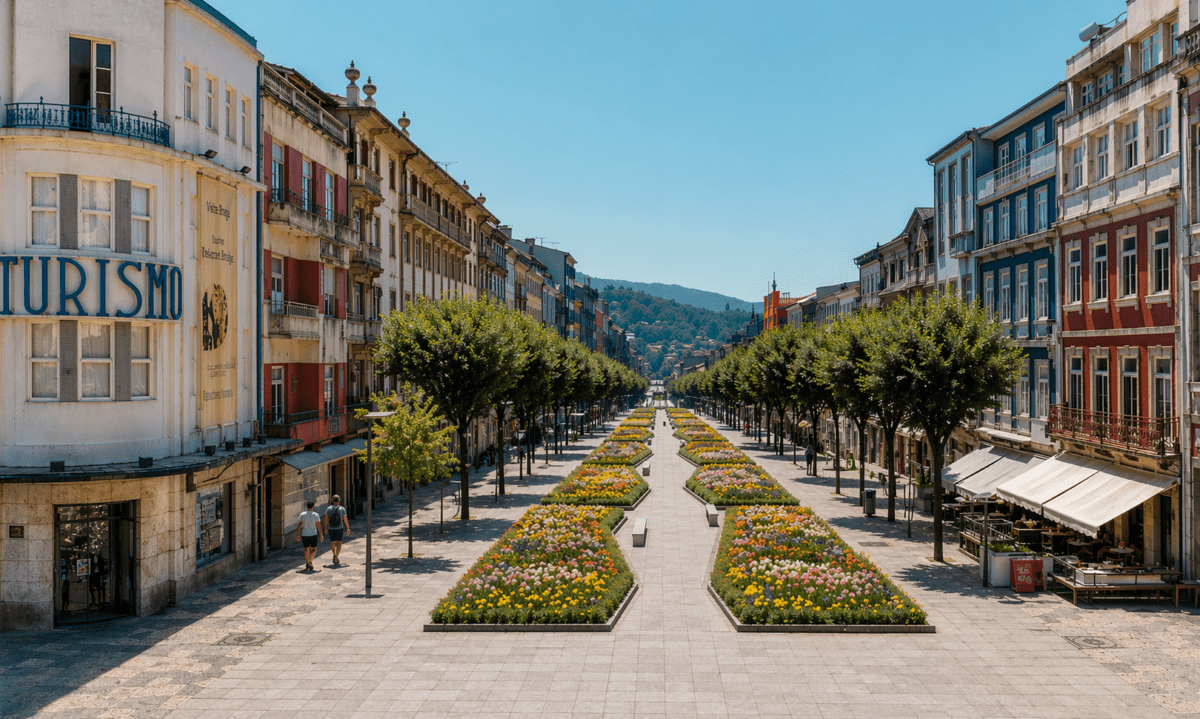
Avenida da Liberdade, where Braga's medieval core opens into a broad promenade
Avenida da Liberdade
Avenida da Liberdade↗
The city opens into a broad, tree-lined avenue, marking Braga’s transition from medieval density to a more modern urban layout. The space widens, the pace slows, and the historic core gives way to a different rhythm. Lined with gardens, cafés, and elegant façades, it remains one of the city’s most pleasant places for a stroll.
Theatro Circo↗
An early 20th-century theater known for its richly decorated interior and long-standing role in Braga’s cultural life. More than a historic landmark, it remains an active performance venue, continuing a tradition of music, theater, and the arts that has animated the city for over a century.
Basílica dos Congregados↗
An 18th-century church with distinctive twin towers facing Avenida da Liberdade. Standing at the meeting point of Braga’s historic center and its more modern avenues, it serves as both a landmark and a visual gateway between the old city and the broader urban landscape beyond.
Jardim da Avenida Central↗
Often considered the heart of modern Braga, this lively square marks the point where the city’s historic center gives way to a broader urban rhythm. Lined with cafés and gathering spaces, it has long served as a meeting place for locals, students, and visitors. A Brasileira↗, one of Braga’s most historic cafés, reflects the city’s social and cultural life, offering a front-row seat to the daily rhythms of the square. Just a short walk away stands Braga Tower, the last surviving keep of the city’s medieval defenses and a reminder of the fortified settlement that once stood here.
ADVERTISEMENT
Tibães Monastery
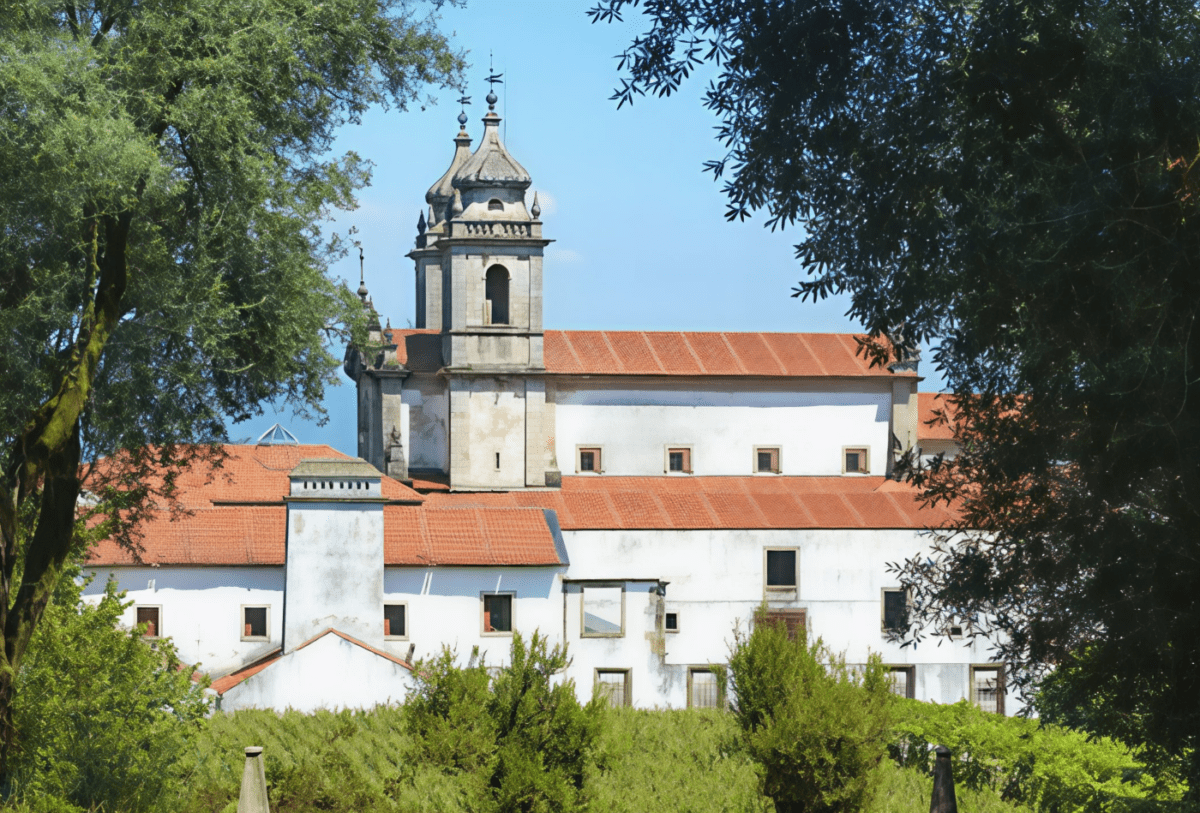
The Monastery of Tibães, where centuries of monastic life unfolded amid the forests and farmland beyond Braga
Tibães began as a modest Benedictine monastery, but its fortunes changed as Portugal emerged as a kingdom. Supported by figures such as Count Henry of Burgundy, Teresa of León, and later Afonso Henriques, the monastery received lands, privileges, and royal patronage that allowed it to grow into one of the most influential religious institutions in northern Portugal. Over the centuries, this support transformed Tibães into a grand monastic complex whose influence extended far beyond its walls.
Life here followed the Benedictine ideal of prayer and work. Monks gathered throughout the day for worship, studied theology, managed vast estates, copied and collected books, trained craftsmen, and oversaw the daily operation of a thriving community. For many, Tibães was not simply a place of worship but the entire world they would know.
The Monastery of Tibães↗ became a center of learning and artistic production. Its library grew into one of the largest in northern Portugal, while sculptors, woodcarvers, architects, and artisans helped shape the development of Portuguese Baroque and Rococo art. The church, cloisters, and decorative details seen today are the legacy of centuries of craftsmanship and patronage.
The monastery’s decline began in 1834 with the abolition of the religious orders, when much of its property was sold and its collections dispersed. Today, restoration has brought Tibães back to life. While it lacks the spectacle of Bom Jesus and the views of Sameiro, the monastery, gardens, and surrounding grounds offer a glimpse into the self-contained world of the Benedictine monks who spent centuries studying, creating art, managing estates, and shaping life far beyond these walls.
ADVERTISEMENT
Sameiro Sanctuary
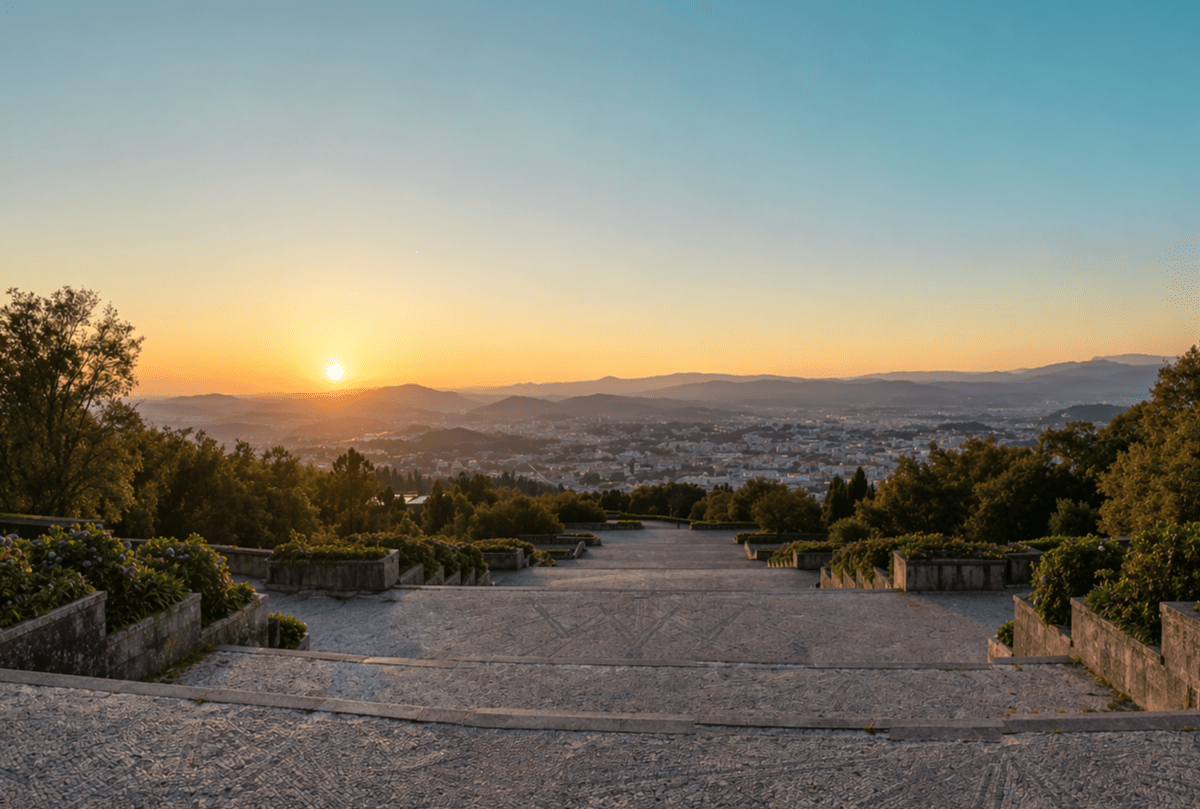
Sunset over Braga, where history, faith, and everyday life converge beneath the hills of northern Portugal
A Sanctuary Above the City
Unlike Bom Jesus, which grew over centuries through successive chapels and stairways, Sameiro was conceived as a destination from the beginning. Emerging during the 19th century, it was designed as a place of pilgrimage, reflection, and devotion to Mary. Pilgrims came not to reenact Christ’s Passion, as they do at Bom Jesus, but to seek comfort, guidance, gratitude, or intercession through prayer to the Virgin.
The basilica itself was built between the late 19th and early 20th centuries. Architecturally, it reflects a more restrained and orderly style than the theatrical Baroque of Bom Jesus. The emphasis is less on dramatic movement and more on serenity. Its white dome and broad terraces were intended to create a sense of openness and elevation above the city below.
Marian Devotion
The Sanctuary of Sameiro↗ stands as one of northern Portugal’s most important expressions of devotion to the Virgin Mary, a tradition that also shaped the Marian sites on Mount Penha near Guimarães. This devotion developed gradually over centuries and was shaped not only by theology but also by art. Long before most people could read, paintings, sculptures, and religious imagery helped people understand and relate to Mary as a symbol of compassion, protection, and hope. By the 19th century, Marian devotion experienced a renewed surge of popularity, inspiring pilgrimage sites and sanctuaries across Europe. In Portugal, that tradition would continue to inspire generations of pilgrims, eventually culminating in Fátima, where reports of Marian apparitions in 1917 transformed a rural village into one of the world’s most important pilgrimage destinations.
Sunset Over Braga
What makes Sameiro memorable is not simply the basilica but its setting. Perched high above Braga, the sanctuary offers sweeping views across the city, the Minho countryside, and distant mountain ranges. Here, the landscape begins to dominate the architecture, encouraging visitors to pause, look outward, and reflect.
That is why Sameiro works so well as the final chapter of the day. Bom Jesus is about the climb. Braga’s historic center is about people and power. Tibães is about the inner world of the monastery. Sameiro shifts attention outward again. After spending the day immersed in history, architecture, and devotion, you stand above the city and see the wider landscape that connects them all.
Dinner Option: After descending from Sameiro, consider ending the day at Tia Isabel↗, one of Braga’s best known traditional restaurants and a long standing favorite for Minho cuisine. If you’re in the mood for something more contemporary, or simply enjoy a good steak, Churrasqueira Nacional↗ is another excellent choice, known for its quality meats and modern approach to the traditional Portuguese grillhouse.
ADVERTISEMENT
Braga Beyond History
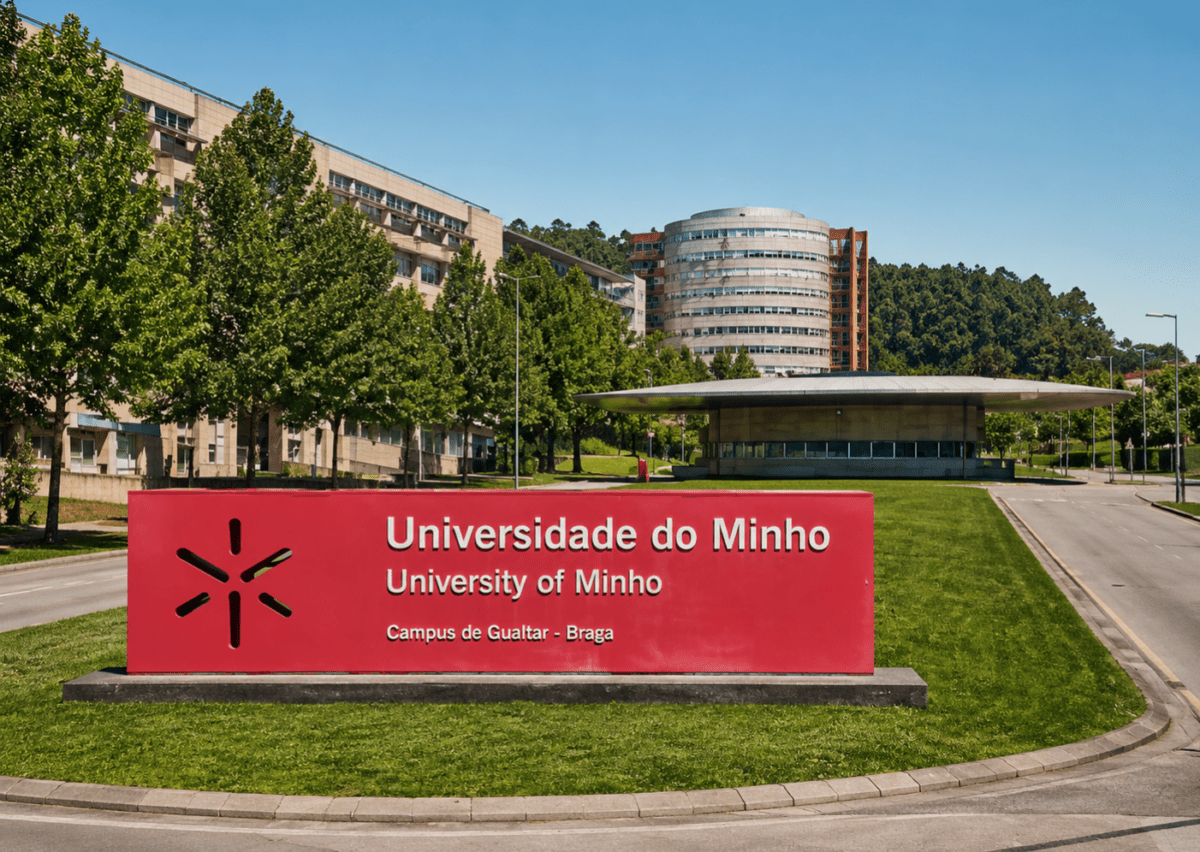
The University of Minho, one of Portugal's leading centers of education, research, and innovation.
Although Braga’s churches, sanctuaries, and historic landmarks attract growing numbers of visitors each year, tourism is not the city’s primary focus. Modern Braga is shaped just as much by education, technology, and research, with institutions such as the University of Minho and companies like Bosch helping drive the local economy. The city has a noticeably youthful character, with students, young professionals, and families contributing to an atmosphere that feels both historic and forward looking.
Beyond the city itself, Braga serves as a gateway to the mountains, forests, and trails of northern Portugal, with Peneda-Gerês National Park within easy reach. The city also hosts a vibrant calendar of festivals, concerts, exhibitions, and performances, extending its identity well beyond the religious and architectural heritage that earned it the nickname “Rome of Portugal.”
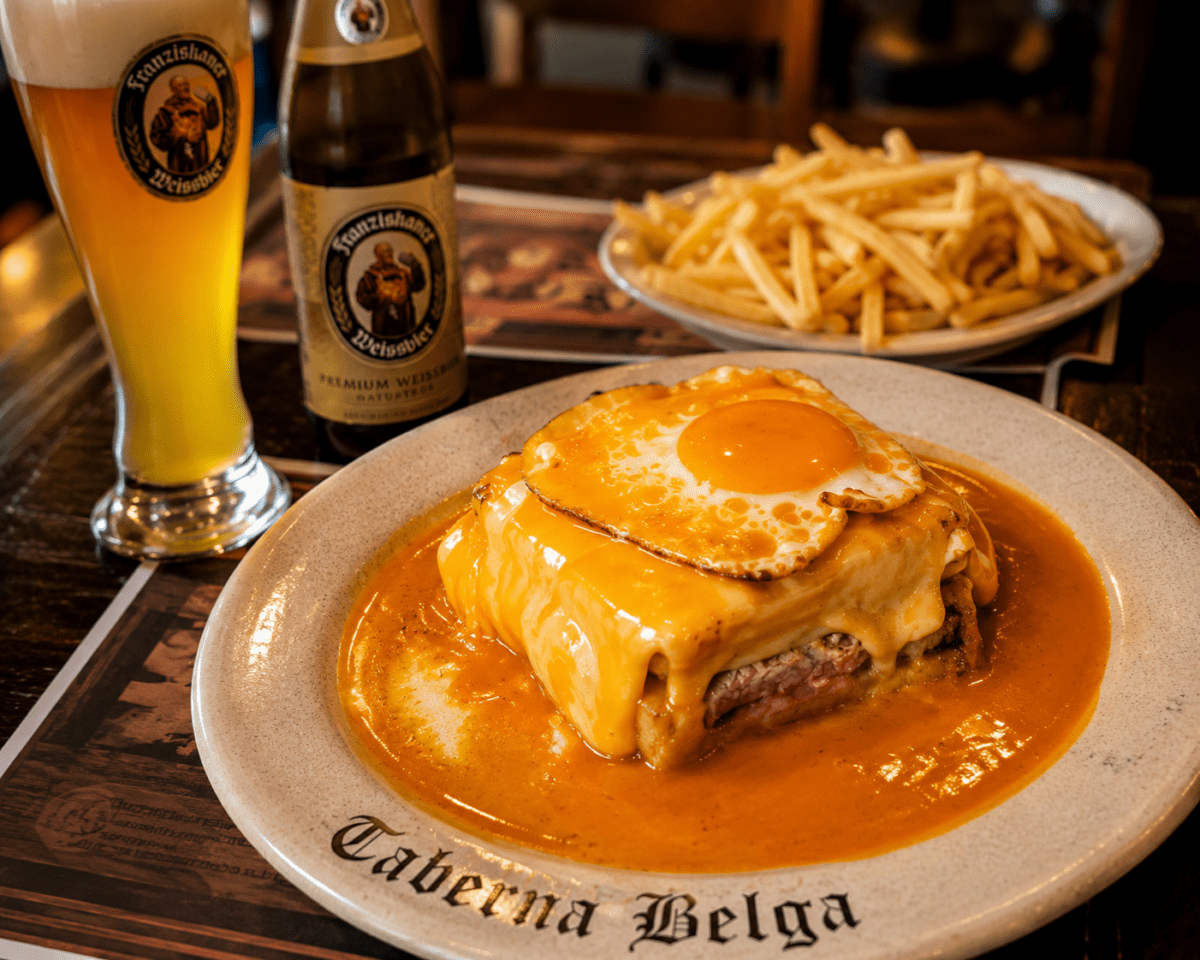
Taberna Belga's famous francesinha, a hearty, no-nonsense northern Portuguese classic
One of the city’s most recognizable modern institutions is Taberna Belga↗, famous for its distinctive francesinha. It may not have centuries of history behind it, but it has become part of the Braga experience for a new generation.
Francesinha is northern Portugal’s most famous comfort food: a hearty sandwich layered with meat, covered in melted cheese and a rich sauce, then served with fries. Braga’s best-known version is found at Taberna Belga, whose distinctive sauce has made it one of the city’s modern culinary landmarks.