Porto’s Old World Charm
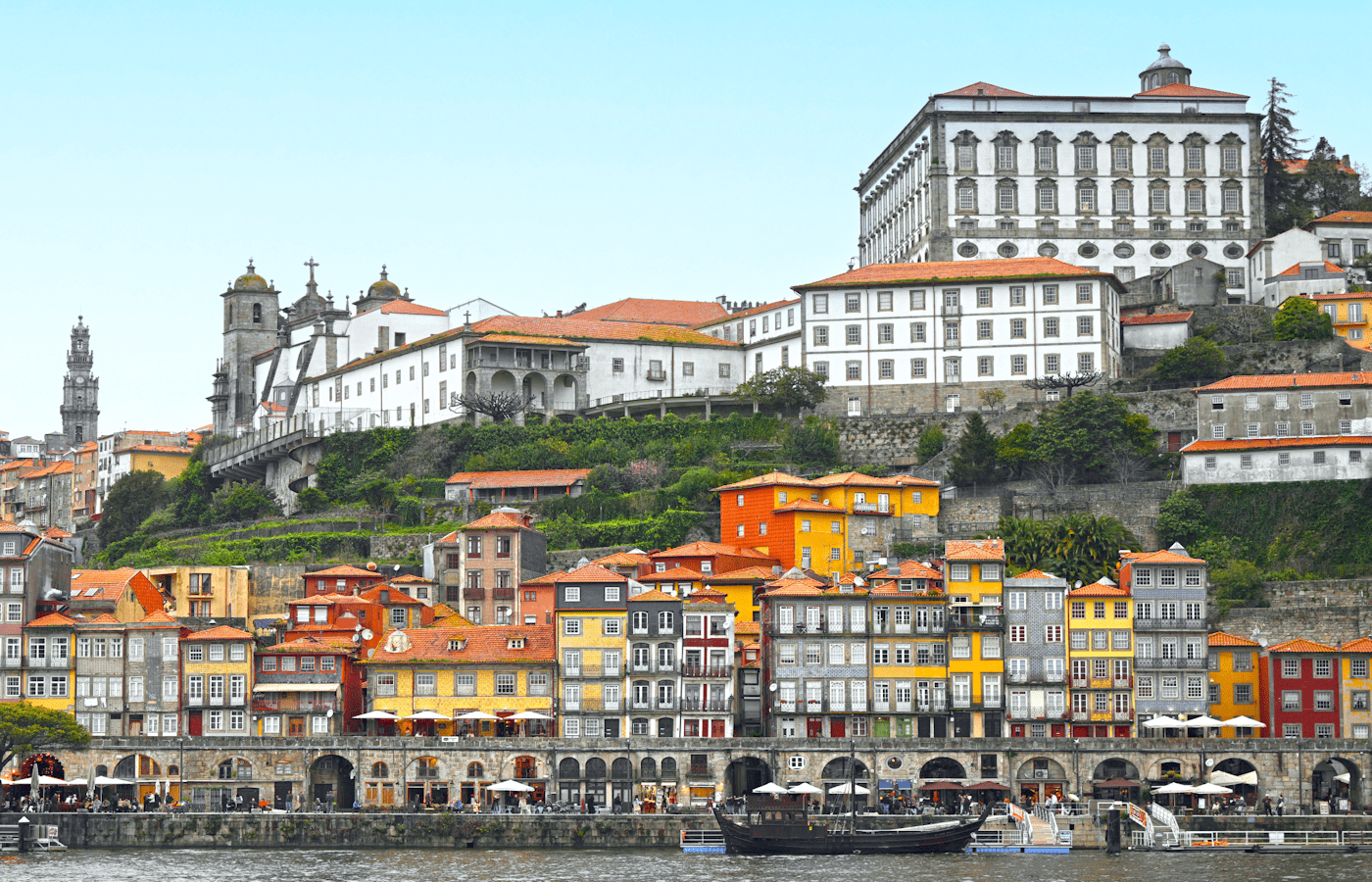
Porto unfolds one hill at a time. Colourful merchant houses cascade toward the Douro River, while medieval rooftops stretch across the skyline. Across the river, centuries old wine lodges define the city’s historic waterfront. Between panoramic viewpoints, riverside cafés, bustling markets, and winding granite streets, Porto offers the perfect setting to wander at your own pace or share unforgettable moments with friends and family.
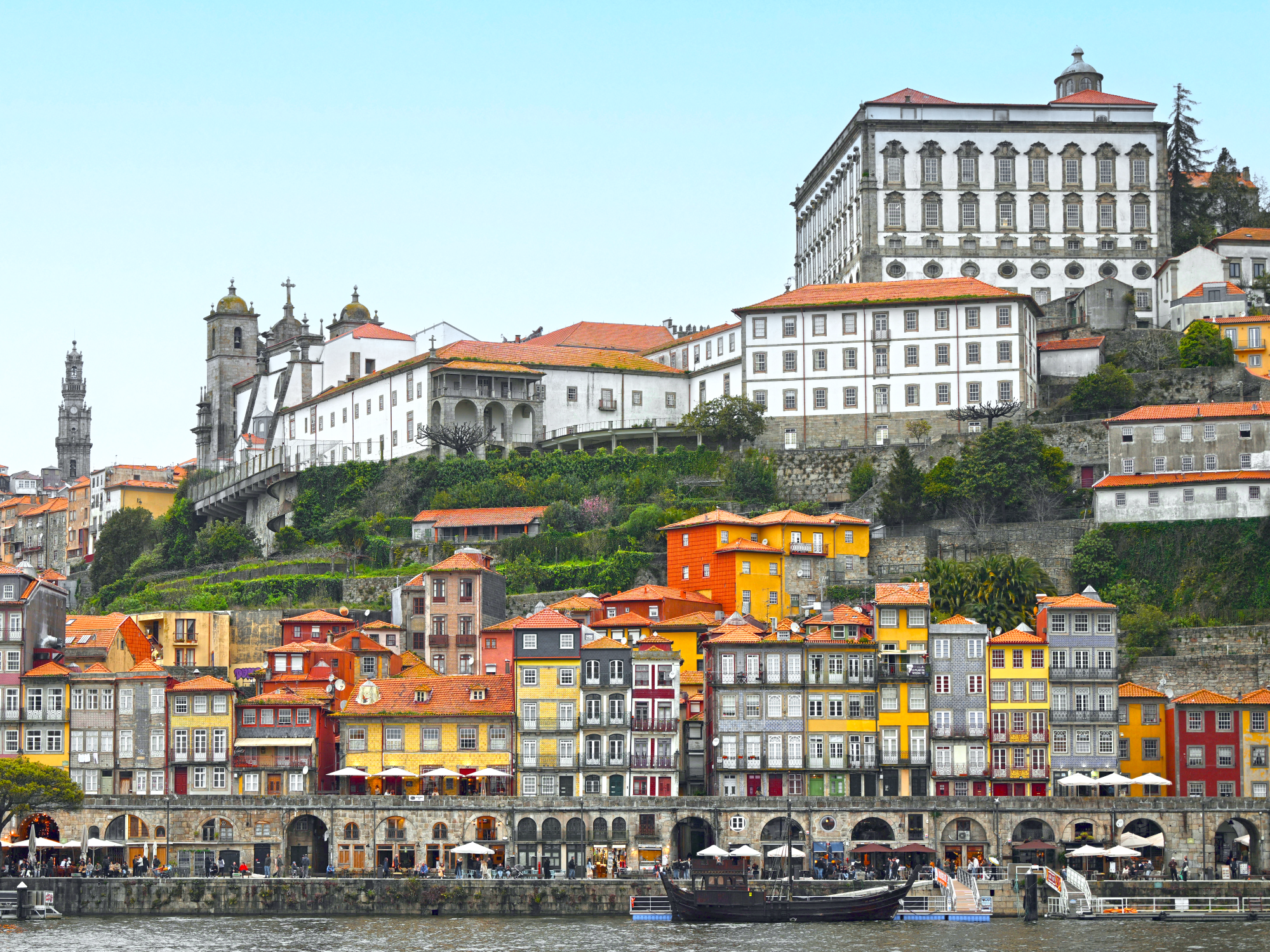
Porto's colorful Ribeira waterfront rises in terraces beneath the city's medieval skyline, where merchants, pilgrims, and explorers shaped the history of Portugal
Main Attractions
Cathedral Hill
Escadas do Barredo
Church of São Francisco & Palácio da Bolsa
Rua da Fonte Taurina
Praça da Ribeira & the Waterfront
Rua das Flores
São Bento Train Station
Hotel NH Batalha
Majestic Café
Bolhão Market
Chapel of Souls
Praça da Trindade
Praça da Liberdade
Praça de Gomes Teixeira
Foz do Douro + Jardim do Passeio Alegre
Luis I Bridge
Miradouro da Serra do Pilar
Jardim do Morro
WOW Porto
Taylor's Port
Sandeman
Graham's Port Lodge
Espaço Porto Cruz
Mercado Beira-Rio
ADVERTISEMENT
Foundations of Porto
Ancient Foundations
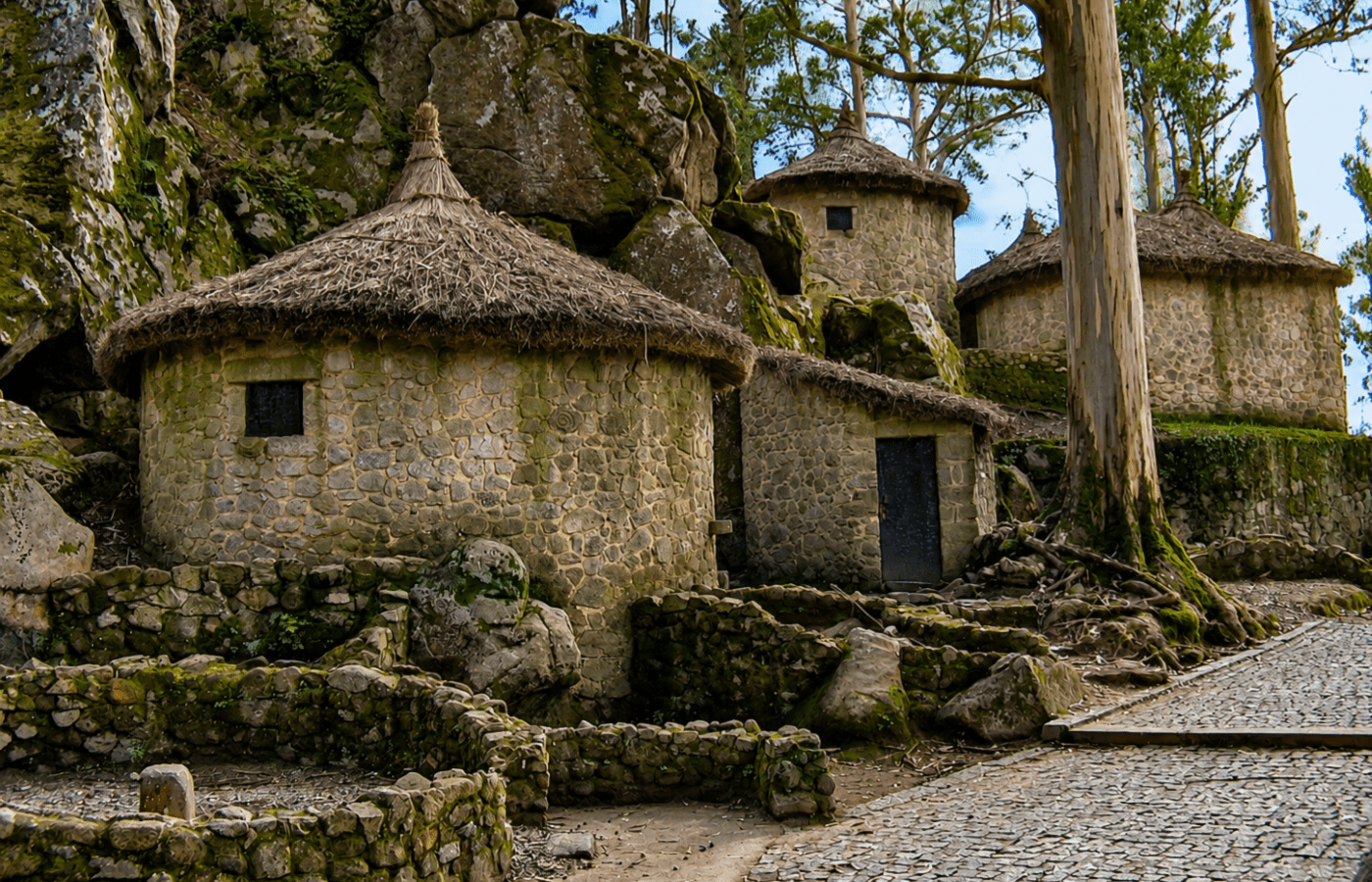
From the high cliffs of modern-day Vila Nova de Gaia, people lived inside tight circular stone huts, watching the riverbanks for rival tribal raiders. Ribeira district—was transformed into a busy dockland crowded with heavy Roman cargo galleys loading local grain and olive oil. The river itself was a hive of activity, with travelers and marching legions constantly crossing back and forth on a highly organized network of wooden ferry pontoons.
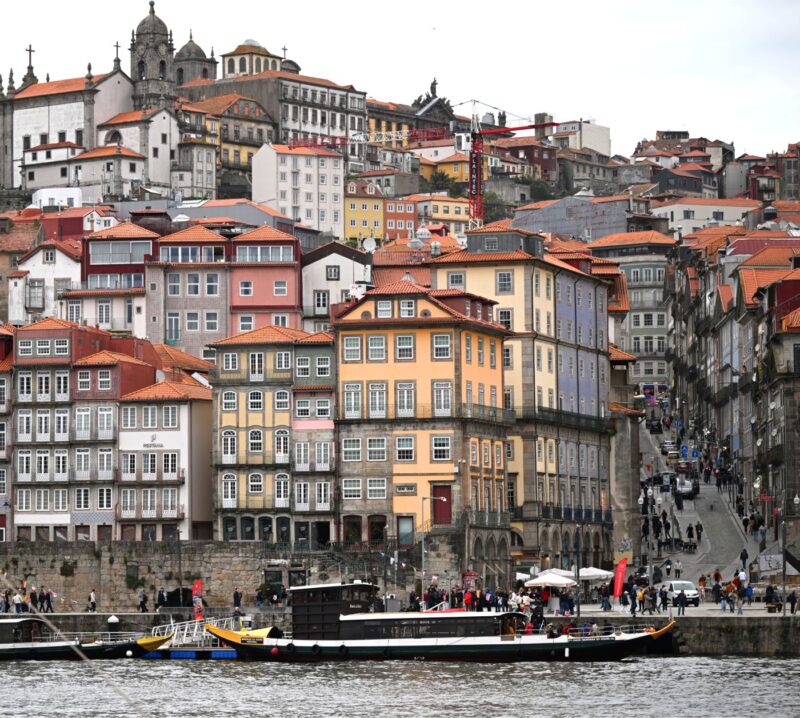
From Vila Nova de Gaia, Porto's colorful merchant houses rise in tightly packed terraces above the Ribeira waterfront
Frontier to Kingdom
Following the collapse of the Germanic kingdoms, Islamic Berber and Arab armies advanced up Roman roads to the northernmost tip of Portugal. Facing constant Christian guerrilla raids, the Moors found the wet, rainy northern peaks too difficult to defend, and eventually withdrew their heavy garrisons south to the Douro River, transforming Porto into a tense, volatile frontier checkpoint and a dangerous “no man’s land” buffer zone directly facing enemy territory across the water.
The Christian holy war exploded in 868 AD when warlord Vímara Peres drove the Moorish frontier guards out of Porto. This newly liberated frontier zone from the Minho to the Douro was officially named the County of Portugal. For centuries, Porto functioned as a heavily weaponized religious borderland, with its stone watchtowers standing as a shield against southern counter-attacks.
Merchants, Church leaders, and the local nobility provided the wealth and weapons that fueled Afonso Henriques. While Afonso ruled from Guimarães, Porto’s powerful elite supported his campaigns in exchange for preserving their trading privileges and tax exemptions. Backed by this fierce commercial engine, Afonso broke free from León, shifting his capital to Coimbra. Porto remained his indispensable financial engine room, bankrolling his escalating military campaigns.
Faith and Exploration
Beginning in the 12th century, Porto became one of the principal stopping points on the Portuguese Way of St. James. Pilgrims crossed the Douro before climbing to Porto Cathedral for a blessing, then continued north along ancient Roman roads toward Santiago de Compostela.
The Ribeira riverfront became a major shipbuilding dockyard. Porto helped build, equip, and provision the fleets that launched Portugal’s Age of Discovery. King João I entrusted his son, Prince Henry the Navigator, with organizing Portugal’s overseas expeditions. These voyages brought immense wealth but also ushered in one of history’s darkest chapters, laying the foundations of the Atlantic slave trade. The profits from overseas commerce helped finance churches, merchant houses, public buildings, and later industries. Porto’s maritime success was inseparable from this legacy of exploration, commerce, and human suffering.
Port Wine and Industry
The Douro Valley has produced exceptional wine for centuries. The Douro River carried barrels downstream to Porto, where merchants exported them around the world. In the early 1700s, Portugal signed a trade agreement with England that gave Portuguese wine a significant price advantage over French wine, dramatically increasing demand. To survive the long sea voyage, merchants fortified the wine with brandy, creating the sweet, long-lasting wine known as Port. As demand soared, vast wine lodges rose across the river in Vila Nova de Gaia, and the wealth generated by the trade transformed Porto into one of Europe’s great commercial cities.
The wealth generated by trade and the Port wine industry transformed Porto into one of Portugal’s leading industrial cities.
ADVERTISEMENT
Ribeira
While the city’s earliest roots lie across the Douro during the Castro period, Porto’s story truly begins here. The Roman settlement of Portus Cale grew around Cathedral Hill and the riverfront below. It later became a fortified medieval frontier city and an important stop on the Portuguese Way to Santiago. As trade expanded, Porto developed into one of Europe’s great Atlantic ports. Nearly every chapter of that history can still be followed on the short walk from the Sé Cathedral to Praça da Ribeira.
If you only have one full day in Porto, this is where you should spend much of it. In less than a kilometre you will walk through nearly two thousand years of history. You will follow the footsteps of bishops, pilgrims, merchants, explorers, and Port wine traders. Allow at least half a day.
Cathedral Hill↗
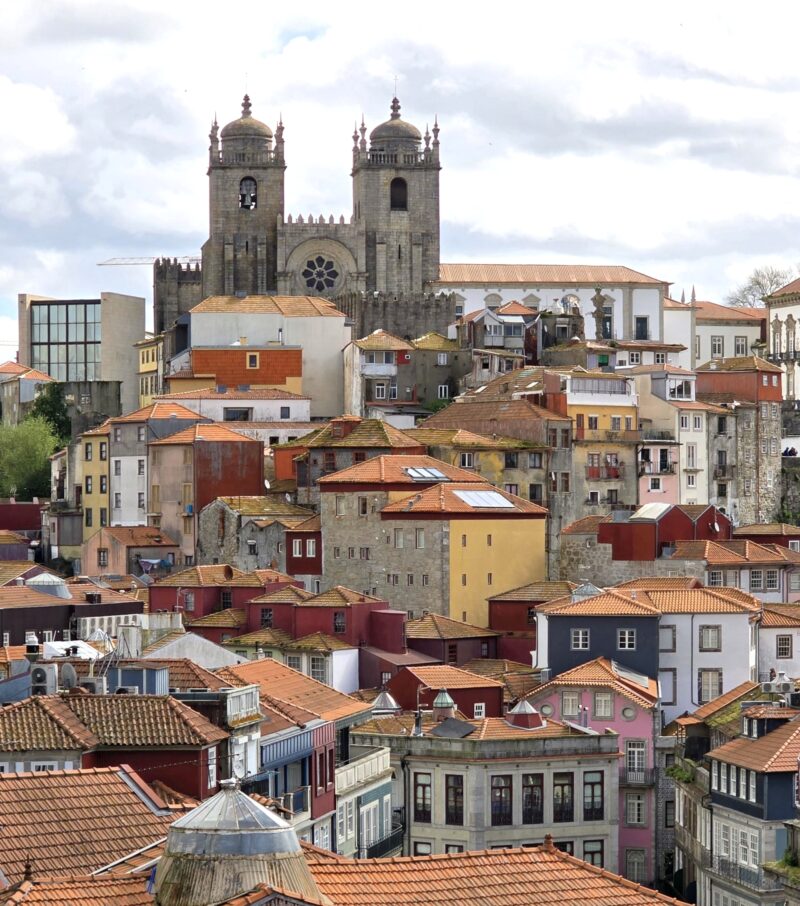
For nearly a thousand years, Cathedral Hill has been the spiritual and political heart of Porto. Standing in Terreiro da Sé, the broad square outside the cathedral, the city’s story unfolds below you. Medieval streets descend toward Ribeira, with the Douro River beyond. Across the water sits Vila Nova de Gaia, where Port wine became one of the world’s most famous exports.
Built during the twelfth century, the Sé Cathedral resembles a fortress more than a Gothic church. Its thick granite walls reflect Porto’s frontier past. Before entering, notice the bronze equestrian statue of Vímara Peres overlooking the square. His recapture of Porto in 868 paved the way for the Christian city that followed and ultimately for the cathedral standing here today. Inside, its Romanesque nave, Gothic cloisters, Baroque chapels, and beautiful azulejo panels trace centuries of changing fortunes. For centuries, pilgrims walking the Portuguese Way to Santiago have paused here before continuing north into Galicia.
Beside the cathedral stands the Episcopal Palace, once the residence of Porto’s bishops and one of medieval Portugal’s great centers of power. Here, Church leaders helped shape the city’s political and economic future. Together with Porto’s merchants and local nobility, they provided the wealth and influence that supported Afonso Henriques in his struggle for independence, making Cathedral Hill one of the places where the foundations of Portugal were forged.
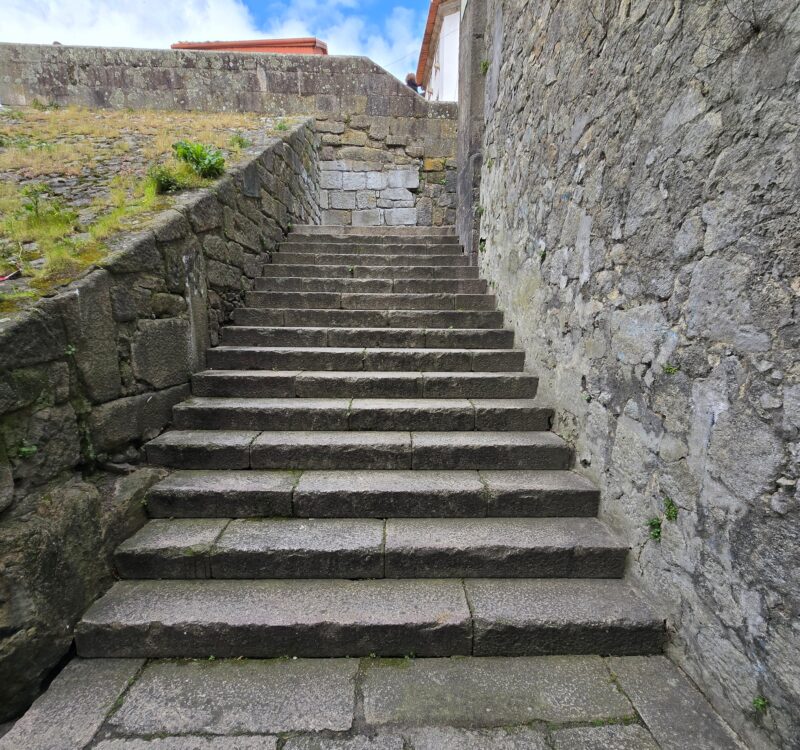
Escadas do Barredo links Cathedral Hill with Ribeira through one of Porto's oldest medieval passageways
Escadas do Barredo↗
Leaving Cathedral Hill, descend through Escadas do Barredo, where Porto’s medieval street plan survives almost unchanged. Narrow granite stairways, weathered houses, and hidden courtyards reveal a neighborhood once home to fishermen, dockworkers, and craftsmen. This neighborhood marks the transition from Porto’s religious and political center to its bustling commercial waterfront.
At the bottom, the route joins Rua dos Mercadores, one of medieval Porto’s principal commercial streets. Merchants from Portugal, England, Flanders, Castile, and Italy passed through here as goods moved between the river, the customs house, and the markets above. The tall, narrow buildings still reflect medieval tax laws that encouraged owners to build upward instead of outward.
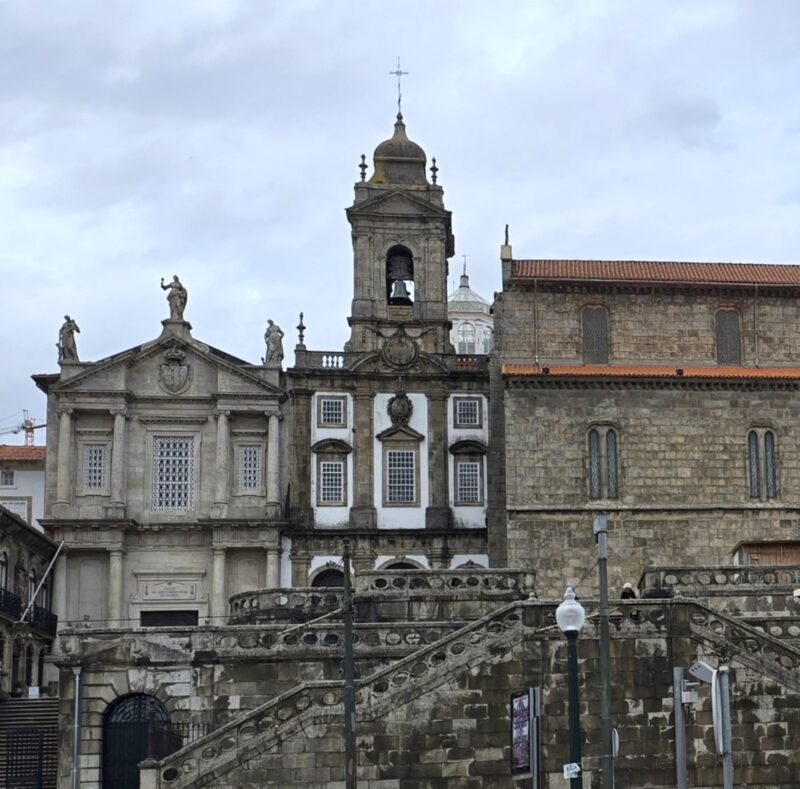
The Church of São Francisco rises above Porto's Douro waterfront, where its Gothic church and Baroque façade have welcomed visitors for centuries
Church of São Francisco & Palácio da Bolsa↗
Porto’s story now shifts from faith to commerce. Construction of the Church of São Francisco began about a century after the Sé Cathedral. Behind its simple Gothic exterior lies one of Portugal’s most spectacular Baroque interiors, where elaborate gilded woodwork reflects the immense wealth generated through overseas trade.
Next door, the Palácio da Bolsa represents a later chapter in Porto’s history. Built on the site of the former Franciscan monastery, it became the headquarters of Porto’s merchant association, where the city’s commercial leaders promoted trade, welcomed foreign dignitaries, and helped shape Porto’s economic future. As Porto prospered, the city’s center of power gradually shifted from the Church and its bishops to merchants and commerce. The Palácio da Bolsa became the symbol of that transformation.
Around the corner stands the Casa do Infante, Porto’s medieval customs house, where goods arriving by river were inspected and taxed centuries before Port wine made the city famous. Although traditionally associated with the birth of Prince Henry the Navigator, its greater significance lies in revealing how long Porto prospered as an international trading port.
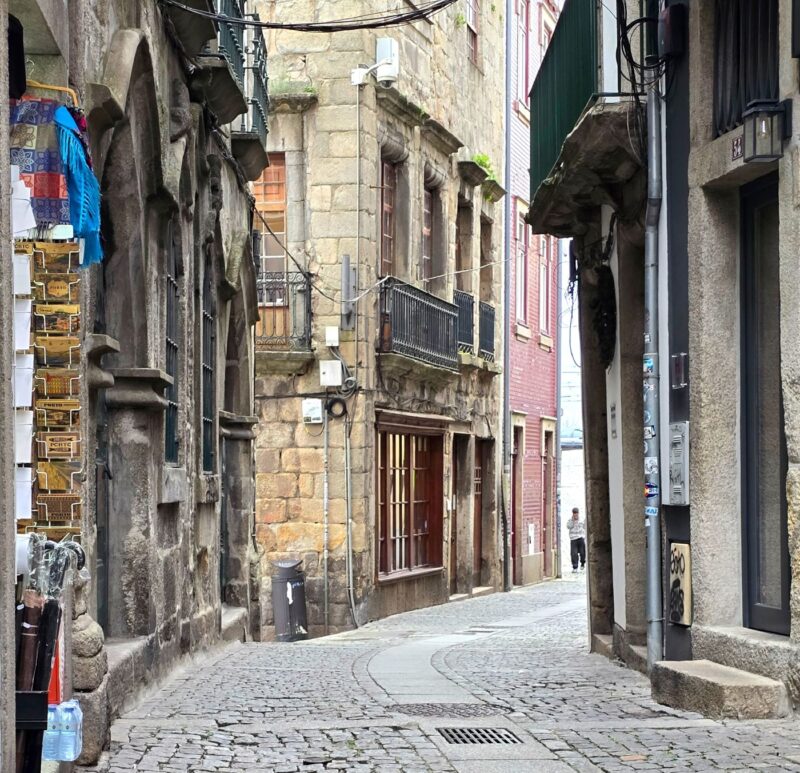
Rua da Fonte Taurina is one of Porto's oldest streets, lined with historic buildings and lively cafés near the Douro waterfront
Rua da Fonte Taurina↗
If one street captures the atmosphere of old Ribeira, it is Rua da Fonte Taurina. Once lined with warehouses, taverns, and merchants’ houses, this narrow granite street connected the commercial quarter with the Douro. Today many of the former warehouses and taverns have become restaurants and wine bars, yet the street retains its intimate scale, weathered façades, wrought-iron balconies, and close relationship with the waterfront.
Rua da Fonte Taurina has quietly become one of Ribeira’s best streets for traditional Portuguese dining. Within a remarkably short stretch, family-run restaurants serve regional specialties such as grilled octopus, bacalhau, seafood rice, seasonal sardines, and slow-cooked meats. Pair them with a Douro red, a crisp Vinho Verde, or finish your meal with a glass of tawny Port. Small galleries and independent shops tucked between the restaurants add to the street’s relaxed, lived-in character, making it one of the most enjoyable places in Porto to wander without any particular destination.
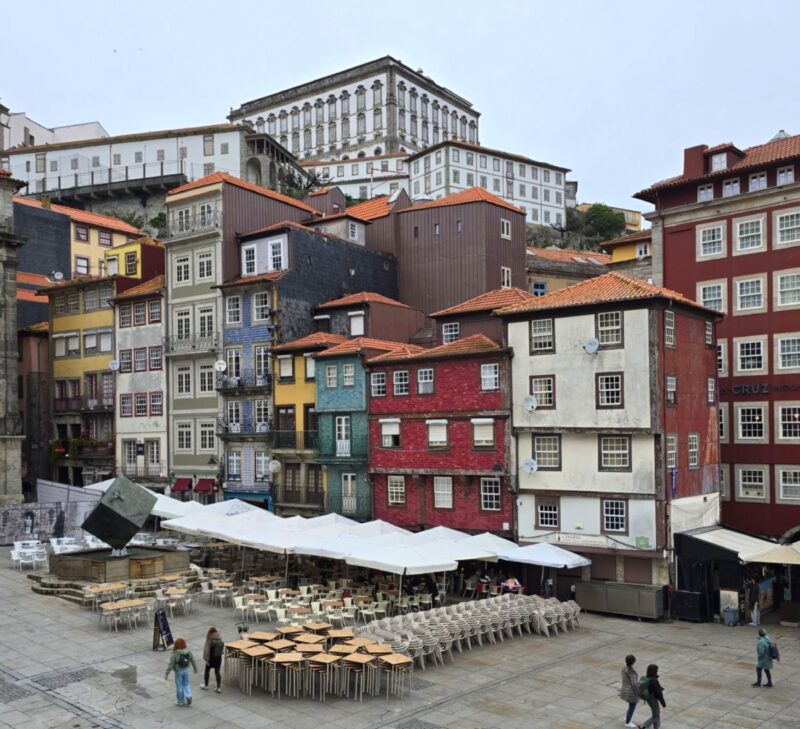
Colorful riverside buildings surround Praça da Ribeira, the lively heart of Porto's historic waterfront
Praça da Ribeira & the Waterfront↗
For centuries, Praça da Ribeira was Porto’s marketplace and working waterfront. Merchants unloaded cargo here. Contracts were negotiated beneath the arcades. Barrels of wine were loaded onto boats bound for the Atlantic. Today it is the city’s busiest gathering place, where colorful merchant houses now contain cafés and restaurants overlooking the Douro.
The waterfront is the culmination of all that is Porto. Looking across to the historic wine lodges of Vila Nova de Gaia, it becomes easy to understand why the Douro shaped the fortunes of both cities for centuries. Come early in the morning or near sunset for the best atmosphere. The waterfront is perfect for lingering over a glass of Port, a Douro wine, or simply a coffee while watching the changing light on the river.
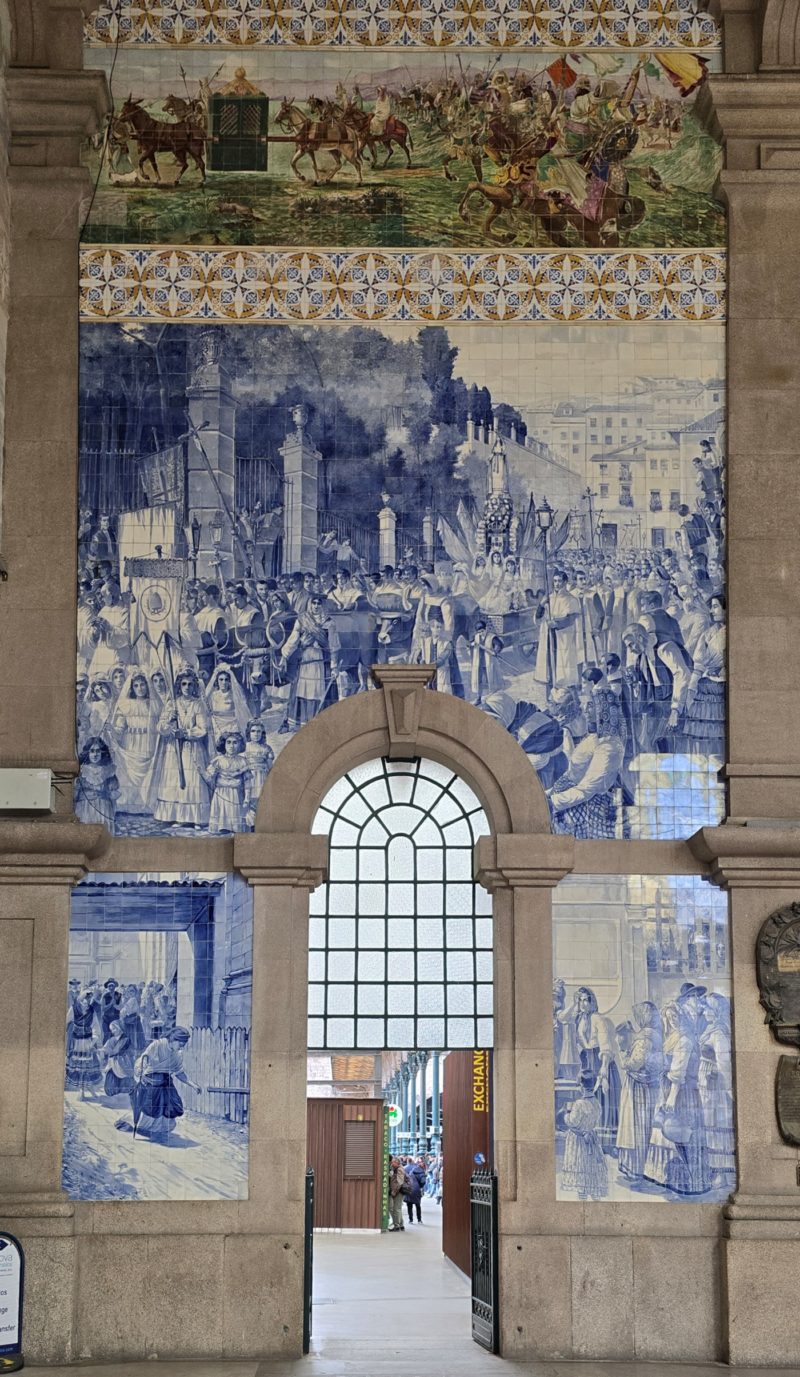
São Bento Station's iconic azulejo murals depict defining moments in Portuguese history and scenes of everyday life
Rua das Flores↗ & São Bento Station↗
Leaving Ribeira, Rua das Flores marks the transition from Porto’s medieval waterfront to the expanding upper city. Laid out in the sixteenth century as one of Porto’s first planned streets beyond the old medieval core, it soon became home to wealthy merchants, goldsmiths, and noble families. Today its beautifully restored buildings, cafés, boutiques, and wine bars make it one of the city’s most enjoyable streets to explore.
At the top of the street stands São Bento Station. Built on the site of a former Benedictine monastery, it welcomed travelers arriving from across Portugal during the railway age. Inside, more than 20,000 azulejo tiles illustrate battles, royal ceremonies, rural traditions, and everyday life, offering a fitting summary of Portuguese history as Porto entered the modern era. From here, it is an easy walk across the Dom Luís I Bridge to Vila Nova de Gaia, where the story of Port wine continues.
In less than a kilometre you have passed through nearly every chapter of Porto’s history. You have followed the footsteps of bishops, pilgrims, merchants, explorers, and Port wine traders. A Roman river port became a medieval frontier city. A pilgrimage route became a commercial powerhouse. A local wine trade became one of the world’s most famous exports. Few cities in Europe offer so much history in such a compact and walkable area. If you only have one full day in Porto, this is where you should spend most of it.
ADVERTISEMENT
Vila Nova de Gaia
Ponte Luís I↗
The Ponte Luís I carries a constant stream of visitors across the Douro River. The bridge has two levels, with the upper deck offering the best views. After crossing, a short flight of stairs leads down to the waterfront below.
Although Porto and Vila Nova de Gaia have grown together into a single metropolitan area, they have always remained distinct cities with different roles. Over the centuries, Porto developed as the region’s fortified commercial centre, while Gaia provided the space for shipbuilding, warehouses, and the lodges where Port wine was blended, aged, bottled, and prepared for export around the world. Together, the two cities created one of Europe’s greatest wine-trading centres, each depending on the other to prosper.
That history still defines Gaia today. The broad waterfront promenade follows the river past cafés, restaurants, lively terraces, and the historic wine lodges. Behind the waterfront, cool, quiet stone cellars continue a tradition that has shaped this region for centuries. While Porto is compact, steep, and full of energy, Gaia offers a different perspective, where visitors can slow down, enjoy the riverfront, and discover the other half of Porto’s story.
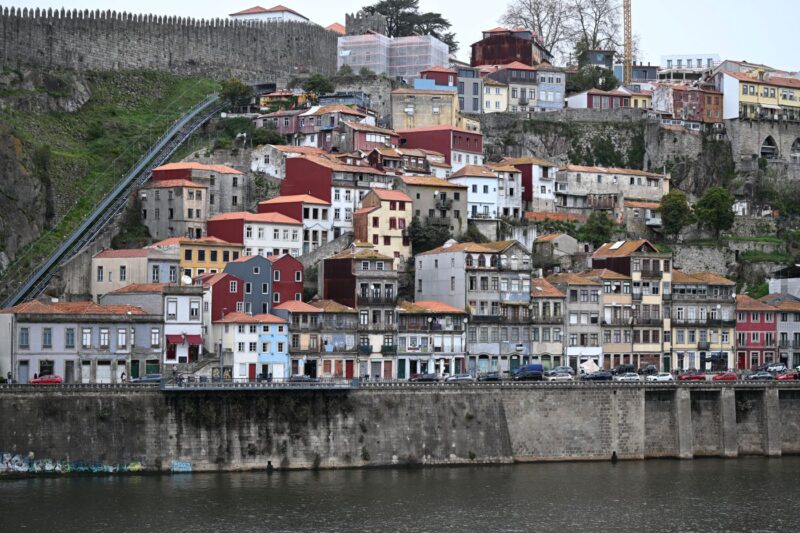
The colorful hillside homes of Guindais climb beneath Porto's medieval Fernandine Walls
Cais de Gaia↗
From the foot of the Ponte Luís I, the Cais de Gaia (Waterfront Promenade) stretches west along the south bank of the Douro River. Once a busy working waterfront lined with warehouses, barrels, and trading ships, it is now one of Porto’s most enjoyable places to explore on foot.
Across the river, the colourful houses of Ribeira climb the hillside, creating one of Portugal’s most memorable views. Traditional rabelo boats rest along the quay, recalling the days when they carried barrels of Port wine downstream from the Douro Valley.
The promenade is lined with cafés, restaurants, wine bars, and outdoor terraces. Head to the rooftop terrace at Espaço Porto Cruz↗. Overlooking the river and the rooftops of Porto, it is an excellent place to enjoy a drink while watching the city change from day to night.
As you continue walking, you’ll come across the striking Half Rabbit by Portuguese artist Bordalo II↗. Created from discarded materials, the giant rabbit is a reminder that even a historic waterfront continues to evolve.
Farther along, the lively Mercado Beira-Rio↗ offers local food, drinks, and regional specialties. River cruises also depart regularly from the waterfront, offering a different perspective of Porto and the Douro River.
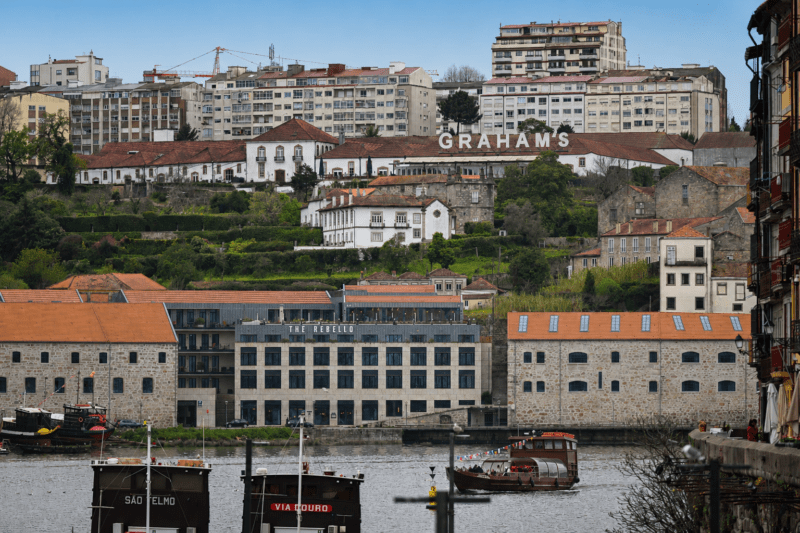
Graham's Port Lodge overlooks the Douro River, where Port wine has been aged for generations
Port Wine Lodges & Cellar Tours
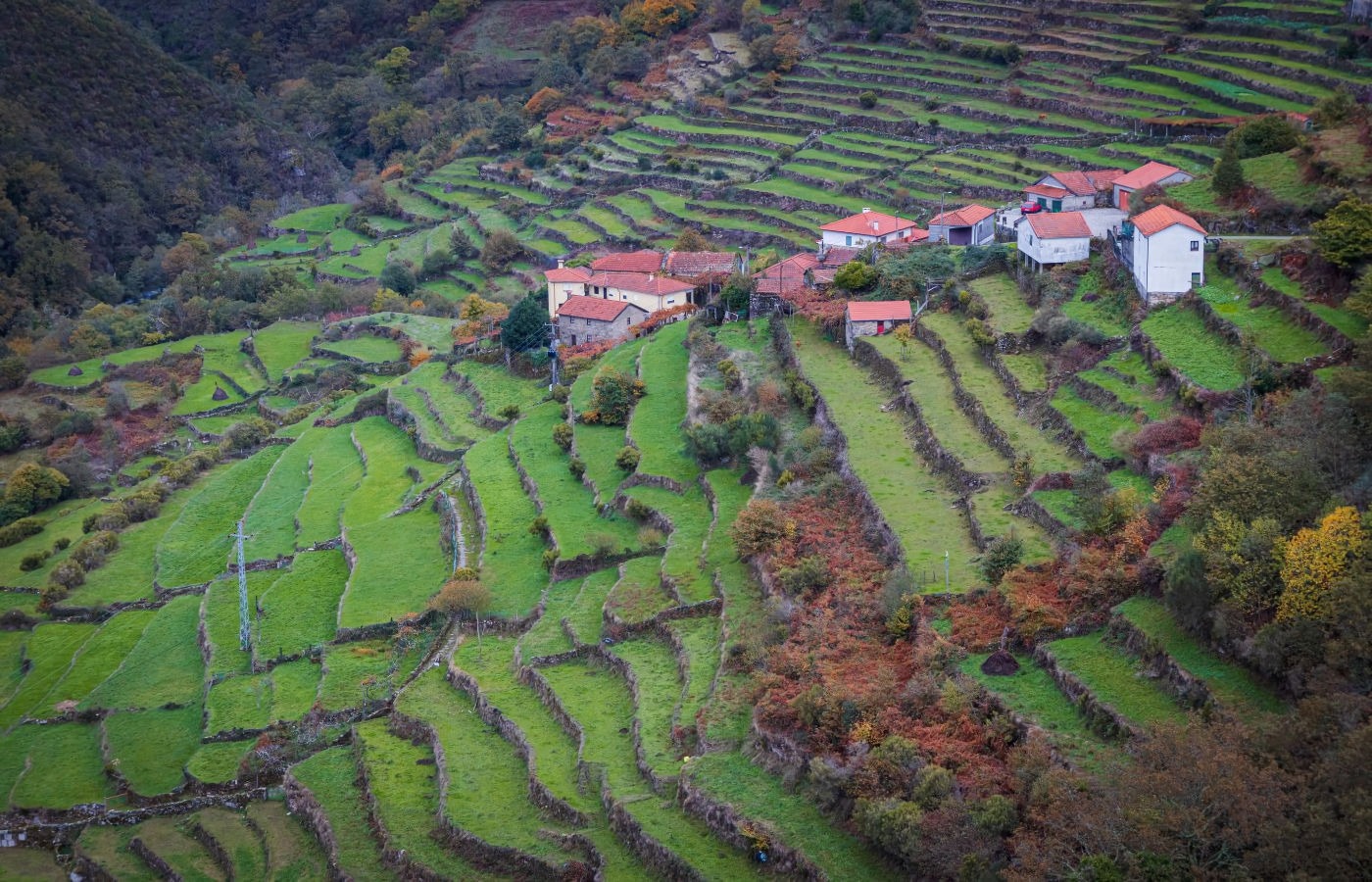
For many visitors, the Port wine lodges are the highlight of a visit to Gaia. The story, however, begins more than 100 kilometres upstream in the Douro Valley, where the region’s steep, terraced vineyards produce the grapes used to make Port.
For centuries, barrels of wine travelled down the Douro River in traditional rabelo boats before arriving in Gaia. Here, the cooler conditions, available space, and easy access to the river made it the ideal place to blend, age, bottle, and export Port wine. As the trade grew, the waterfront became lined with large stone lodges, many of which continue to operate today.
Several of the world’s best-known Port houses welcome visitors with guided tours explaining how Port is blended, aged, and bottled before concluding with a tasting. While each lodge has its own history and character, they all tell the story of an industry that helped shape both Gaia and Porto.
Whether you visit one lodge or several, you’ll quickly discover that they are more than historic cellars. They remain working businesses, preserving centuries of craftsmanship while continuing to produce one of Portugal’s most celebrated wines.
Many excellent Port houses welcome visitors in Gaia, including Cálem, Ferreira, Ramos Pinto, Cockburn’s, Churchill’s, Burmester, and many others. Each has its own history and character, but the following three are among the most respected and offer an excellent introduction to the world of Port wine.
Taylor’s Port↗
Founded in 1692, Taylor’s is one of the oldest and most respected names in Port wine. Often considered the benchmark Port house, it is renowned for its exceptional Vintage Ports and aged Tawny Ports. The historic lodge combines centuries of tradition with excellent self-guided tours and tastings overlooking Porto.
Graham’s Port Lodge↗
Established in 1820, Graham’s is celebrated for its rich, full-bodied Ports and one of the finest visitor experiences in Gaia. Set on a hillside above the river, the beautifully restored lodge offers excellent guided tours, outstanding tastings, and panoramic views across Porto.
Sandeman Cellars↗
Founded in 1790, Sandeman is one of the world’s most recognizable Port houses, famous for its iconic “Don” logo. Located on the Gaia waterfront, the historic lodge offers engaging guided tours that explore the history of Port wine, followed by tastings of its renowned wines. Combining centuries of tradition with an excellent location, Sandeman is a popular choice for first-time visitors.
World of Wine↗
Opened in 2020, World of Wine (WOW) has transformed a collection of historic wine warehouses into one of Gaia’s most popular cultural attractions. Rather than focusing on a single Port producer, WOW brings together museums, restaurants, shops, and tasting experiences that celebrate the wines, history, and culture of Portugal.
Visitors can choose from several museums covering subjects such as Port wine, cork, chocolate, drinking vessels, and the history of the region. Wine tastings, workshops, and guided experiences provide an introduction to Portugal’s diverse wine-producing regions, while a variety of restaurants and cafés make it easy to spend several hours exploring the complex.
Perched above the Gaia waterfront, WOW also offers excellent views across the Douro River toward Porto. Whether you’re interested in wine, history, or simply looking for a relaxed place to explore, it provides a modern complement to the historic Port wine lodges nearby.
For the latest exhibitions, opening hours, and ticket information, visit:
Visit WOW’s official website→.
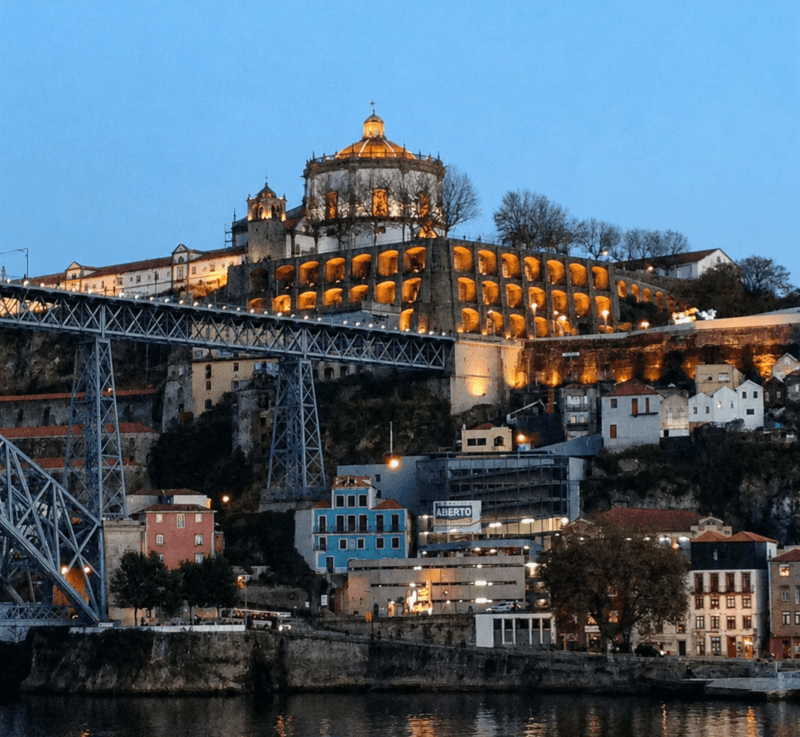
Serra do Pilar Monastery crowns the hillside above the Douro River in Vila Nova de Gaia
Serra do Pilar Monastery↗ & Jardim do Morro↗
Perched high above the Douro River, the Serra do Pilar Monastery and the adjoining Jardim do Morro offer some of the finest views in Portugal. The view stretches across the historic heart of Porto, from the medieval waterfront to the cathedral ridge and the city’s layered skyline. Looking across the Ponte Luís I to the right, you’ll see Guindais, one of the oldest and most picturesque parts of Porto. Its narrow streets and historic buildings cling to the steep hillside beneath the Fernandine Walls, beside the lower station of the Guindais Funicular. During blue hour, the illuminated Serra do Pilar Monastery create a memorable evening photo opportunity.
Construction of the monastery began in 1538 for the Augustinian Canons Regular. Its distinctive circular church and cloister are unique in Portugal and are among its most remarkable architectural achievements. Because of its commanding position overlooking the Douro, the monastery also played an important military role throughout its history.
Today, the monastery forms part of the UNESCO World Heritage Site, Historic Centre of Porto, Luiz I Bridge and Monastery of Serra do Pilar. Visitors can explore the church and cloister before stepping outside to enjoy the spectacular panorama.
Beside the monastery, Jardim do Morro is one of Gaia’s most popular gathering places. Shaded lawns and terraces provide a relaxing place to pause while taking in the view across the river. As the sun begins to set, locals and visitors gather here to watch the changing light over Porto, making it one of the city’s favourite sunset spots.
Whether you arrive on foot across the upper deck of the Ponte Luís I or by the Gaia Cable Car↗, Serra do Pilar and Jardim do Morro provide a fitting conclusion to a visit to Gaia, bringing together centuries of history with one of Europe’s most memorable urban landscapes. The cable car offers a scenic alternative to the walk, linking the waterfront with the monastery while providing spectacular views over the Douro River and Porto. For current fares, opening hours, and tickets, visit:
Visit Gaia Cable Car website→.
ADVERTISEMENT
Baixa
No longer confined within its medieval walls, Porto gradually spread northward. Broad avenues replaced narrow lanes, while elegant civic buildings, cafés, theatres, railway stations, and shopping streets shaped the modern city. Today, Baixa remains Porto’s civic, cultural, and social heart. Beginning with breakfast or a coffee, this relaxed walk is the perfect addition to your time in Ribeira and Vila Nova de Gaia.
Market & Café Culture↗
Begin with a coffee or breakfast at Café Majestic↗, one of Europe’s finest Belle Époque cafés. Opened in 1921, its beautifully preserved interior has made it one of Porto’s most celebrated landmarks. Whether you stop for a coffee, pastry, or simply admire the elegant surroundings, it remains one of the city’s classic experiences.
Just a short walk away, Mercado do Bolhão↗ has been Porto’s traditional market for more than a century. Following its careful restoration, the market combines fresh produce, regional specialties, cafés, and casual eateries, making it one of the best places to experience the everyday flavours of northern Portugal. Whether you’re looking for lunch, an early dinner, or simply to browse the stalls, it offers an authentic glimpse into local life.
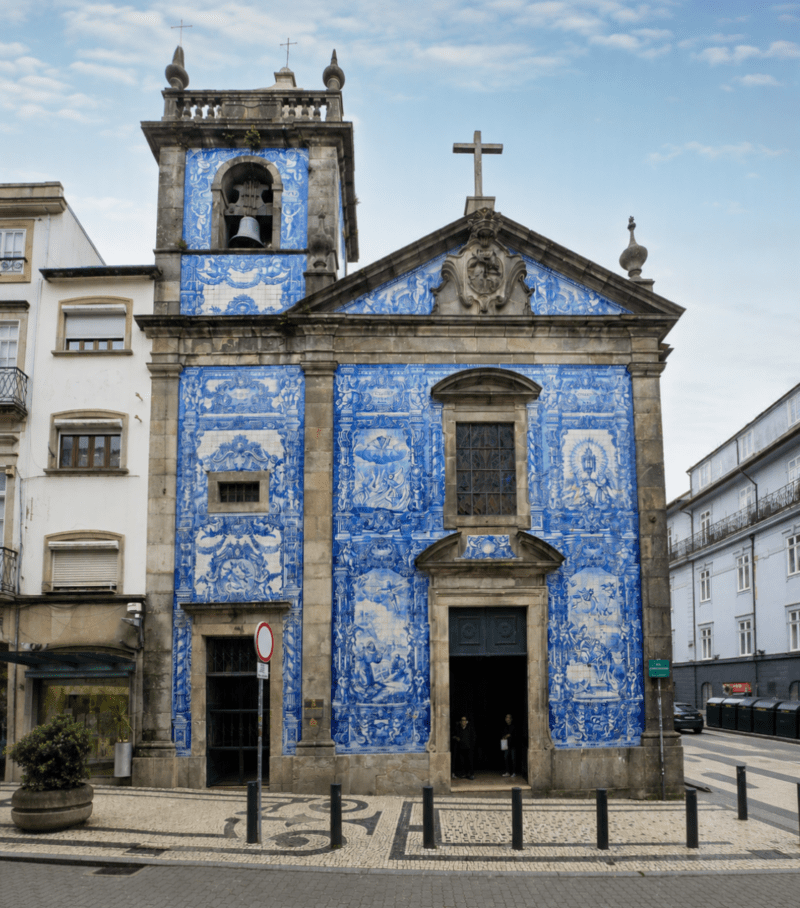
Intricate azulejo tiles adorn the façade of Capela de Santa Catarina (Chapel of Souls), Porto
Chapel of Souls↗
At the corner of Rua de Santa Catarina, the Chapel of Souls (Capela das Almas) is visually unique and feels like a real local church rather than just a tourist attraction. Built in the early eighteenth century as Porto expanded beyond its medieval walls, it served the growing population of the city’s new northern districts. The church originally had a simple Baroque appearance before its exterior was covered with more than 16,000 blue-and-white azulejos depicting scenes from the life of the chapel’s patron saint.
Despite the constant flow of visitors outside, the Chapel of Souls remains a living neighbourhood church, where local residents continue to gather for Mass, prayer, and quiet reflection. While many visitors stop only to admire its famous tiled façade, the quiet interior is equally memorable.
Avenida dos Aliados↗
Continue toward Praça da Trindade, where Porto’s impressive City Hall and the neighbouring Church of Trindade reflect the city’s expansion beyond its medieval walls. From here, stroll south along Avenida dos Aliados, Porto’s grand boulevard, lined with elegant civic buildings, historic hotels, cafés, and theatres. The avenue leads naturally into Praça da Liberdade↗, one of the city’s most important public squares and a longtime setting for celebrations, political gatherings, festivals, and national commemorations.
At its centre stands the monument to King Pedro IV, a man whose life connected Portugal and Brazil in an extraordinary way. Pedro was born into Portugal’s royal family. When Napoleon invaded Portugal, the royal court fled to Brazil, then part of the Portuguese Empire. Pedro grew up there and remained behind when his father, King João VI, returned to Lisbon.
In Brazil, he became Emperor Pedro I after fighting for and securing Brazil’s independence from Portugal. When his father later died, Pedro also inherited the Portuguese throne as King Pedro IV. This led to a civil war with his brother, Miguel. After securing the throne, Pedro passed it on to his young daughter, Maria II.
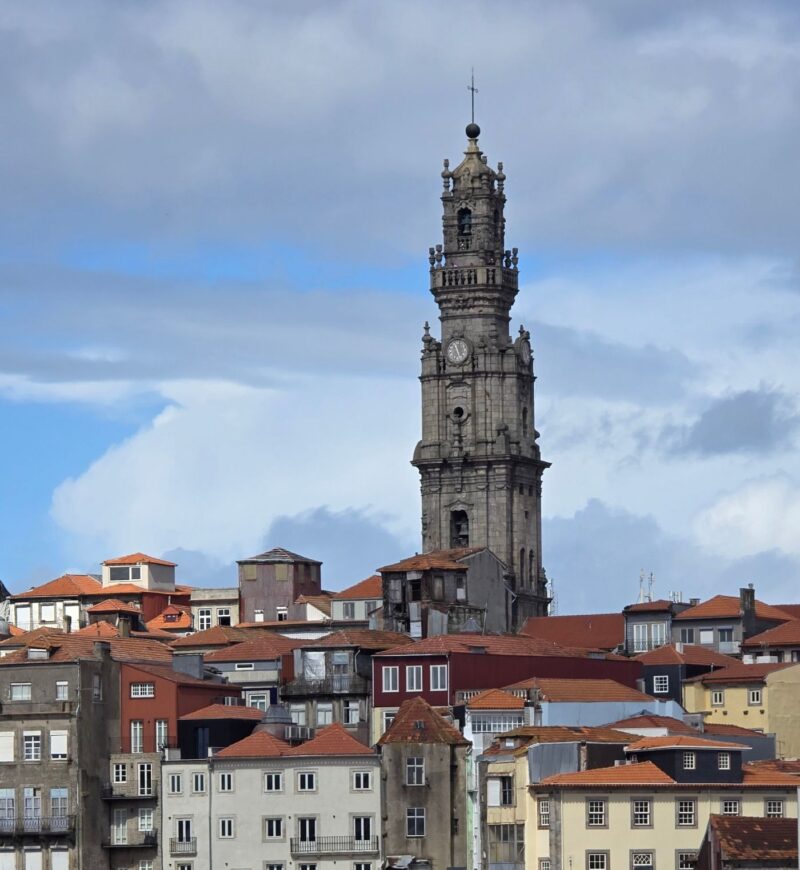
Clérigos Tower rises above Porto's rooftops, a beacon overlooking the city
Praça de Gomes Teixeira↗
Continue west along Rua dos Clérigos to Praça de Gomes Teixeira, a vibrant and historically significant public square. It is a major cultural crossroads where history, student culture, and striking monuments blend together.
On the west side of the square, standing side by side, are Igreja do Carmo and Igreja dos Carmelitas↗. Although they appear to be a single building, they are separated by the famous Casa Escondida (Hidden House), a residence little more than a metre wide. It was built because church law at the time did not allow two churches to share a common wall. The Church of Carmo is best known for its magnificent blue-and-white azulejo panel covering the side façade, which beautifully illustrates Portugal’s tradition of using azulejos to tell religious stories.
Just across the square stands Livraria Lello↗, one of the world’s most beautiful bookstores, famous for its sweeping staircase, carved woodwork, and stained-glass ceiling. Even if you choose not to go inside, its ornate Neo-Gothic façade is worth admiring.
At the far end of Praça de Gomes Teixeira, the Clérigos Tower↗ rises above Porto’s rooftops. Designed by an Italian architect, the tower forms part of a church built for the Brotherhood of Clerics, a religious order that cared for priests and supported charitable works.
Standing more than 75 metres high, it was the tallest building in Portugal when completed. Long before modern maps and GPS, sailors navigating the Douro River and travellers approaching the city looked for the tower to guide them. Its bells also marked the rhythm of daily life, calling worshippers to prayer and marking the passing of time for the city below.
Today, climbing its 225 steps rewards visitors with one of the finest panoramic views over Porto, stretching from the historic centre to the Douro River and Vila Nova de Gaia.
ADVERTISEMENT
Douro Meets the Atlantic
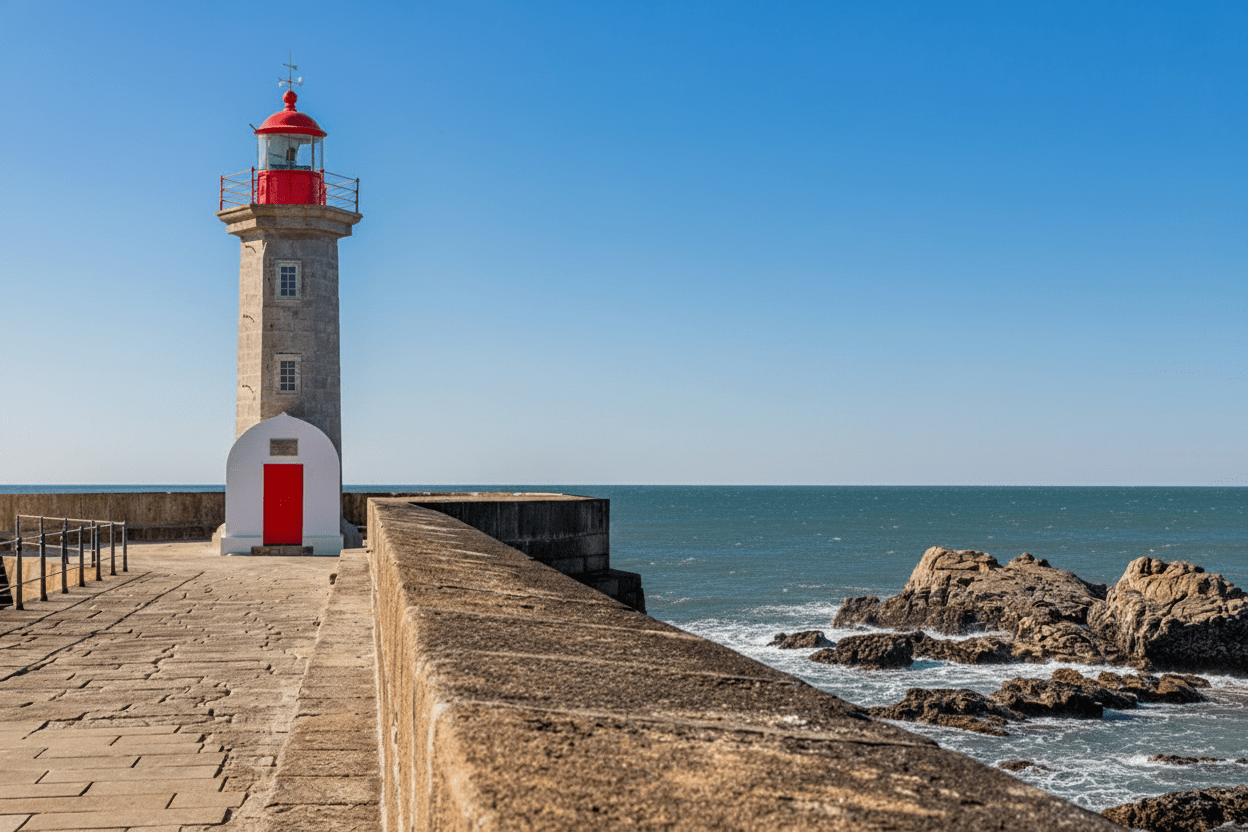
Felgueiras Lighthouse at Foz do Douro, where Portugal's most famous river reaches the Atlantic Ocean
After winding through vineyards, valleys, and the historic heart of Porto, the Douro River finally reaches the Atlantic Ocean at Foz do Douro. It is a quieter side of the city, where broad promenades, ocean views, and crashing waves replace the bustle of the riverfront. It is a fitting place to bring your journey through Porto to a close.
Foz do Douro↗
Foz do Douro marks the point where Portugal’s most famous river meets the Atlantic Ocean. A scenic promenade follows the waterfront past beaches, cafés, and rocky headlands to the mouth of the Douro. Overlooking the entrance to the river is the sixteenth-century Fort of São João Baptista da Foz, built to defend Porto from attacks arriving by sea. Together with the nearby lighthouse, it serves as a reminder that this peaceful waterfront was once one of the city’s most strategic locations. Today, it is an ideal place for a leisurely walk, especially in the late afternoon as the sun begins to set over the Atlantic.
Jardim do Passeio Alegre↗
Dating from the late nineteenth century, Jardim do Passeio Alegre is one of Porto’s most elegant riverside gardens. Palm trees, ornamental fountains, winding paths, and a historic bandstand create a peaceful setting overlooking the point where the Douro River meets the Atlantic Ocean. It is the perfect place to relax after exploring the city and watch the river complete its long journey to the sea.
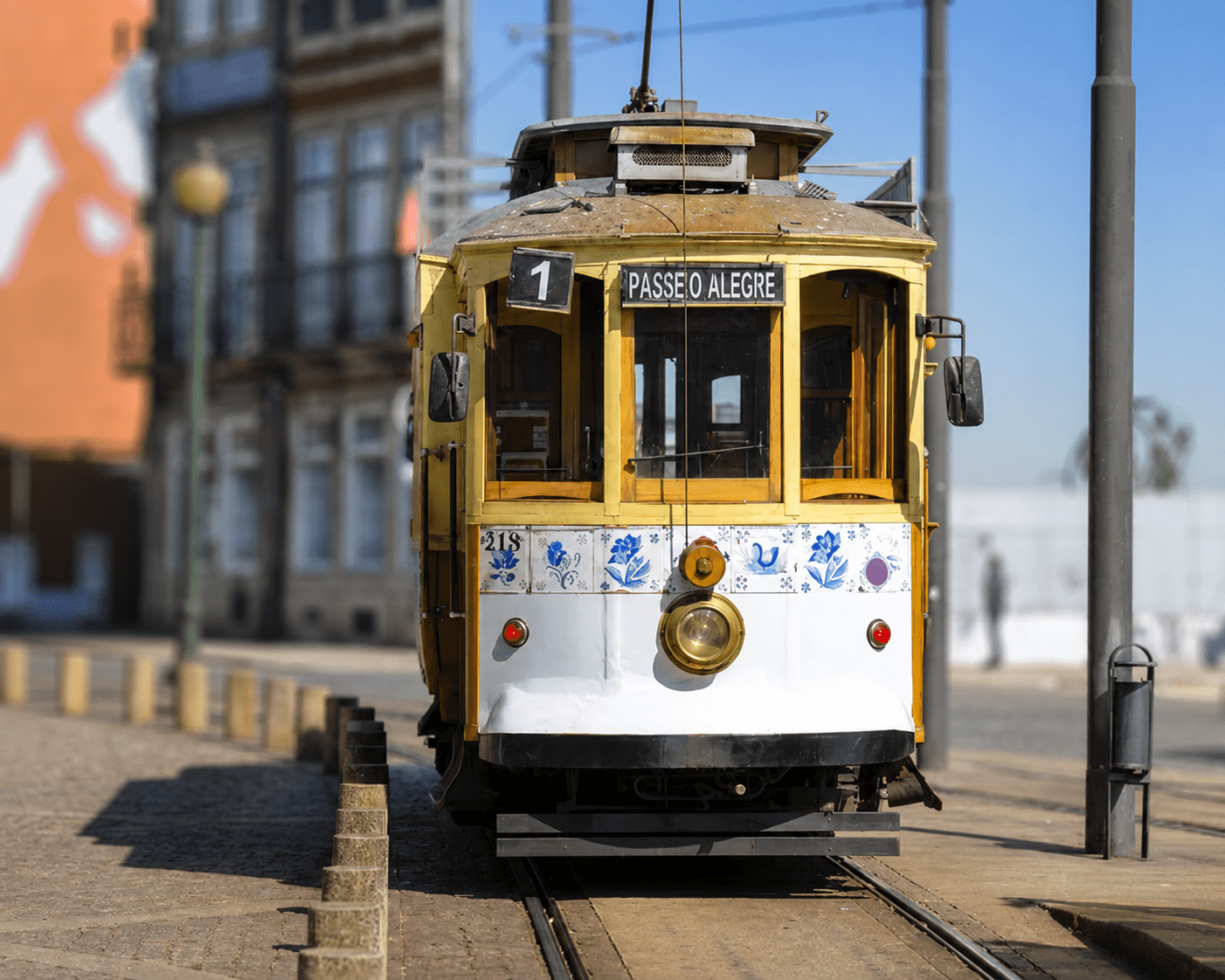
Porto's historic Tram Line 1 follows the Douro River to Foz do Douro, offering one of the city's most scenic journeys
Historic Tram Line 1
One of the most enjoyable ways to reach Foz do Douro is aboard Porto’s historic Tram Line 1. Departing from Infante, near Ribeira, the beautifully restored vintage tram follows the north bank of the Douro River as it makes its final approach to the Atlantic Ocean. The ride takes about 25 minutes and is an experience in itself, passing riverside cafés, old warehouses, marinas, and quiet neighbourhoods before arriving at Jardim do Passeio Alegre. Tram Line 1 is a heritage service and requires a separate ticket purchased directly from the driver. For current fares, schedules, and service information:
Visit the official STCP website→.