Portugal’s Ancient Hillforts and the Mysterious Castro Culture
Explore eight ancient Iron Age hillforts, mysterious ritual baths, and 2,000-year-old stone settlements across northern Portugal.
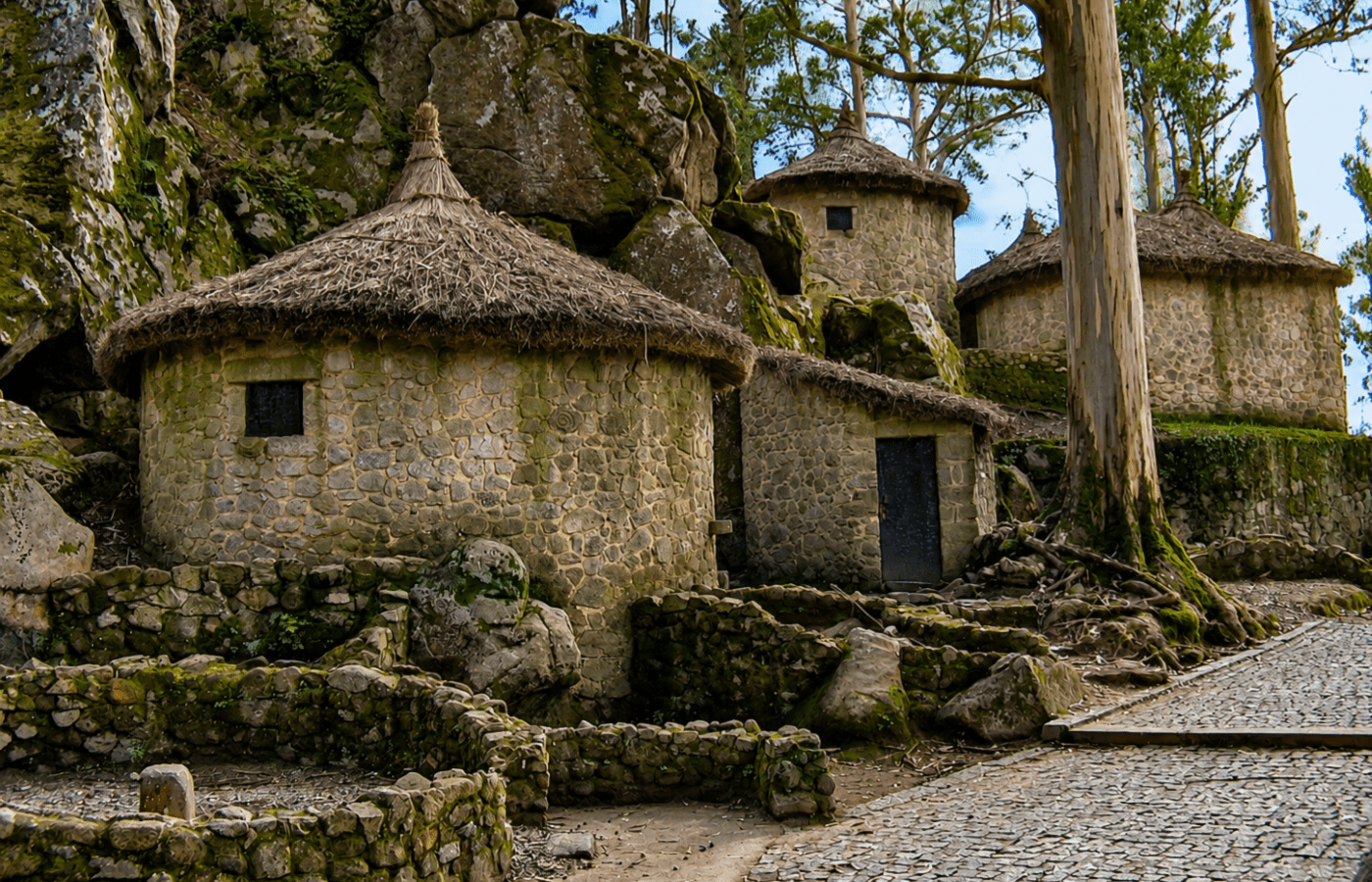
Reconstructed roundhouses at Castro de São Lourenço based on archaeological remains
For many travellers, a visit to a Castro settlement is not the destination itself, but part of a broader journey through northern Portugal. Combined with historic cities, coastal landscapes, mountain scenery, and local traditions, these archaeological sites add a deeper human story to the places around them and provide a fascinating introduction to the history and culture of the Castro people.
Origins of the Castro People
The roots of the Castro culture reach far deeper than the hilltop walls that survive today. Long before the first Castro communities appeared, northern Portugal was home to farmers, herders, metalworkers, and traders whose ancestors arrived through waves of migration and cultural change that shaped Europe over thousands of years. Their roots likely included ancient Iberian farming communities, Bronze Age peoples associated with the Bell Beaker culture, and populations carrying ancestry that had spread westward from the Eurasian Steppe and regions near the Caucasus Mountains. Over time, these influences blended with local traditions to create the communities that would eventually build the fortified settlements of the Castro world.
The Castro people did not emerge in isolation. They inherited knowledge, technologies, and traditions that had been developing across Europe for centuries. Trade connected communities across the region, allowing metals, goods, skills, and ideas to move from place to place. During the Iron Age, they were also influenced by broader cultural currents spreading across Atlantic Europe, including elements commonly associated with Celtic culture, while developing a distinctive identity of their own.
What remains today are traces of communities spread across the coastal regions, river valleys, and mountains of northern Portugal. The consistency in roundhouse architecture, pottery styles, and ritual stonecraft suggests a society that was intimately connected. Although no written records survive from the people themselves, the archaeological evidence points to a connected society that adapted to its landscape while remaining part of a much larger world.
Sites to Visit
Castro is a general term for any fortified hillfort, while Citânia identifies the larger, more urbanized settlements like Briteiros or Sanfins.
- Citânia de Briteiros ★★★★★
- Castro de São Lourenço ★★★★★
- Citânia de Sanfins ★★★★
- Castro de Monte Mozinho ★★★★
Coastal Communities
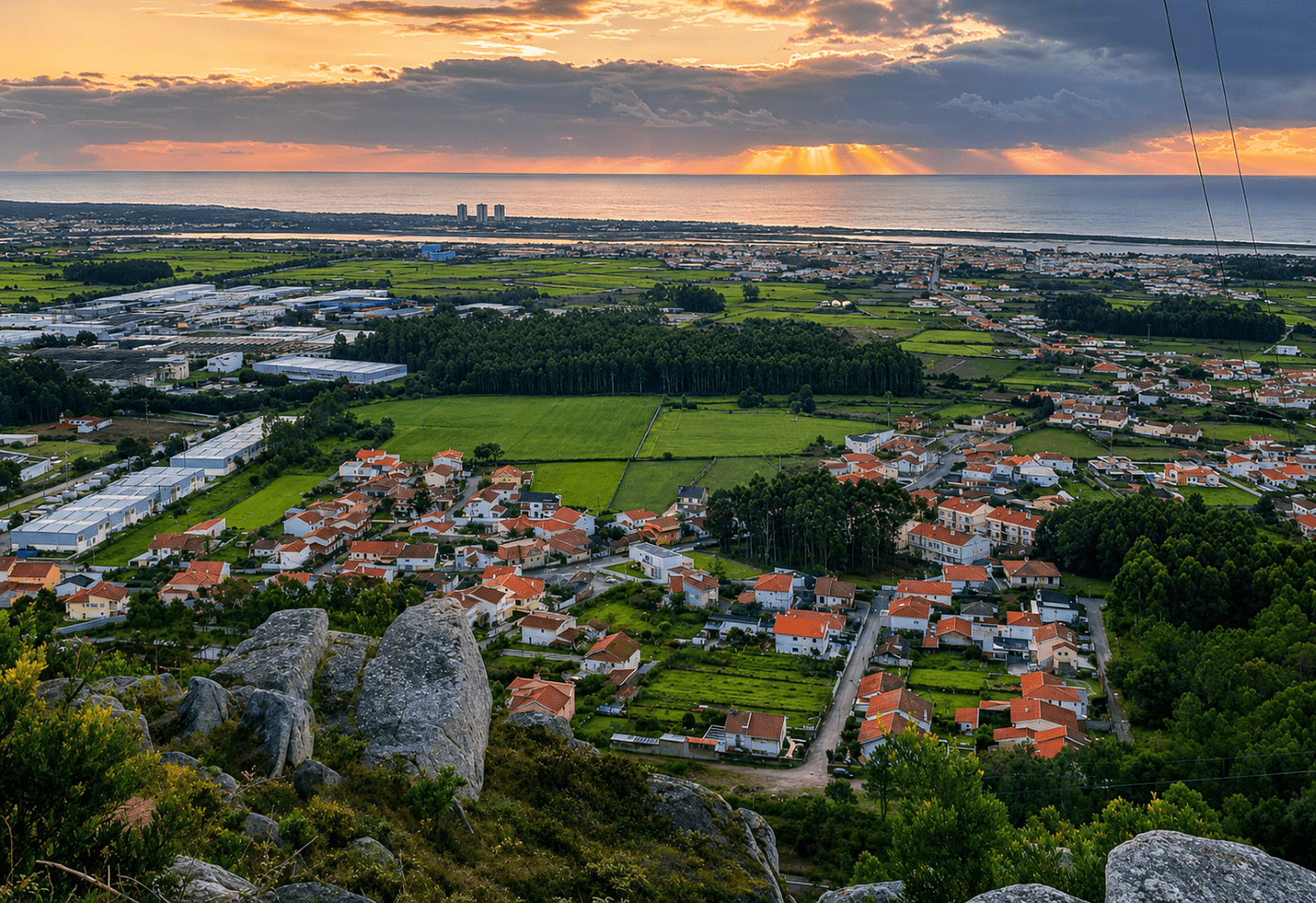
Castro de São Lourenço overlooks farmland and the Atlantic coastal plain
Life in the coastal community was shaped by access to the Atlantic Ocean. Fishing, salt production, and maritime trade provided opportunities that were unavailable farther inland. These communities connected the Castro world to the wider Atlantic region while remaining linked to neighbouring settlements through trade, communication, and shared traditions.
Two of the most noteworthy Castro settlements in this region are Castro de São Lourenço and Cividade de Terroso. Their elevated locations provided security and extensive views while maintaining close connections to the resources and opportunities of the Atlantic.
Castro de São Lourenço
Perched on the first significant hill overlooking the Atlantic coastal plain, São Lourenço occupied a position that combined security with opportunity. From here, its inhabitants could look across fertile farmland toward the ocean while remaining connected to the resources, trade, and movement that shaped life along the coast.
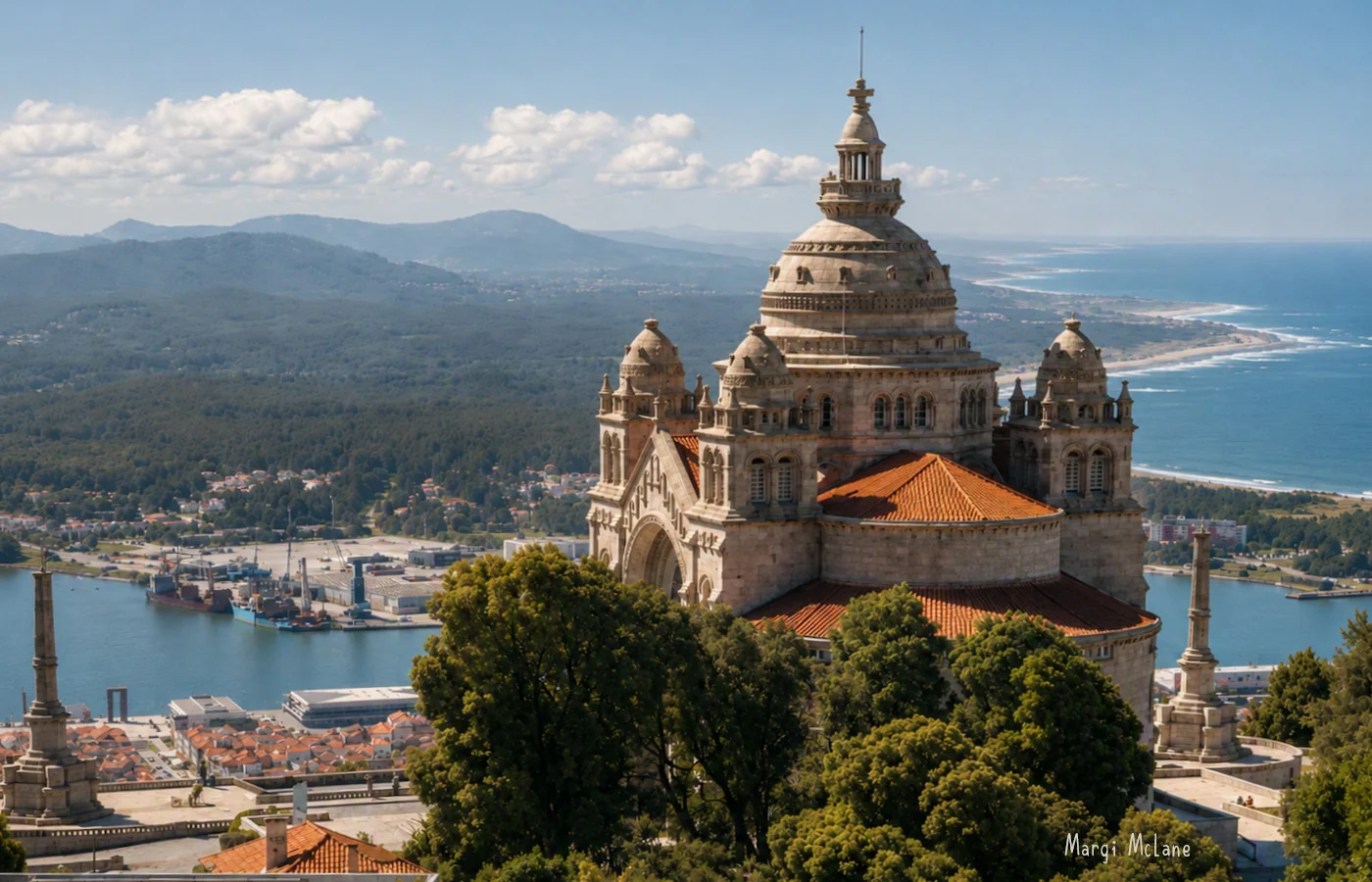
Today, São Lourenço is easy to combine with other destinations along northern Portugal’s coastline. Mindelo Coastal Reserve + Praia de Ofir ↗ offer protected dunes, Atlantic scenery, and one of the region’s most popular beaches. Praia da Amorosa ↗ provides a quieter stretch of coastline popular with walkers and surfers. A short drive away, Viana do Castelo ↗ combines maritime heritage, a historic centre, and some of the finest views in northern Portugal. Together, these destinations make São Lourenço a natural addition to a day exploring the Atlantic coast.
River Valley Communities
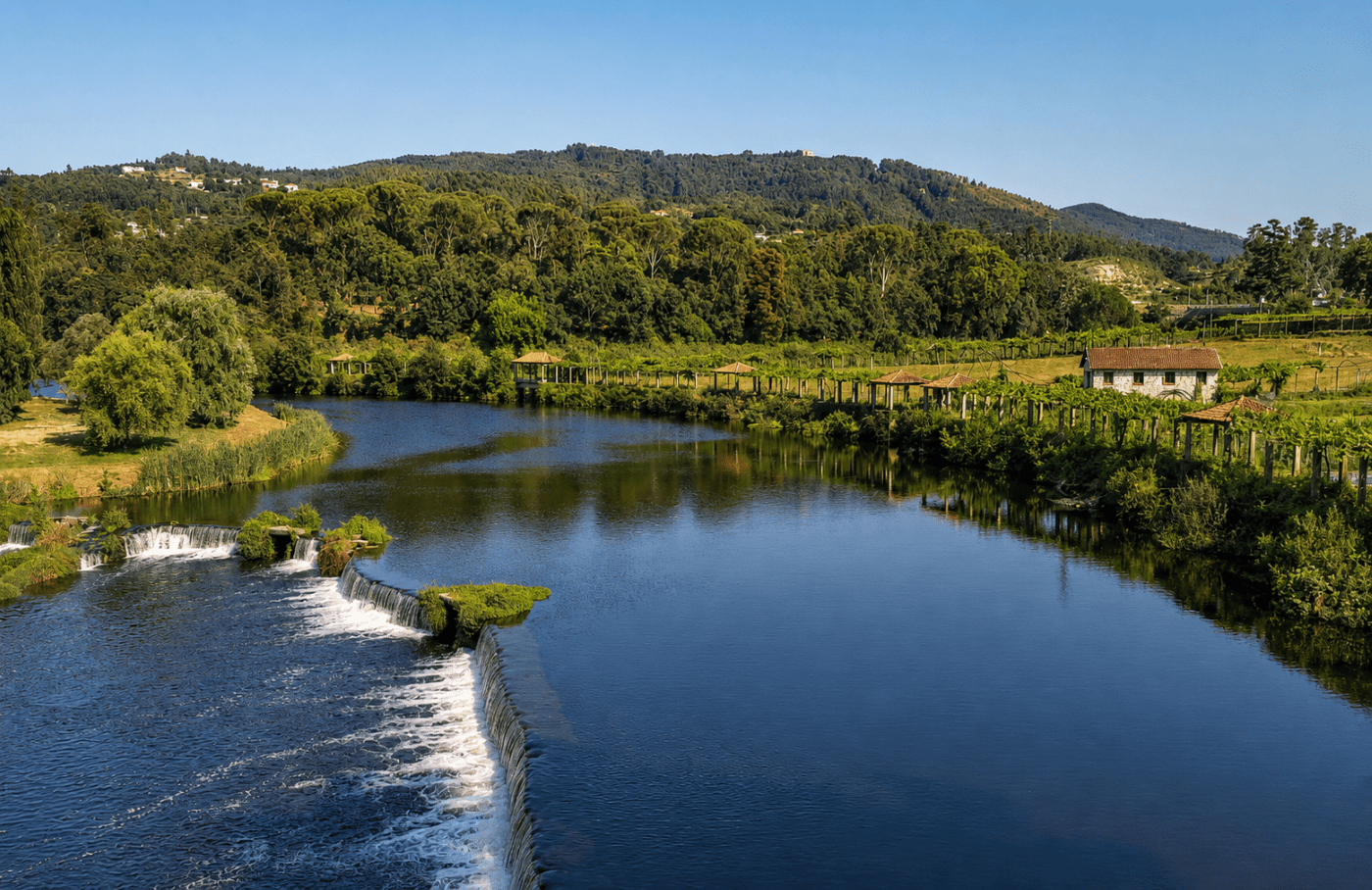
The Ave River at Santo Tirso provided water, fertile land, and routes that connected communities
The fertile river valleys supported larger populations and some of the most influential settlements in the Castro world. Agriculture, livestock, and trade helped communities prosper, while rivers provided access to fertile farmland and connected settlements across northern Portugal.
Alongside major centres such as Sanfins and Briteiros, smaller communities also played an important role in this network. Castro de Bagunte overlooked the lower Ave Valley, while Castro de Alvarelhos occupied a strategic position along routes linking neighbouring settlements. Together, they helped connect the people, resources, and trade that moved through the region.
Citânia de Sanfins
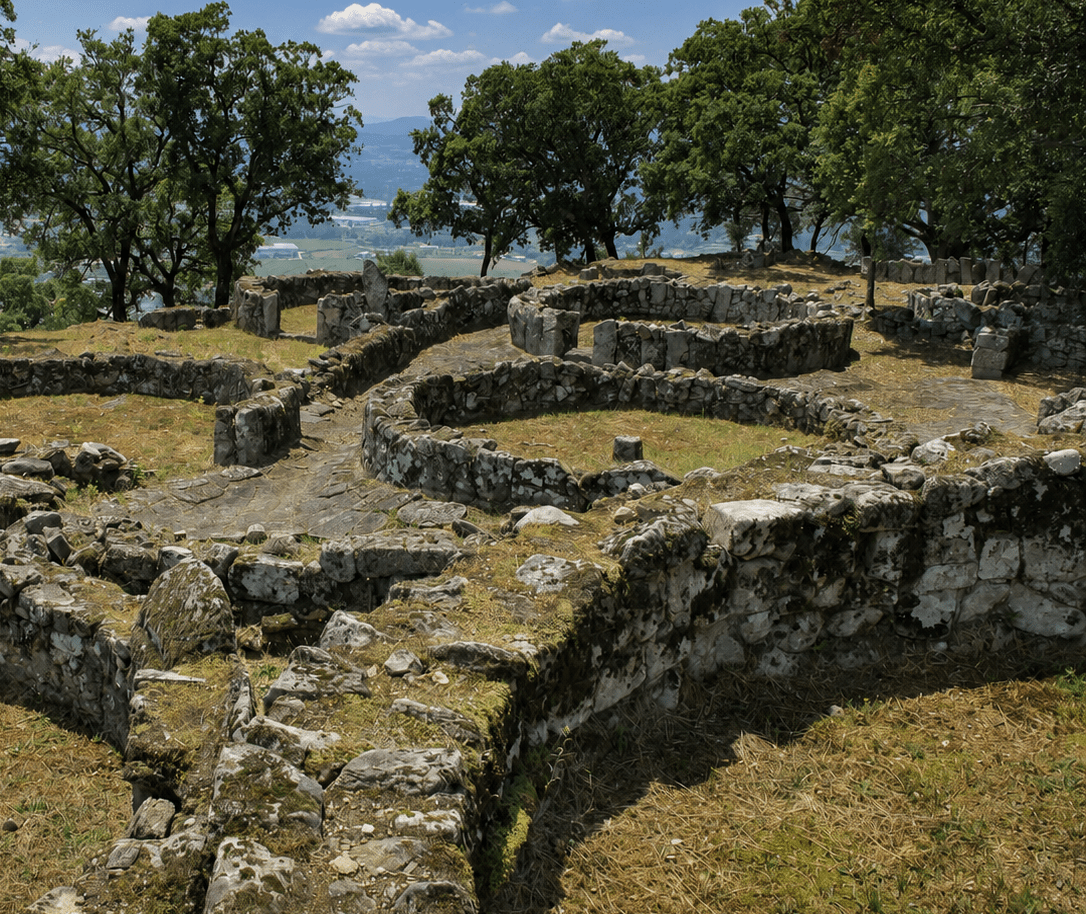
One of the largest and most important settlements in the Castro world, Sanfins contains extensive fortifications, hundreds of stone structures, a Castro sauna complex, and a Pedra Formosa, all pointing to a community of considerable significance.
What makes Sanfins particularly intriguing is its location. Viewed on a map, it occupies a remarkably central position within the network of Castro settlements featured in this guide. Unlike many hilltop communities that feel isolated, Sanfins appears connected to the wider landscape in every direction.
From the hilltop, the surrounding countryside stretches to the horizon. Its commanding position raises an interesting possibility. Perhaps Sanfins owed its importance not only to its size and defences, but also to its ability to oversee the routes, valleys, and communities that linked the Castro world together.
Citânia de Briteiros
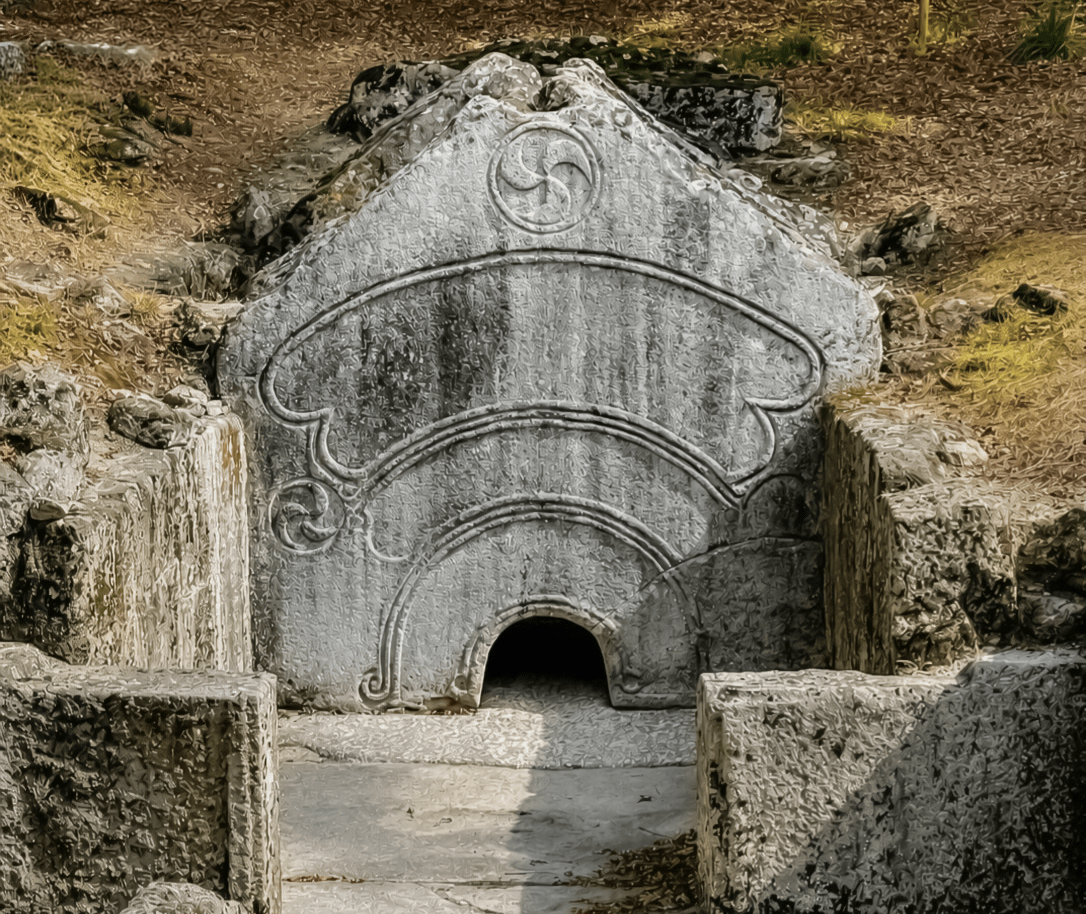
Perched above the Ave Valley, Briteiros occupies a strategic position overlooking a landscape that linked communities across the region. It is also home to one of the best-known Pedra Formosa structures. Citânia de Briteiros contains evidence for at least two Castro bath complexes, each associated with a Pedra Formosa. One remains at the site, while the more elaborate example is preserved in the Museum of Castro Culture.
The Pedra Formosa, literally translated as beautiful stone, remains one of the greatest mysteries of the Castro world. This beautifully carved stone doorway leads into a subterranean ritual chamber believed to have played an important ceremonial role. Similar structures discovered at Sanfins and other settlements suggest that important beliefs and traditions were shared throughout the region.
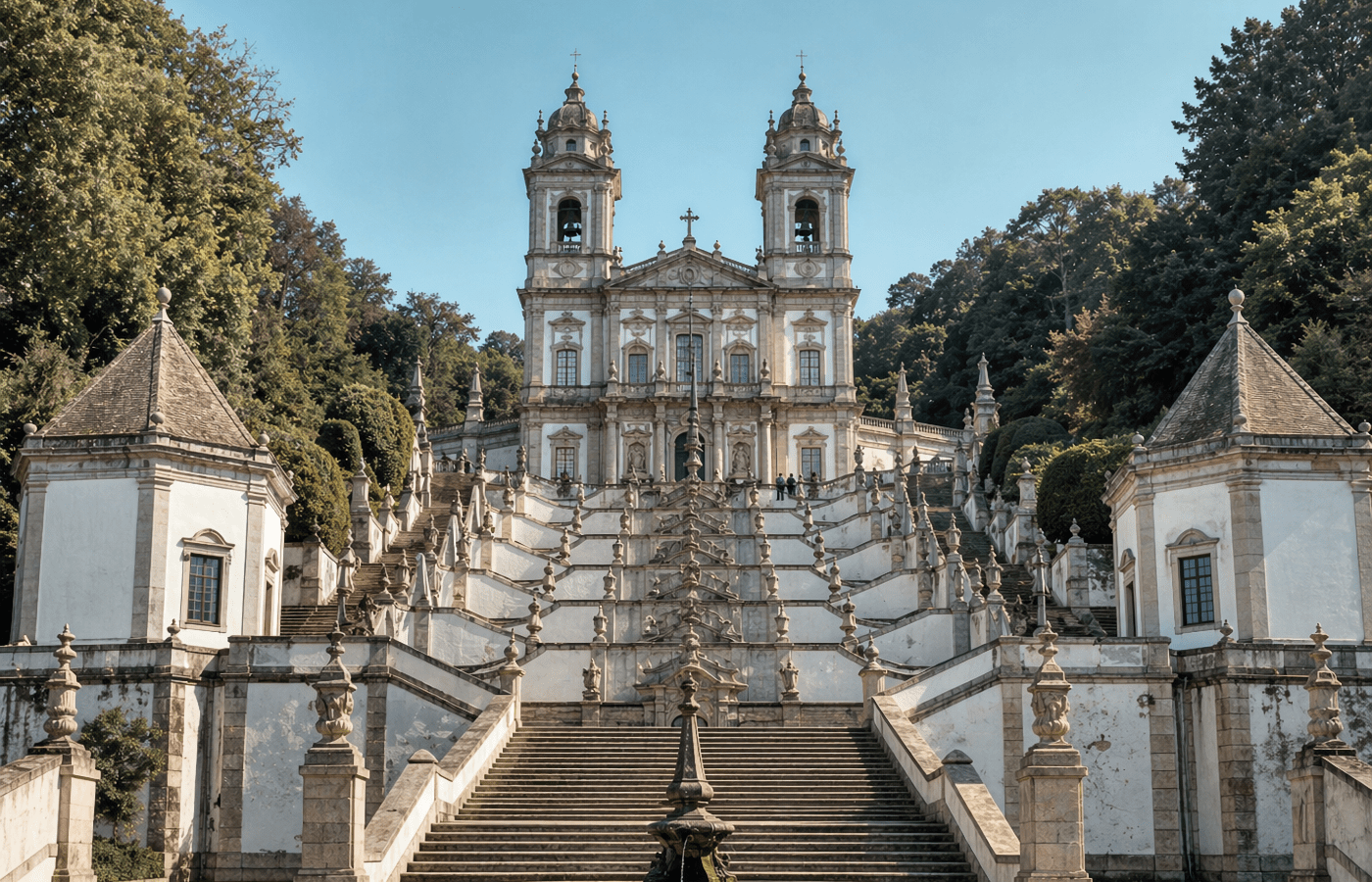
Located just a short drive from Guimarães and Braga, Briteiros is often the easiest Castro settlement to incorporate into a northern Portugal itinerary and offers one of the richest visitor experiences.
Mountain Communities
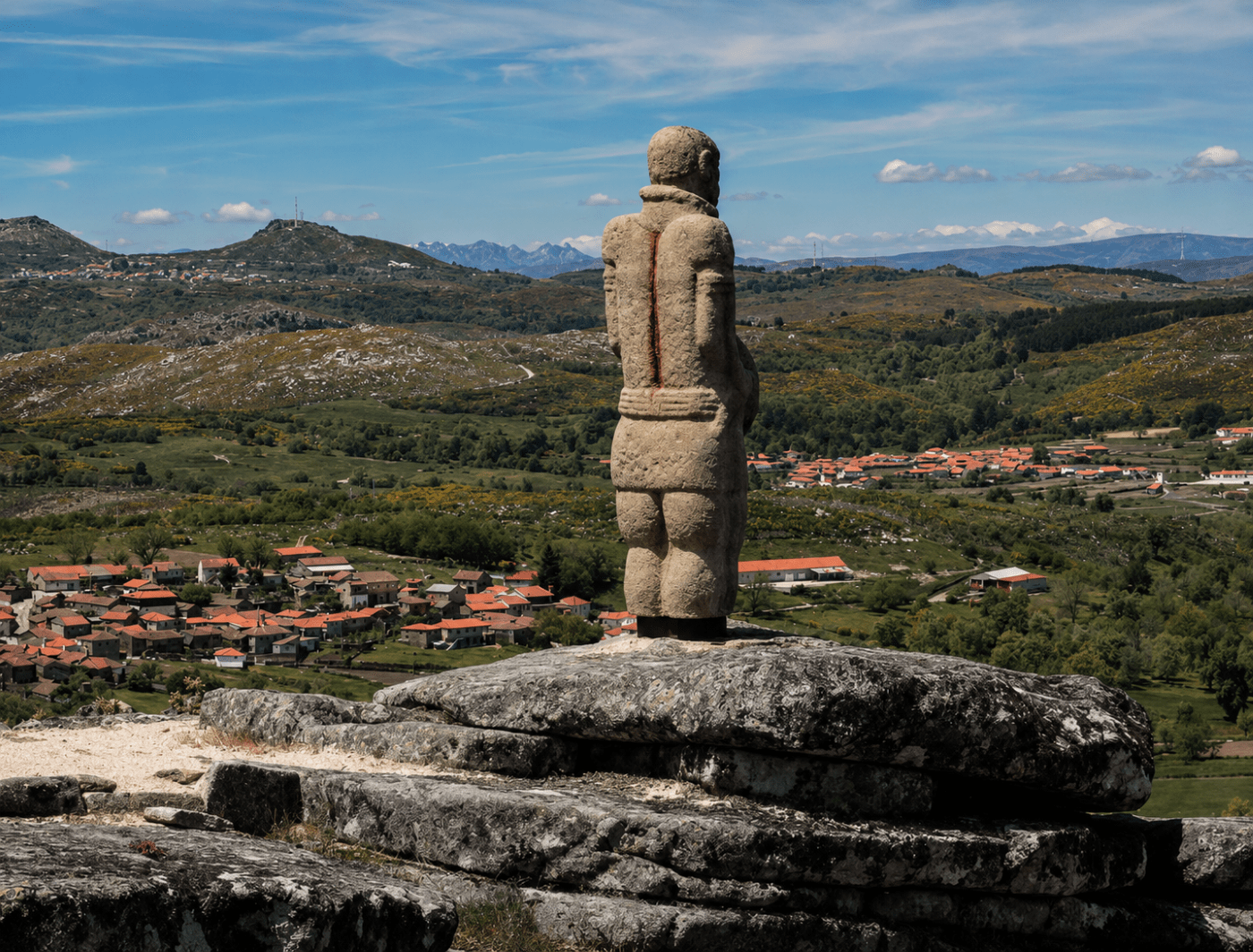
A granite warrior overlooks the valleys of northern Portugal
The mountains provided access to valuable resources including gold, tin, iron, and copper. Communities built in these higher elevations occupied strategic locations with extensive views across the landscape while remaining connected to neighbouring settlements through trade and movement. Among them were Castro de Monte Mozinho, situated between the gold-bearing hills of Castromil and the Douro valley, and Castro do Lesenho, perched more than 1,000 metres above sea level near the Beça River.
Castro de Monte Mozinho
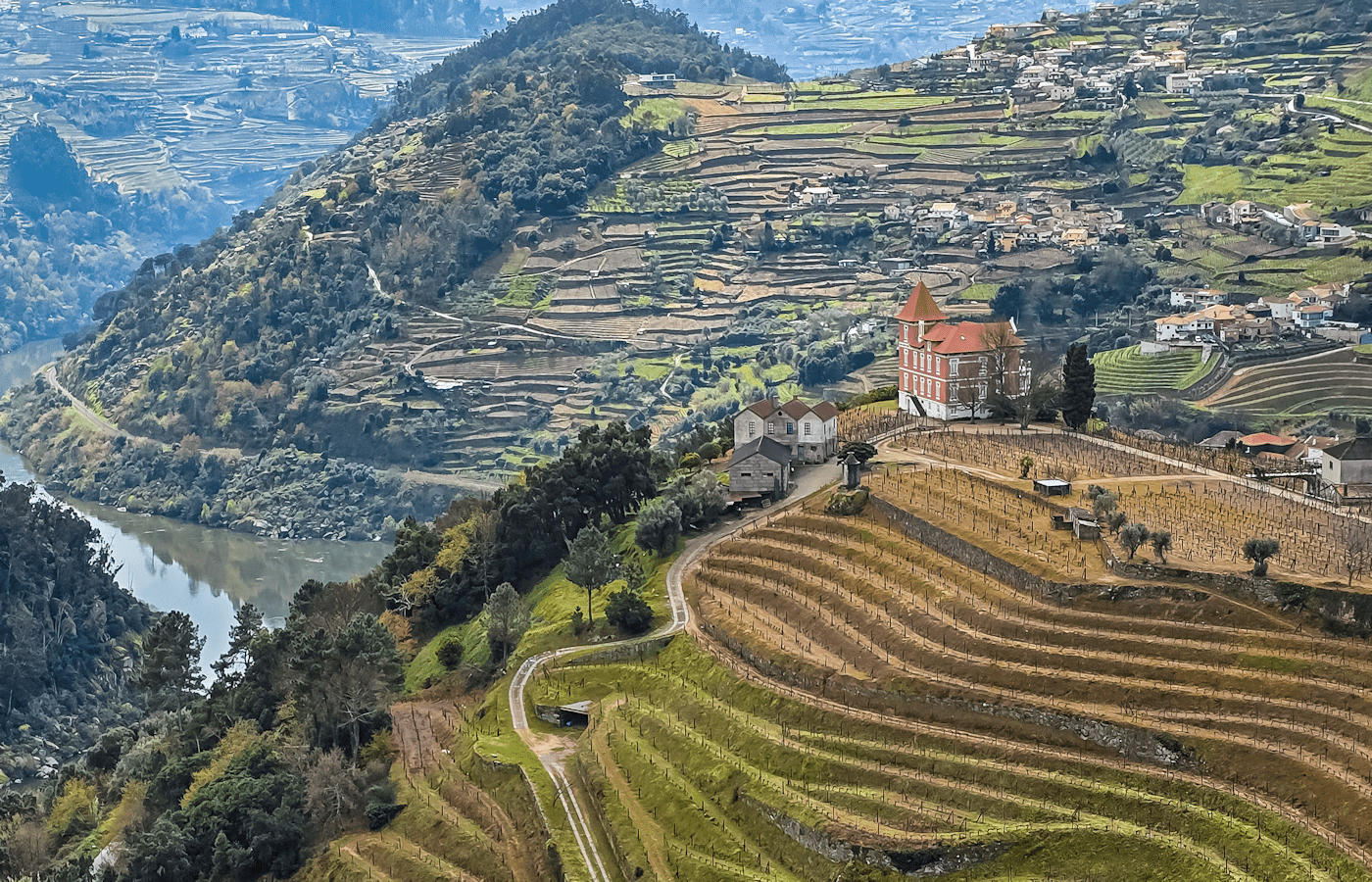
Situated between the gold-bearing hills of Castromil and the Douro valley, Monte Mozinho occupied a strategic position within a landscape connected by resources, trade, and movement. It later became one of the largest settlements in northern Portugal and provides insight into the transition from the Castro world to Roman society. If your travels take you toward Penafiel or the Douro Valley, Monte Mozinho offers a fascinating glimpse into how the Castro world adapted to life under Roman rule.
Across the hills, river valleys, and mountains of northern Portugal, traces of the Castro world still remain. As you travel through the region, these ancient communities offer an opportunity to discover a different side of northern Portugal, one shaped not by kings, castles, or cathedrals, but by the ordinary people who once called this landscape home.
Pause for a moment. Look beyond the stone walls and consider the families who built homes, raised children, traded with neighbouring communities, celebrated traditions, and adapted to a changing world. The stone walls may be ancient, but the hopes, challenges, and connections that shaped these communities remain familiar. In that sense, the Castro world is not as distant as it first appears.