SEATTLE TRAVEL GUIDE
Five Part Evolution of Seattle
1. The Era of the Duwamish (Dkhw’Duw’Absh)
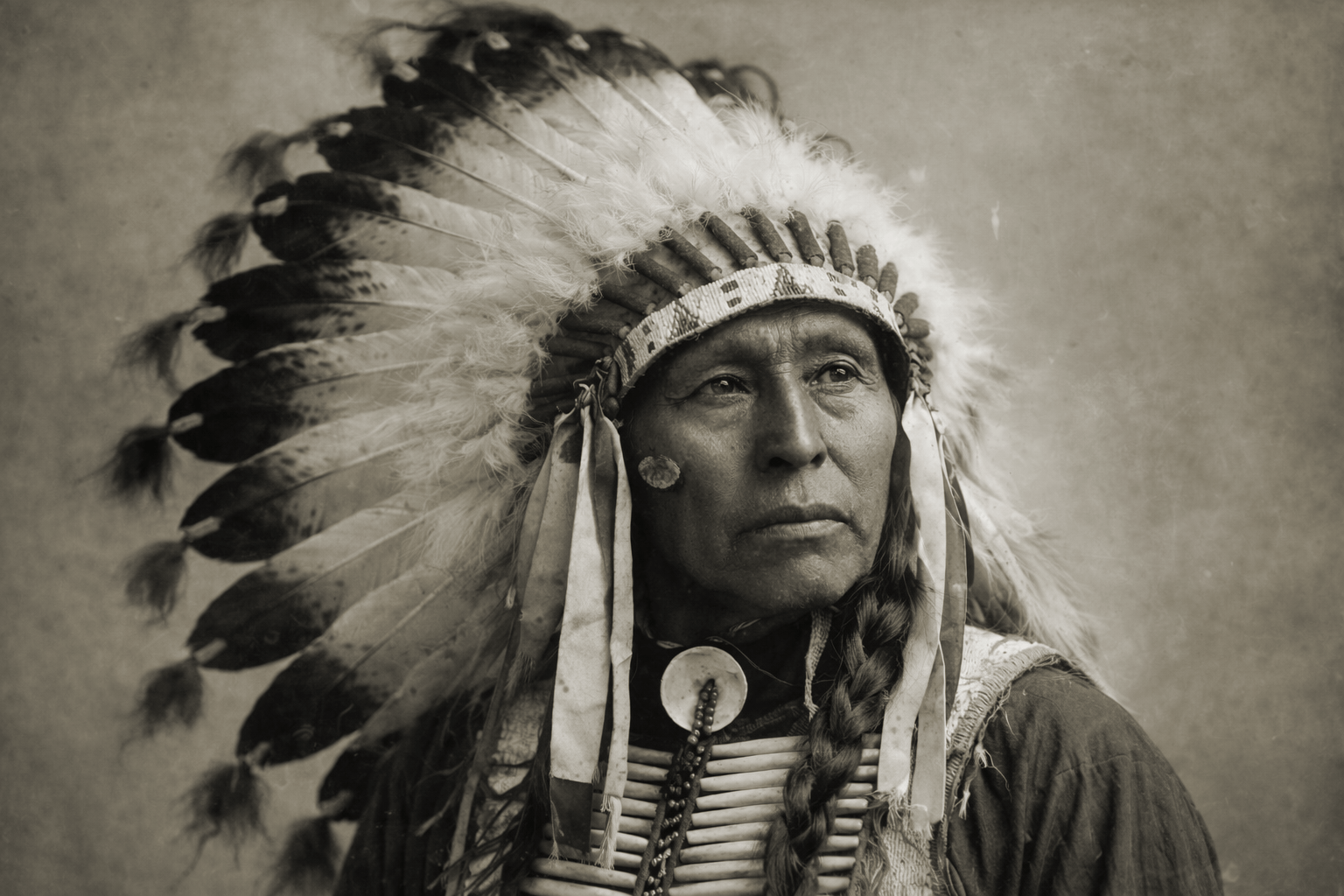
The story of Seattle begins, with two interconnected worlds shaped by water. The first people to settle Elliott Bay and the Duwamish River were Lushootseed-speaking peoples. They formed a shared cultural and linguistic network, linking the nations of Puget Sound through language, trade, and tradition.
• Elliott Bay & Duwamish River: Home to the Salt Water and River People (Duw’Absh), masters of the tideflats and deep-water fishing.
• Lake Washington: Home to the Lake People (Hachua’Absh), connected to the bay by the now-vanished Black River that once carried the lake to the sea.
At the center of this world stood Chief Si’ahl, a leader of both Suquamish and Duwamish descent, who bridged communities across the Sound. When settlers arrived at Alki Point in 1851, they were welcomed by these communities before moving to Elliott Bay and naming their new town after the chief.
2. The Great Seattle Fire (1889)
Seattle was originally a wooden town built on soggy tideflats that flooded at high tide.
• The Event: A boiling glue pot started a fire that leveled 25 city blocks.
• The Impact: The city didn’t just rebuild—it raised the streets. Brick walls were built around the old ruins, and a new city was paved one story higher. This created the Seattle Underground and transformed a muddy outpost into a stone-and-brick metropolis.
3. The Klondike Gold Rush (1896-1899)
Seattle wasn’t near the gold, but it became the Gateway to Alaska.
• The Boom: Local merchants convinced the world that Seattle was the only place to buy a ton of supplies, required by law to enter the Yukon.
• The Impact: The massive wealth from the Gold Rush funded the Regrades. Engineers used high-pressure water to wash away hills like Denny Hill into the bay, flattening the downtown core for skyscrapers.
4. The Engineering of the Lakes and River (1913–1917)
This era saw the most radical physical change to the urban landscape.
• The Ship Canal: The Lake Washington Ship Canal was dug to connect freshwater to the saltwater of the Sound.
• The Result: Lake Washington’s water level dropped by 9 feet, causing the Black River to dry up and vanish. At the same time, the Duwamish River was straightened from a 28-mile winding snake into a 5-mile industrial canal to support the growing shipping industry.
5. The Boeing Era and the 1962 World’s Fair
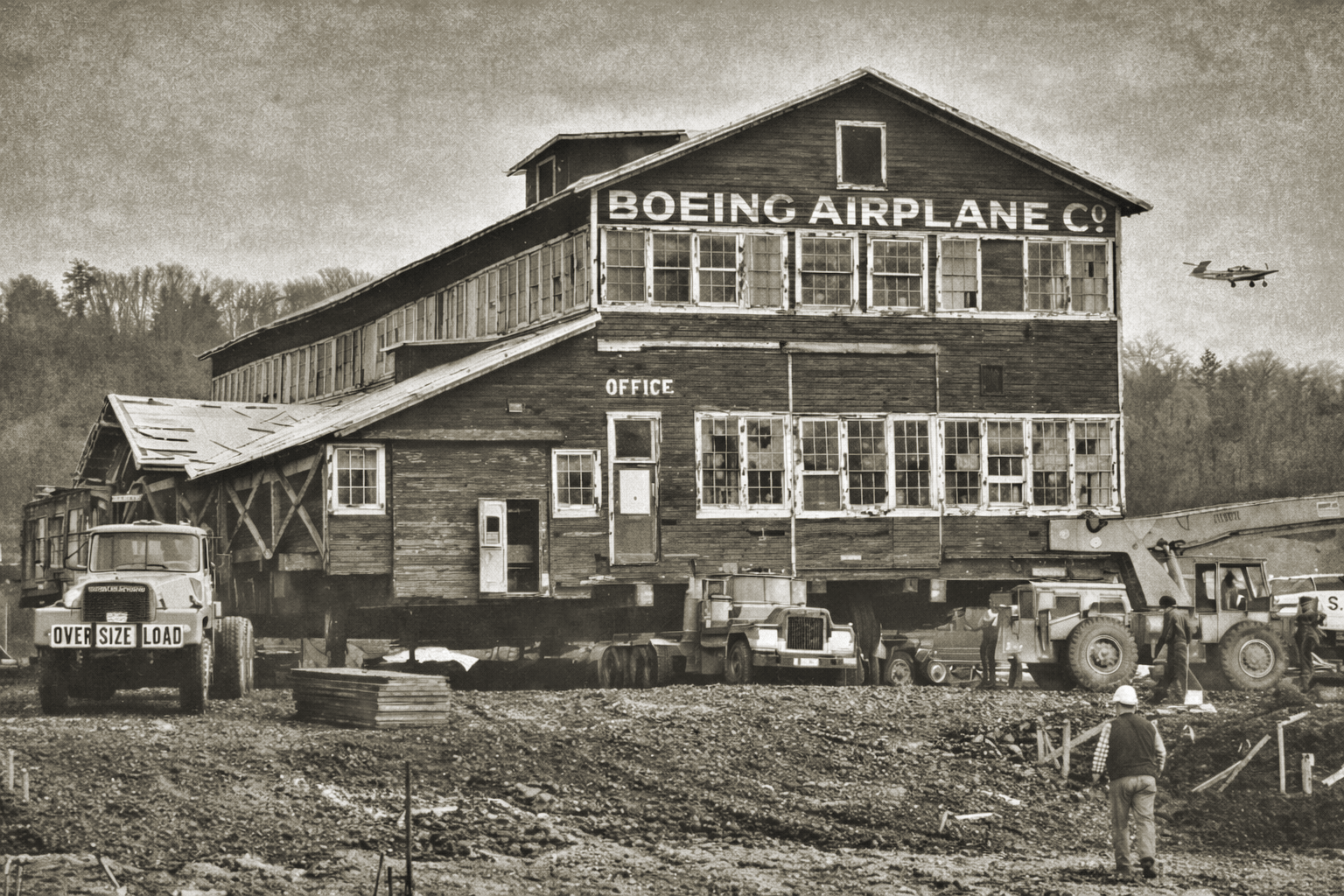
This transformed Seattle from a remote timber and fishing town into a global Jet City.
• Industrialization: World War II brought massive Boeing plants to the Duwamish waterway, cementing the city’s identity as a manufacturing powerhouse.
• The Space Needle: The 1962 World’s Fair was the city’s coming-out party, signaling a shift toward technology, aviation, and the Space Age identity that would eventually lead to the Microsoft and Amazon eras.
The Historic Core
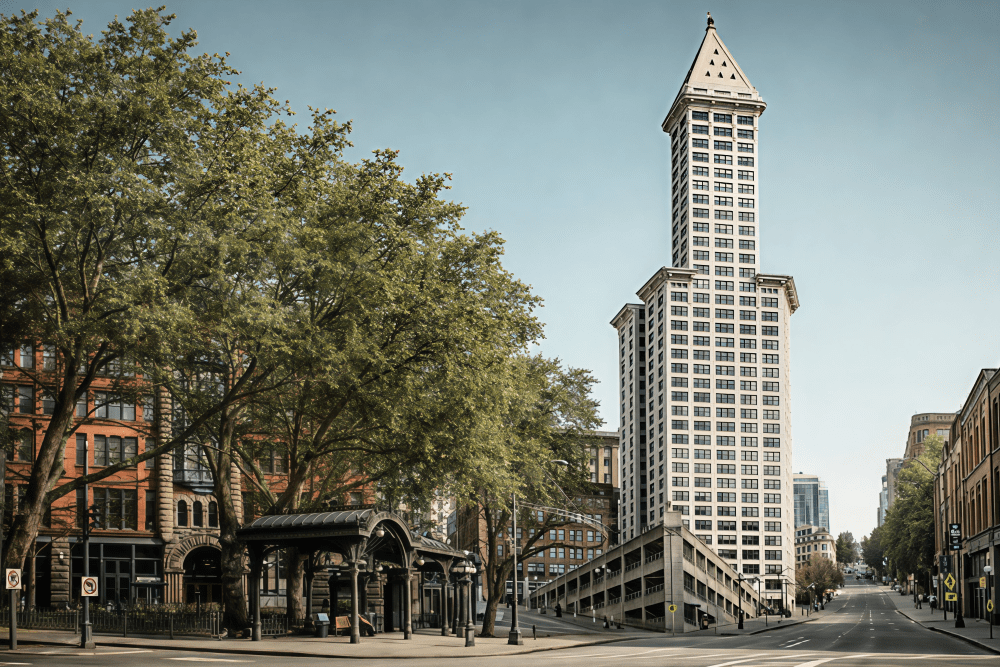
Seattle’s historic core originally sat on the tidal flats of Elliott Bay, with the shoreline much lower and further inland than it is today. Because the city’s sewer pipes were simply wooden troughs running underneath the streets and emptying into the bay, the area frequently flooded with sewage at high tide. Following the Great Fire, the city decided to raise the streets and fix the drainage problem, hauling in millions of tons of fill. Since the project took nearly a decade to finish, many merchants couldn’t afford to wait, rebuilding their brick shops at the original, low ground level.
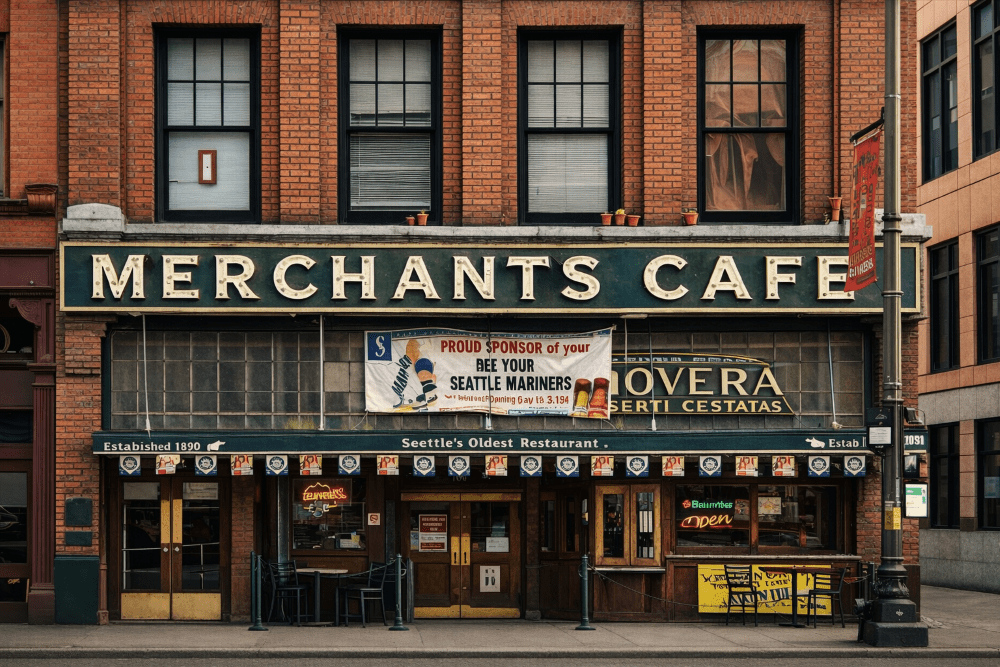
As the new street level extended toward the shoreline, it was built directly on top of the merchant stores, capping the old storefronts with elevated sidewalks and turning the original first floors into the subterranean network now called the Underground City. This network was officially sealed in 1907 due to bubonic plague fears. Today, the basements of buildings like the Merchant’s Café and Saloon still contain the original full-sized window frames and doorways, while purple-tinted prism lights in the sidewalks filter sunlight into these passages.
- Pioneer Square: Seattle’s oldest neighborhood, rebuilt from ashes into the striking collection of Romanesque Revival brick buildings you see today.
- The Underground City: A network of subterranean passages and basements that were at ground level in the mid-19th century.
- Smith Tower: The city’s first skyscraper, featuring an ornate white terra cotta exterior and a historic 35th-floor observation deck. The deck includes the Chinese Room, which contains a hand-carved ceiling and furniture gifted by the Empress Cixi of China, and is home to The Observatory Bar. When it was completed in 1914, it stood as the tallest building on the West Coast.
The Waterfront & Downtown
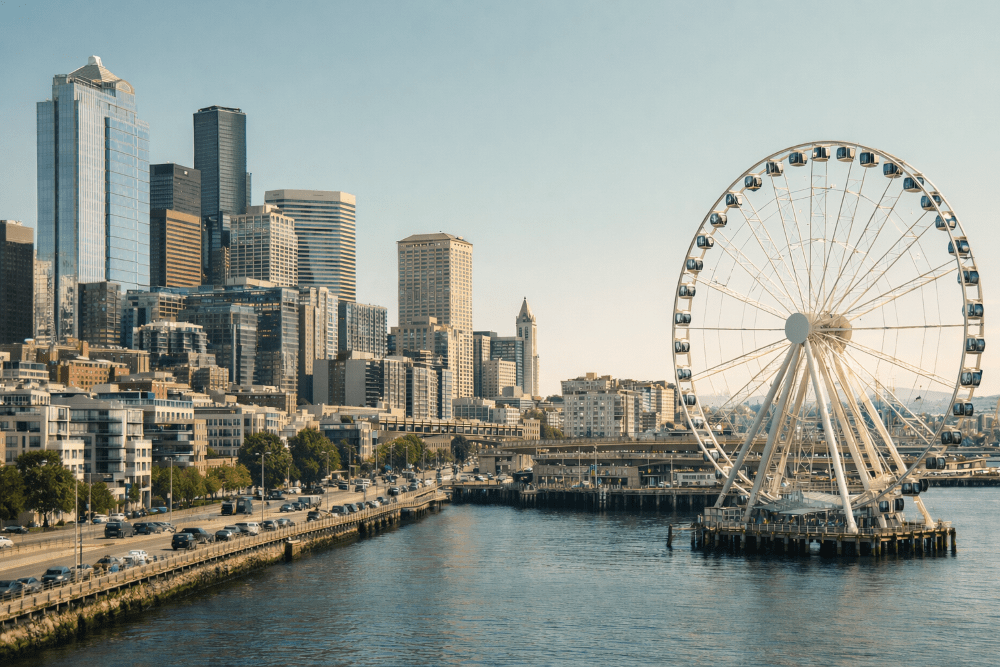
Seattle’s Waterfront Promenade along Elliott Bay is the pedestrian spine of the city’s shoreline. This front porch of the city stretches from Yesler Way through Belltown to Olympic Sculpture Park. Lined with piers, it is well worth exploring. Watch for the Seattle Great Wheel, a 175-foot-tall Ferris wheel providing panoramic views of Elliott Bay. Just north of the wheel, near the Seattle Aquarium, Overlook Walk is an elevated pedestrian park and bridge that serves as the primary “connective tissue” between Pike Place Market and the waterfront. At its northern end, the promenade transitions into the park, a nine-acre green space where monumental art installations meet open views of Puget Sound.
- Piers 54 & 57 (Miner’s Landing): A blend of old and new Seattle waterfront culture, where Pier 54 preserves the city’s maritime past with icons like Ivar’s Acres of Clams and Ye Olde Curiosity Shop, while Pier 57 at Miner’s Landing brings energy and spectacle with attractions like the Seattle Great Wheel and Wings Over Washington.
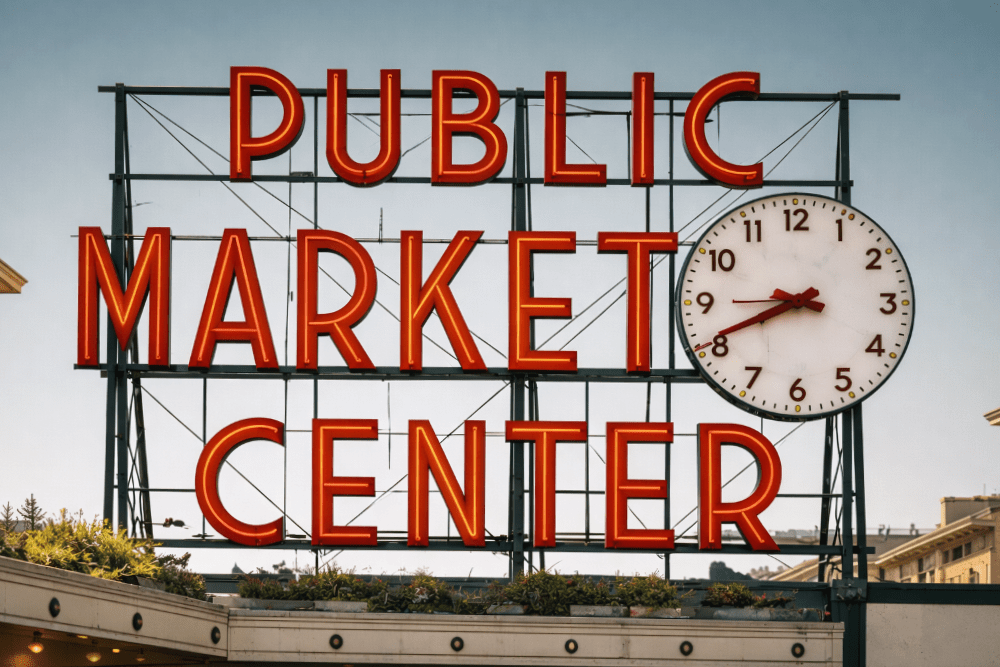
- Pike Place Market: A nine-acre labyrinth of farmers, fishmongers, and artisans, with the nearby Gum Wall tucked into Post Alley below.
- The Seattle Public Library & Amazon Spheres: A striking contrast in contemporary design. The Seattle Public Library Central Library rises as a glass and steel diamond defined by sharp, angular lines and faceted geometry, appearing to float among surrounding skyscrapers. In contrast, the Amazon Spheres soften the cityscape with rounded, organic forms. The Spheres house a multi story glass conservatory filled with thousands of tropical plants, about a 15 minute walk uphill from Pike Place Market.
The Heights
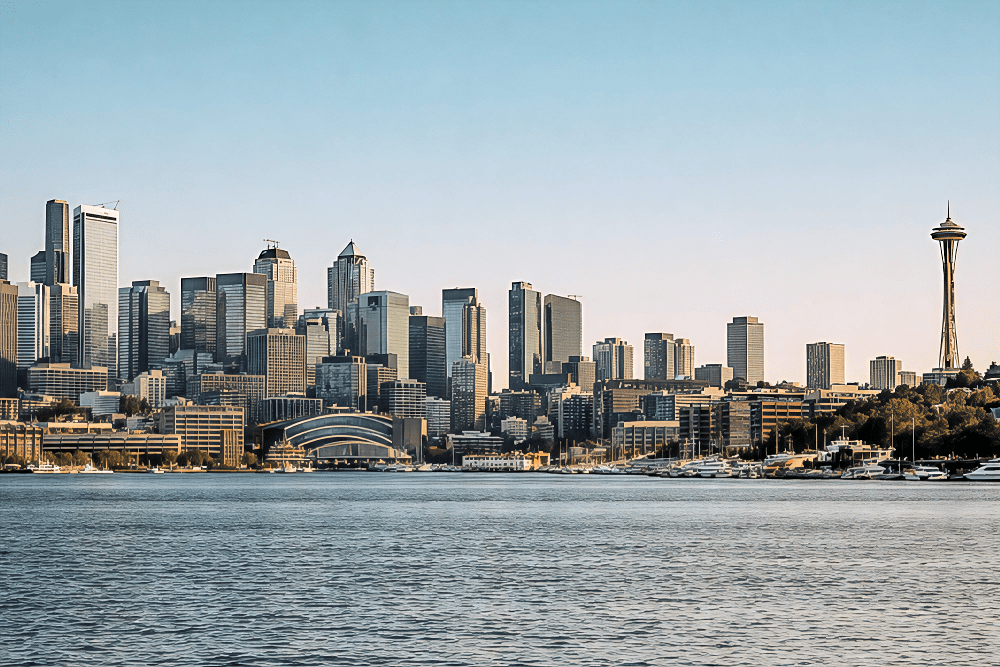
As a photographer, the heights are my favorite part of the city—second only to the waterfront. Rising steeply above the city center, this area combines the city’s most famous landmarks with its historic residential architecture. It includes the “South Slope” of Queen Anne, offering the city’s most iconic perspectives, and the Seattle Center, the sprawling cultural legacy of the 1962 World’s Fair.
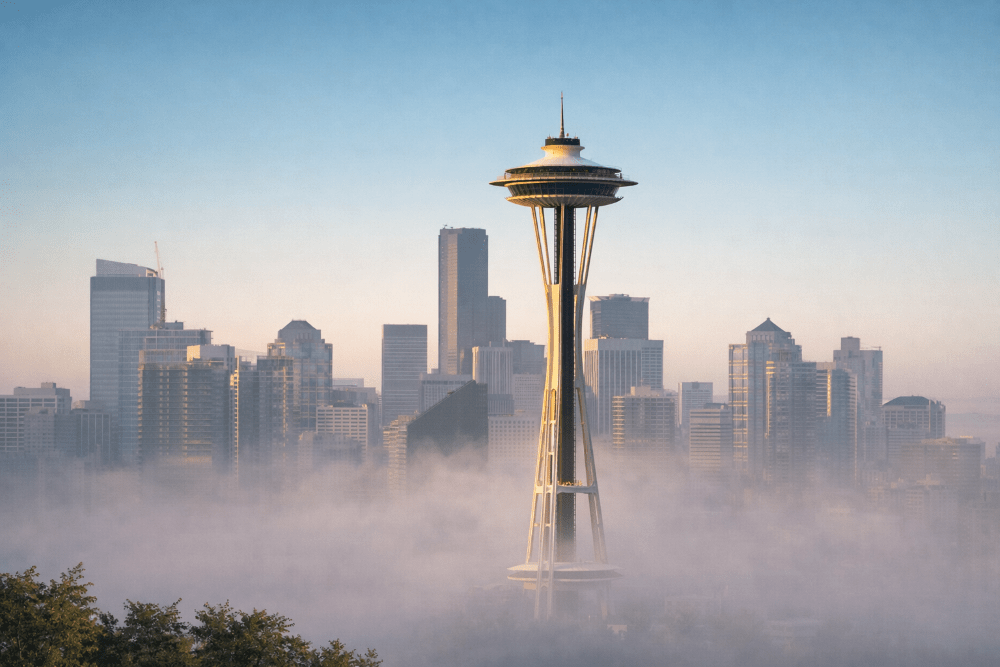
- Kerry Park: The ultimate vantage point, where the Space Needle is perfectly framed against Elliott Bay and Mount Rainier.
- Space Needle: The city’s iconic landmark, now featuring a world-first revolving glass floor.
- Chihuly Garden and Glass: A vibrant glass garden showcasing the intricate work of Dale Chihuly.
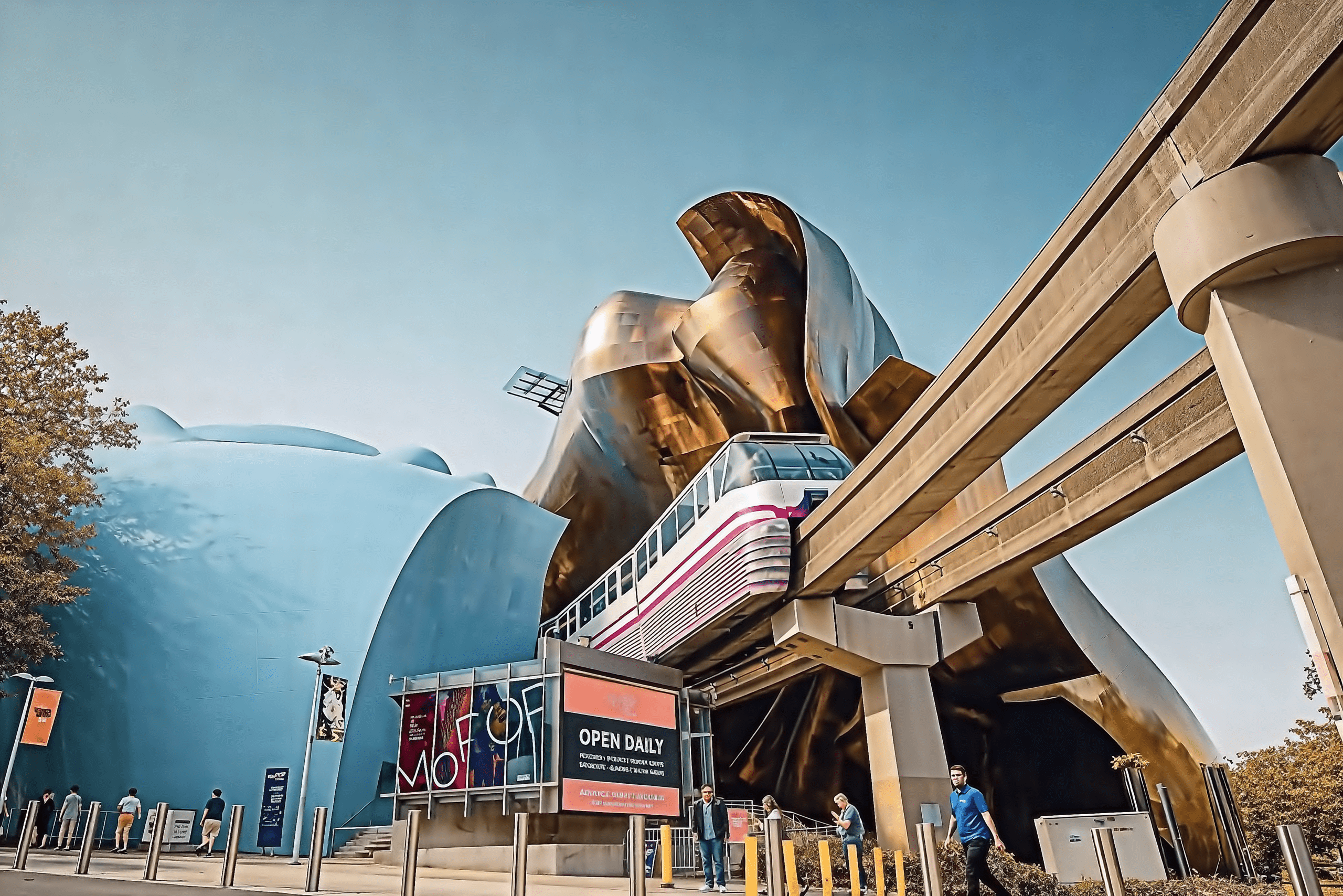
- Monorail & MoPOP: A retro futurist thread through Seattle’s creative core, where the Seattle Center Monorail, built for the 1962 World’s Fair, still zips between downtown and Seattle Center in about two minutes, passing directly through the Museum of Pop Culture, a hands on tribute to the Northwest’s creative pulse, housed in a structure designed to resemble a shattered electric guitar.
The North End
Linked by the ship canal, these neighborhoods represent Seattle’s bohemian soul and its deep-rooted fishing heritage. This region blends Fremont, the self-proclaimed Center of the Universe, with Ballard, a community that still feels like a Scandinavian fishing town defined by its grit and connection to the water.
- Fremont Troll & Archie McPhee: The massive concrete sculpture under the Aurora Bridge, paired with the legendary outpost of the weird known for bizarre novelties and the world’s only Rubber Chicken Museum.
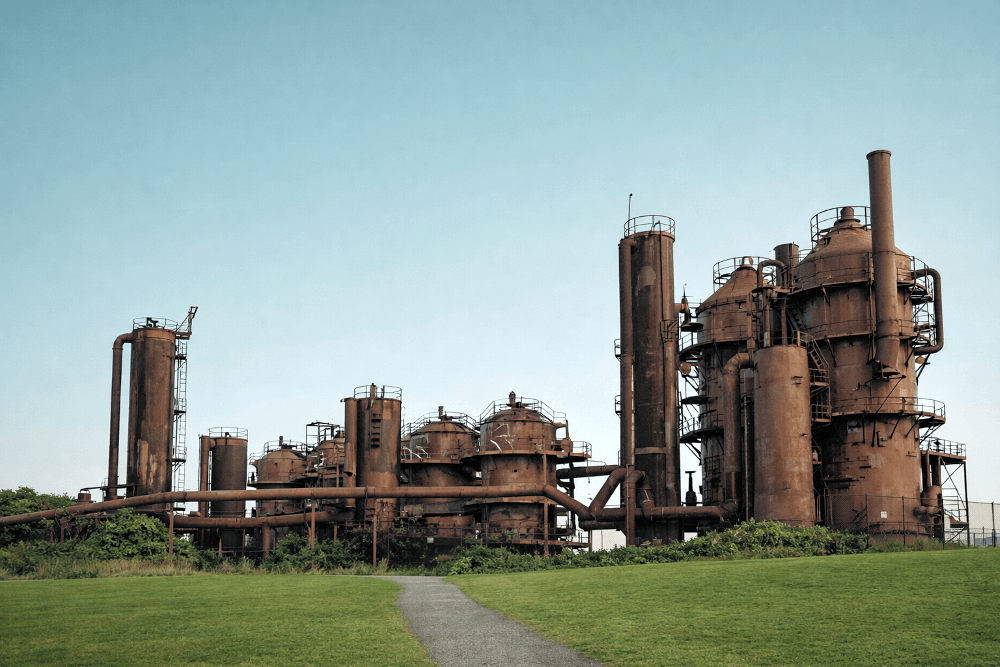
- Gas Works Park: A former coal gasification plant on Lake Union, where rusted machinery remains as massive sculptures.
- Ballard Locks & Fishermen’s Terminal: A working view into Seattle’s maritime backbone, where the Hiram M. Chittenden Locks serve as the mechanical gateway between freshwater lakes and Puget Sound, complete with an underwater viewing gallery where you can stand face to face with migrating salmon, while nearby Fishermen’s Terminal offers an authentic look at the North Pacific fishing fleet, with working boats and stacks of crab pots lining the docks.
The Cultural Uplands
This is the intellectual and creative engine of the city, defined by grand parks, university architecture, and a high-energy pulse. It encompasses Capitol Hill, the city’s counterculture heartbeat, and the University District, a mix of collegiate history and eclectic student culture. This area is anchored by the Pike-Pine Corridor, the neighborhood’s center of activity, known for nightlife, music venues, and coffee culture, and long home to the Starbucks Reserve Roastery, a coffee cathedral in a 1920s auto dealership that has now permanently closed.
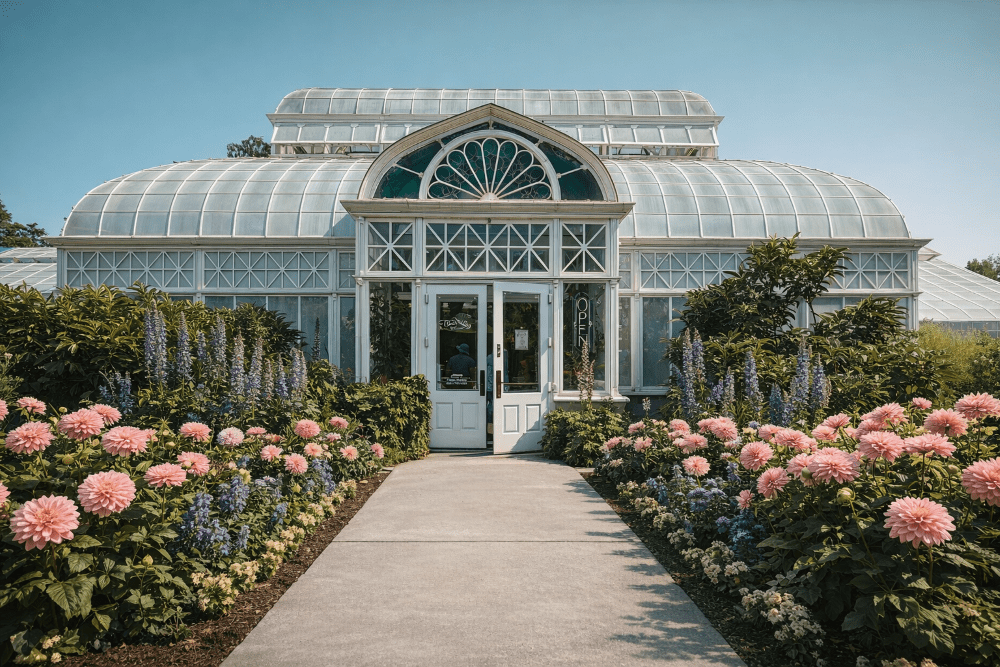
- Volunteer Park: Seattle’s most refined green space, home to the historic Conservatory. Enter from the south along 14th Avenue to enjoy the grand homes of Millionaire’s Row, a distinguished Capitol Hill street where many of Seattle’s notable citizens built their residences in the early 20th century.
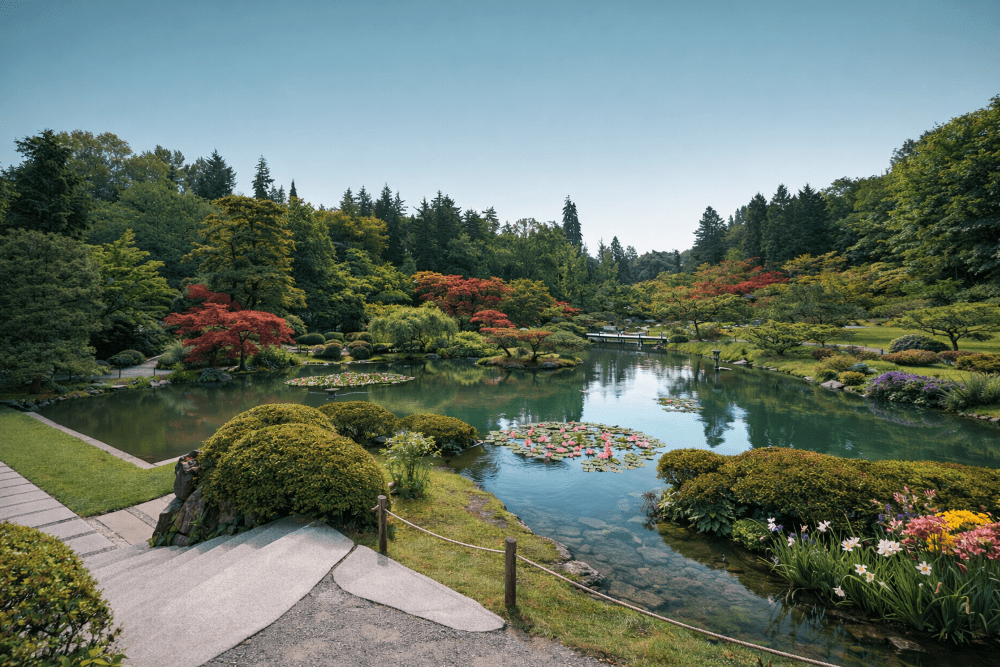
- Washington Park: A 230-acre sanctuary featuring Seattle’s renowned Japanese Garden, perfect for a peaceful stroll.
- Museum of History & Industry: A local museum dedicated to preserving and interpreting the region’s history, offering insight into the people, places, and events that shaped Puget Sound.
- Elliott Bay Book Company: A legendary independent bookstore in the Pike-Pine Corridor, serving as a central gathering place for readers and writers.